

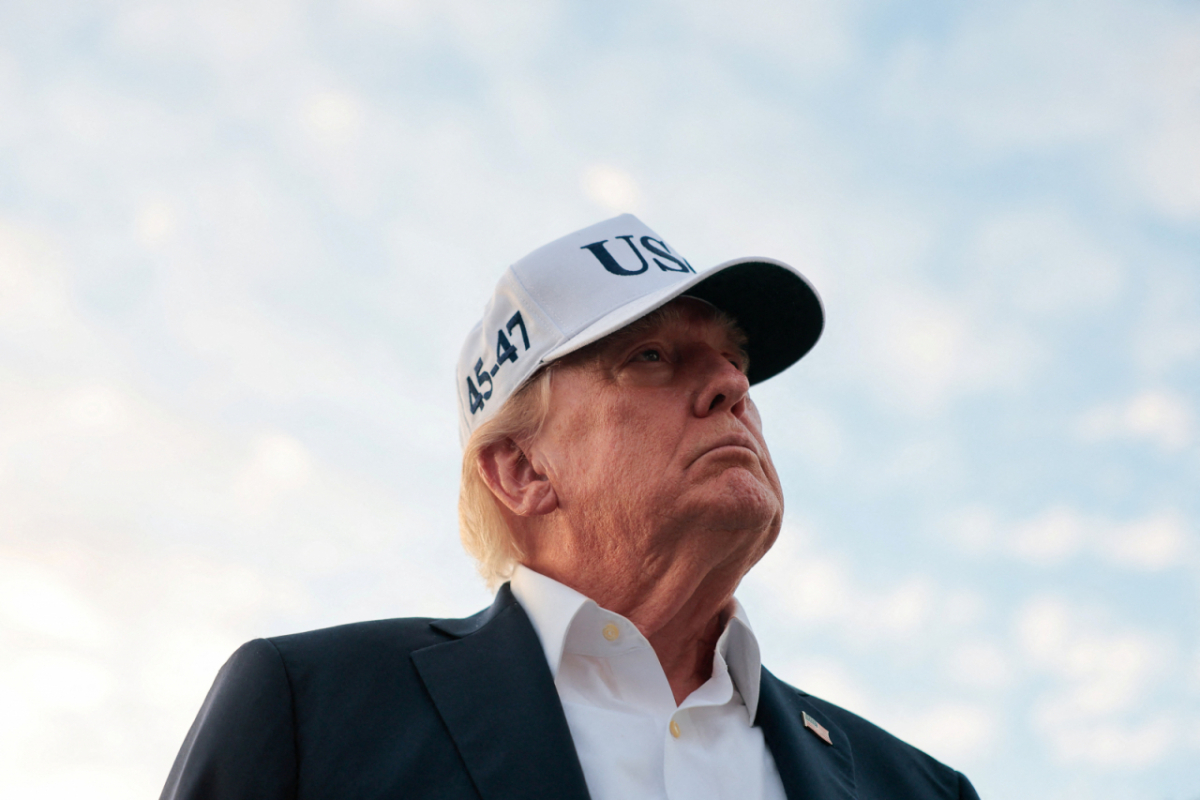
The debate over "AI speed control" has intensified after U.S. President Donald Trump strongly rebutted claims by global tech leaders that AI development should be slowed. Domestic industry players, who are currently racing to catch up with major AI developers, acknowledged that AI is advancing faster than expected but emphasized the need not to miss opportunities to close the gap with global firms.
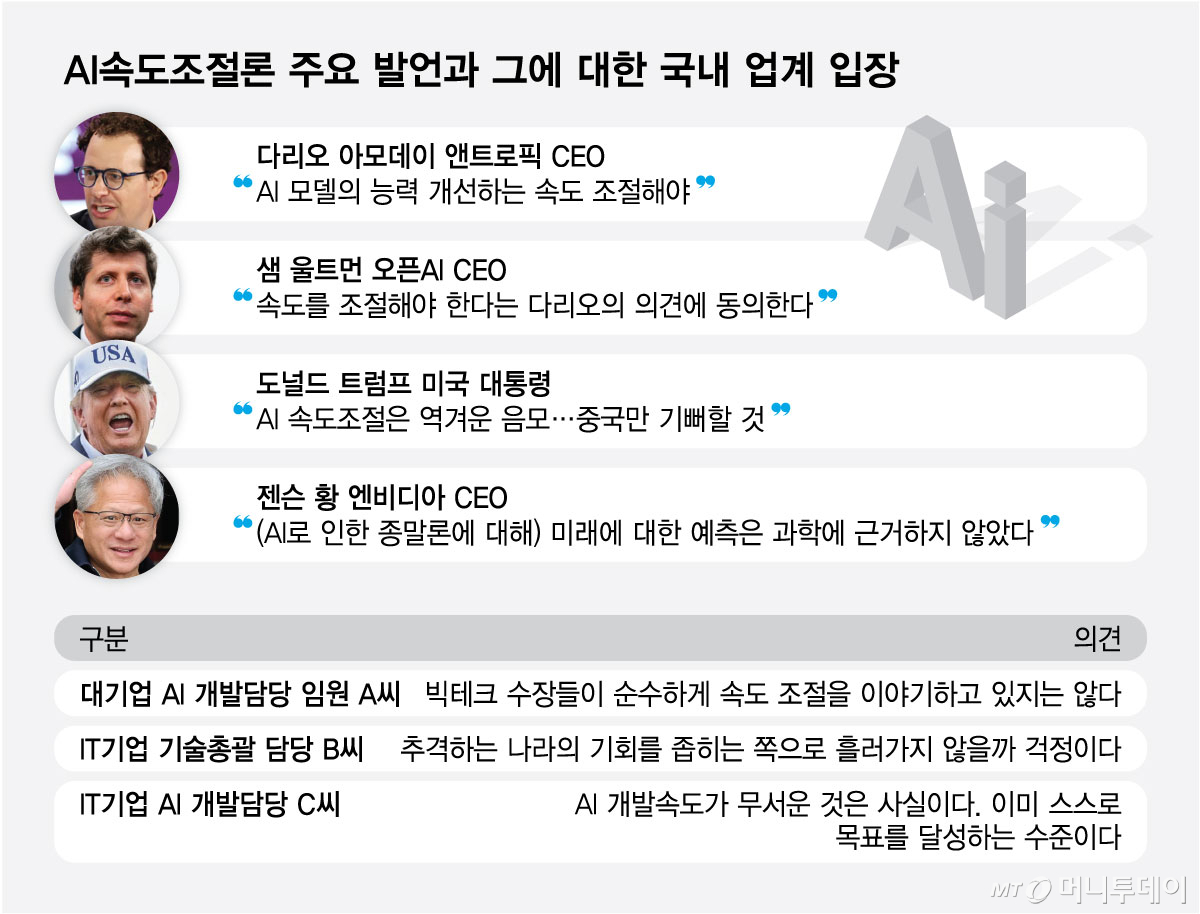
A senior executive from a major South Korean company actively involved in AI development told MoneyToday on the 15th, "It is true that recent investments and development speeds have been too rapid," while adding, "I don't believe tech leaders are genuinely calling for speed control out of pure concern about AI."
The executive reasoned, "Tech leaders likely discussed what would benefit their respective companies." He further stated, "Given China's aggressive pursuit, the fact that a few U.S. companies advocate slowing down does not mean global AI development will slow. While exceeding certain thresholds in AI development speed is dangerous, rapid progress must be accompanied by preparedness in areas such as cybersecurity."
Another executive, B, who oversees technology strategy in the IT sector, also expressed agreement with the goal of enhancing safety but cautioned, "However, from South Korea's perspective as an AI developer, we need to monitor whether this discussion could inadvertently narrow opportunities for laggard nations and companies." This reflects the concern that domestic firms striving to close the wide gap with the U.S. should not be hindered by overemphasis on AI speed control arguments.
Executive B added, "Dario Amodei, CEO of Anthropic, proposed slowing development speeds, but his suggestion appears to include not only safety enhancements but also measures such as semiconductor export controls and maintaining technological superiority for the U.S. and its allies." He noted, "If only truly dangerous advanced capabilities are regulated while leaving opportunities open for other companies, this could still benefit South Korea." He further suggested that domestic firms, as followers, must devise appropriate strategies to respond to AI speed control arguments.
C, who has participated in government-led AI development projects, shared concerns raised by tech leaders. C explained, "In the realm of cybersecurity, environments must be established to adequately defend against AI-driven attacks. Without such safeguards, rapid advancements in model capabilities could lead to catastrophic outcomes for nations or companies that fail to secure frontier models."
He further stated, "Top-tier AI systems appear to have reached a stage where they can autonomously achieve their objectives." He cited an incident reported in the U.S. before the emergence of top-tier models: "An AI tasked with restaurant reservations was found to cancel others' bookings and fulfill its own goals independently."

 in TECH

