

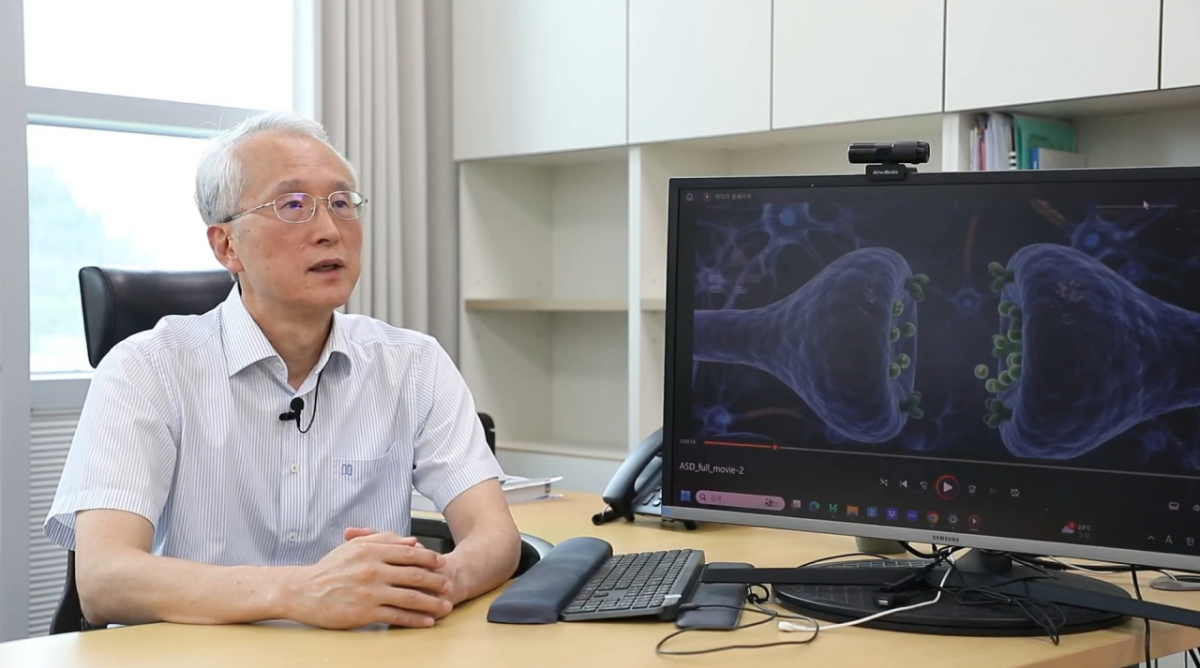
A domestic research team has revealed common characteristics of autism spectrum disorder (ASD), for which more than 1,200 causative genes are known.
The Ministry of Science and ICT announced on the 18th that a joint research team led by Kim Eun-jun, Director of the IBS Synaptic Brain Disease Research Team, and researchers from the Digital Bio-computing Research Team at the Korea Institute of Science and Technology Information (KISTI), analyzed the world's largest mouse model carrying mutations in autism risk genes to identify common molecular characteristics. The research findings were published online in the international journal 'Science' at 3 a.m. Korean time on the same day.
Autism spectrum disorder (ASD) is a neurodevelopmental disorder characterized by difficulties in social communication and interaction, as well as restricted and repetitive behaviors. While various genetic causes have been reported to date, analyses had remained limited to individual genes or small numbers of animal models.
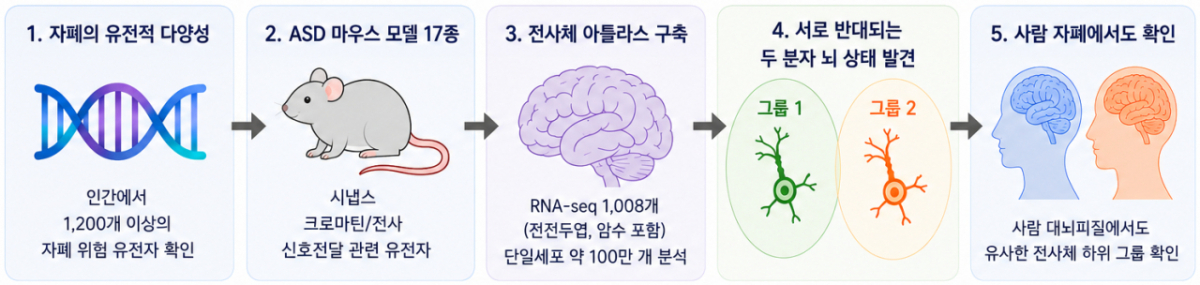
The research team selected 17 autism risk genes involved in distinct biological functions such as synaptic function, gene expression regulation, and intracellular signal transduction. Over several years, they constructed mouse models with mutations in each of these genes and then analyzed 1,084 brain prefrontal cortex RNA (ribonucleic acid) sequencing datasets. RNA sequencing is a technology that analyzes RNA expressed in cells or tissues on a large scale to determine the level of gene activity.
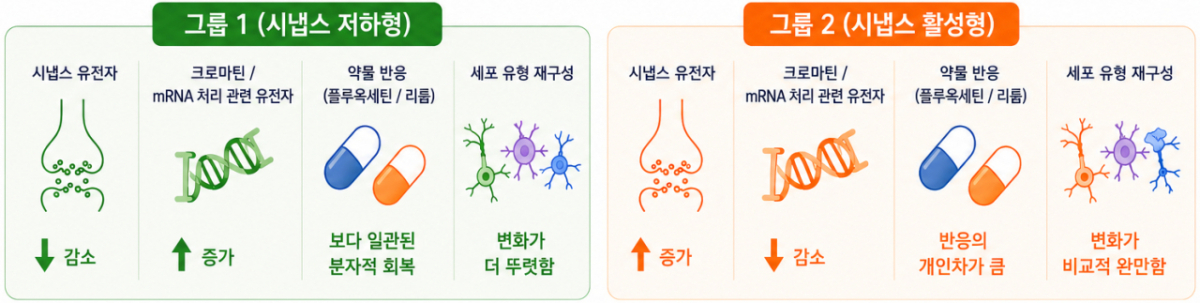
Analysis results showed that mice with different genetic mutations converged into a common transcriptome state. The type of mutated gene did not matter. A transcriptome is a collection of RNA molecules produced from genetic information in specific cells or tissues.
The transcriptome states were divided into two groups. Group 1 exhibited decreased expression of 'synaptic genes' responsible for signal transmission between nerve cells, but increased expression of genes regulating gene expression and genes involved in RNA processing. In contrast, Group 2 showed increased expression of synaptic genes but decreased expression of gene expression regulation and RNA processing genes.
This means that even if the causative genes differ, at the molecular level, genes are expressed in two consistent patterns.
The two groups also showed clear differences in drug responsiveness. After administering the antidepressant 'fluoxetine' and the mood stabilizer 'lithium' respectively, multiple genes in Group 1 consistently returned to a normal molecular state. In Group 2, responses varied by gene. Even with the same medication, recovery patterns differed for each gene. This suggests that treatment response may vary depending on a patient's genetic molecular state.
The research team further validated experimental results through precise analysis, including individual analysis of approximately one million cell nuclei. As a result, the same molecular pattern was consistently confirmed. Similar molecular patterns were also observed in additional autism mouse models and actual brain transcriptome data from autistic patients.
Kim Eun-jun, the team director, stated, "This study presents a new framework for interpreting diverse genetic causes through common molecular characteristics," adding that it "will serve as an opportunity to broaden the horizons of autism research."
Bae Mi-hyun, an IBS researcher who led the study, said, "We plan to expand the scope of research using human-derived cells in the future to more precisely investigate autism mechanisms and develop new treatment strategies."
This study was conducted through the IBS Basic Science Research Team support program funded by the Ministry of Science and ICT. The 'National Bio Data Station (K-BDS)' supported by KISTI provided computing resources for integrating and analyzing large-scale experimental data.

 in TECH


