

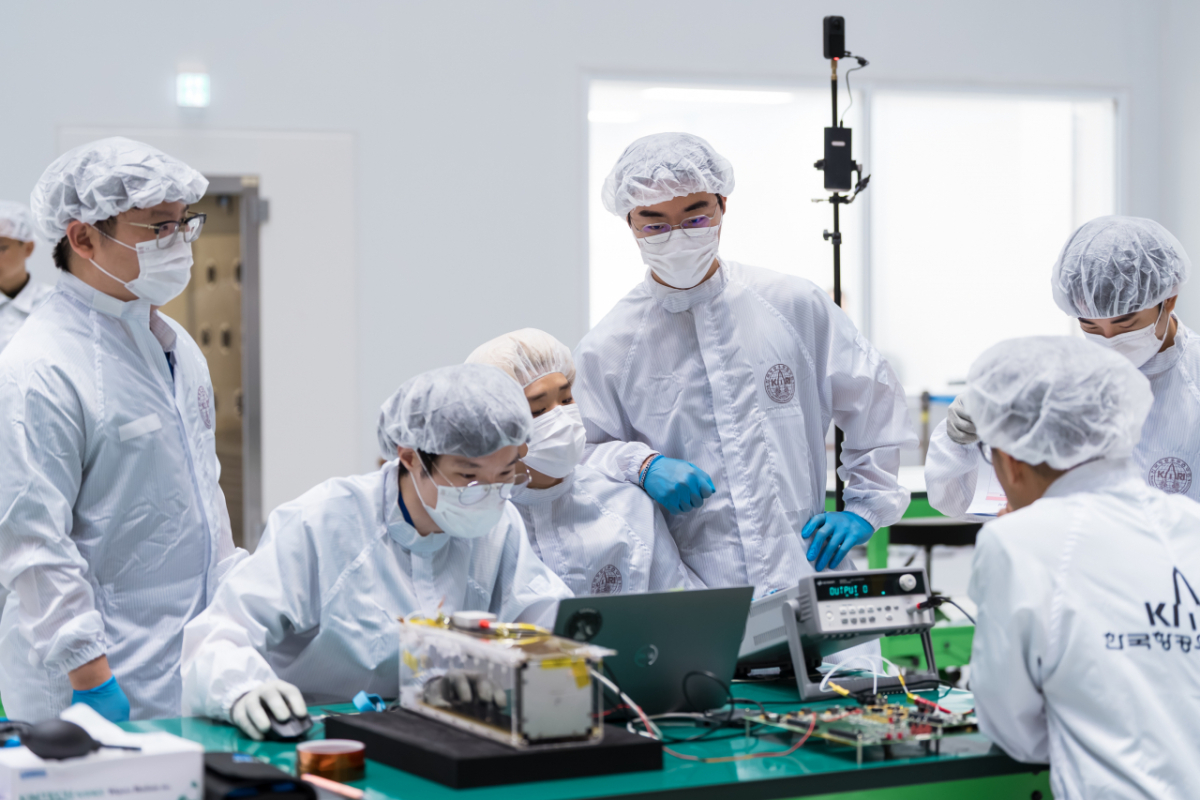
"We started building a satellite with friends during high school. The development, which began as a shared interest, eventually led to its integration onto the Nuri rocket." (Lee Jae-min, KAIST student researcher)
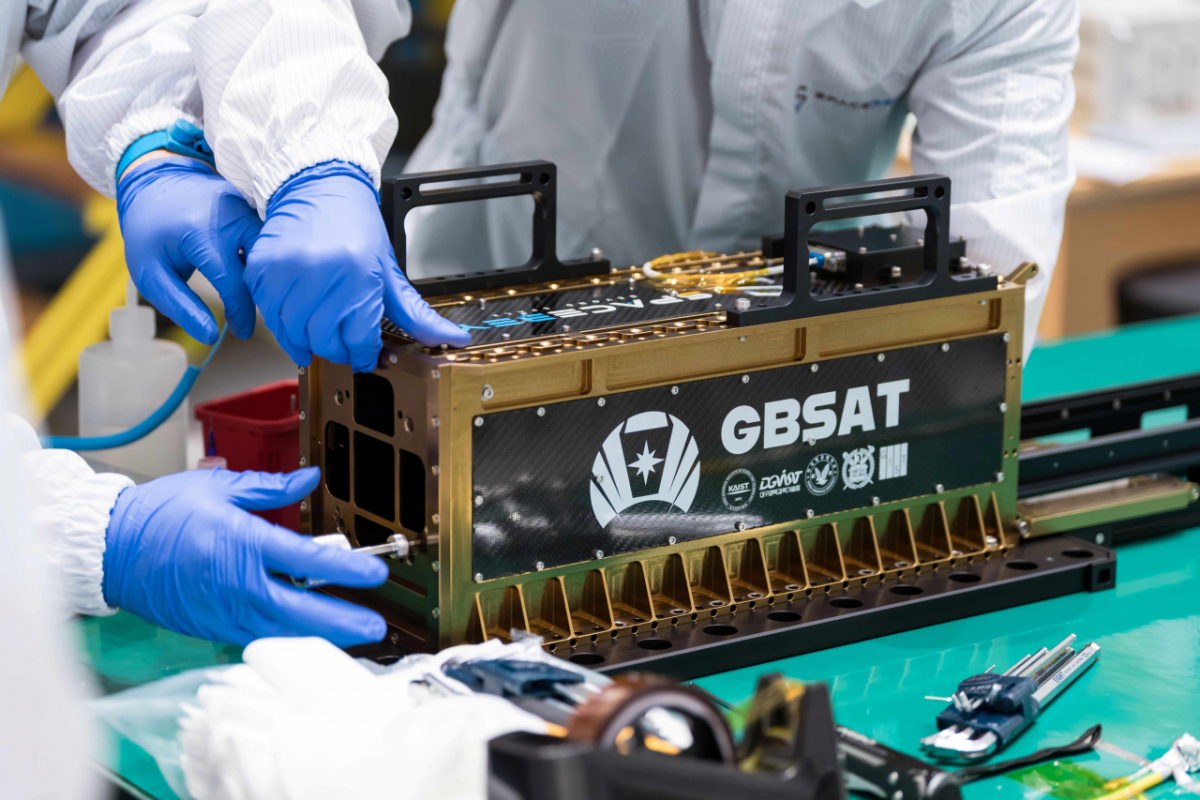
The fifth Nuri rocket, scheduled for launch on October 7, will carry a CubeSat developed by seven university students. It is GBSAT from KAIST. Although it is a small satellite measuring 10 cm in width and depth with a height of 34.05 cm and weighing 3.27 kg, its mission is monumental. After being launched aboard Nuri and settling into low Earth orbit, it will measure the incident density of 'high-energy protons' present in Earth's magnetic field. The goal is to collect actual measurement data on space radiation through this process.
The story of GBSAT can be summarized in one sentence: 'Seven undergraduates, five universities, five years, one satellite.' Seven students who gathered during high school due to a shared interest in artificial satellites reunited after entering university to form the project. Yoon Hyo-sang, KAIST Aerospace Engineering professor, personally supervised their dream of launching a satellite. Development began in May 2022 when they were freshmen, and by December of that year, they were selected as the final winner of the Korea Aerospace Research Institute's 'CubeSat Competition,' earning the opportunity to ride on Nuri.
Ahead of the fifth Nuri launch, during a recent press conference on Nuri payloads held in Seoul, Lee Jae-min, a student researcher from the GBSAT team, stated that many team members dream of pursuing graduate studies or starting businesses in the aerospace field and expressed his ambition to grow into an excellent engineer. He also added, "I hope more support is provided for aerospace development and talent cultivation in our country."
From independently developed 'satellite deployment tubes' to 'onboard AI' and even space medicine satellites
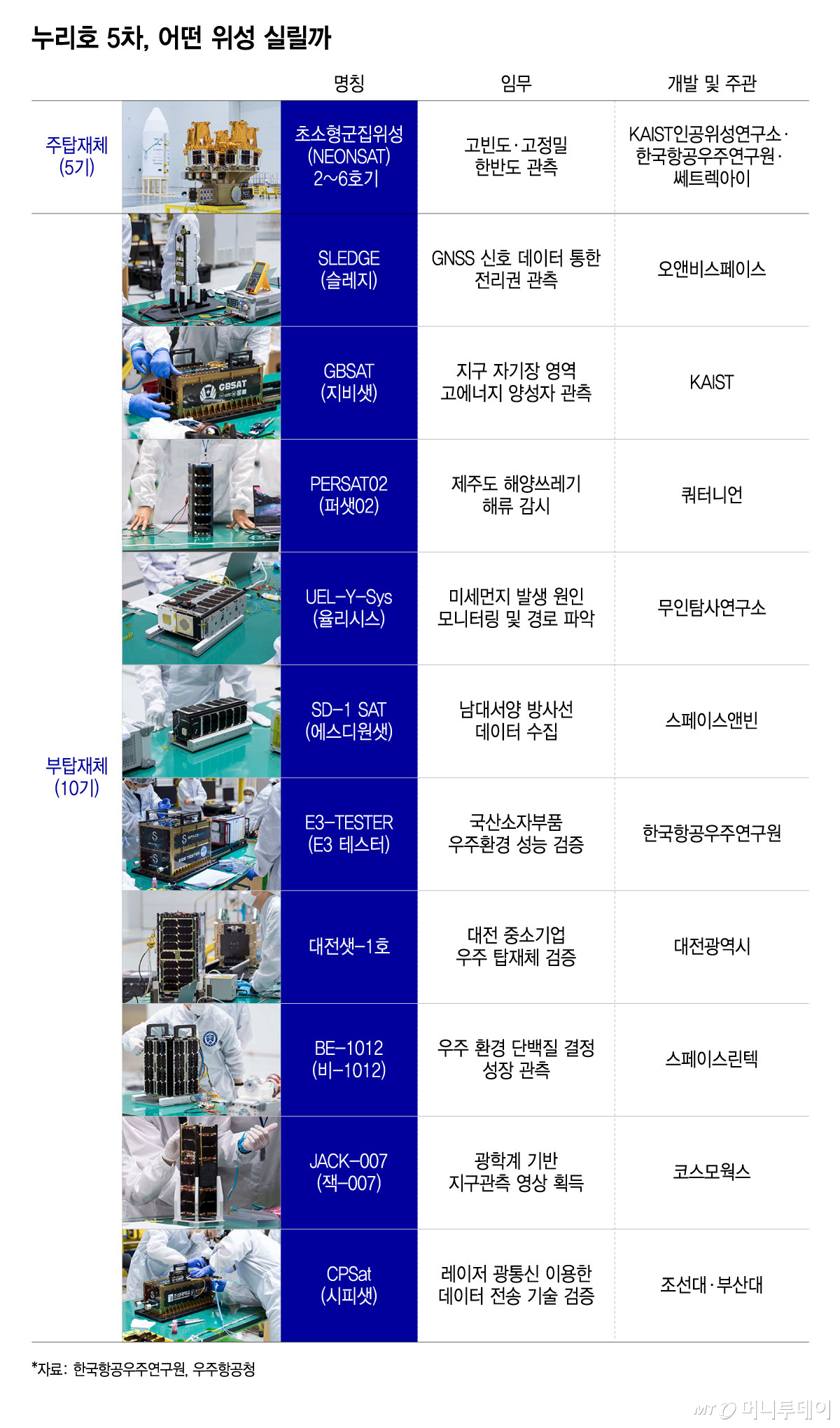
In addition to GBSAT, a total of 10 CubeSats will be carried on this fifth Nuri mission. All are satellites developed independently by domestic industry, academia, and research institutions. 'DaejeonSat-1', from Daejeon Metropolitan City, is an observation satellite created by local aerospace startups in the Daejeon area pooling their technical expertise under the city's leadership. The 'Vibration-Reduced 16U Satellite Deployment Tube' will also be tested during this launch. It is a launch device that stores 16 CubeSats (1U each) and pushes them out at the target orbit. Its key feature is reducing impact by more than one-tenth during satellite deployment. Park Tae-yong, head of StepLab's Aerospace System Development Division, said, "This is a technology independently developed in Korea for the first time," adding, "Once verified through the Nuri launch, it will become a core technology that can be utilized as materials, components, and equipment (so-bu-jang) in the aerospace field."
Meanwhile, space medicine startup Space LinTech is sending its space medicine experiment satellite 'BEE-1012' on the fifth launch, following its participation in the fourth Nuri mission. It will observe the growth rate of protein crystals in a 'microgravity' environment where gravity is nearly absent. The most significant difference from the previous version, 'BEE-1000', is the inclusion of 'onboard AI' based on an NPU (Neural Processing Unit). Yoon Hak-soon, director of SpacLee Seu-rin-tek (CEO), explained, "AI edge computing determines whether protein crystals are generated and their growth stages in orbit, then transmits these judgment results back to Earth. Since only core data is selected, efficient transmission is possible." The onboard AI was developed independently by KAI (Korea Aerospace Industries).
In addition, the fifth Nuri will carry: △'UEL-Y-Sys', a fine dust monitoring satellite (Unmanned Exploration Research Institute); △'SLEDGE', an Earth atmosphere institutional investor observation satellite (O&V Space); △'SD-1 SAT', a South Atlantic radiation data collection satellite (Space & Bin); △'PERSAT-02', a Jeju Island marine debris and ocean current monitoring satellite (Quaternion); △JACK-007, an ultra-small Earth observation satellite (CosmoWorks); △'CPSat', a laser-based communication satellite (Chosun University); and △'E3-Tester', a verification satellite for domestic semiconductor devices and components (KARI).
According to the Korea Aerospace Administration, all 10 CubeSats, including the primary payloads—the ultra-small constellation satellites No. 2 through No. 6—are currently mounted on Nuri-5 and awaiting launch. The launch is scheduled between 12:23 p.m. and 1:23 p.m. on October 7.

 in TECH


