

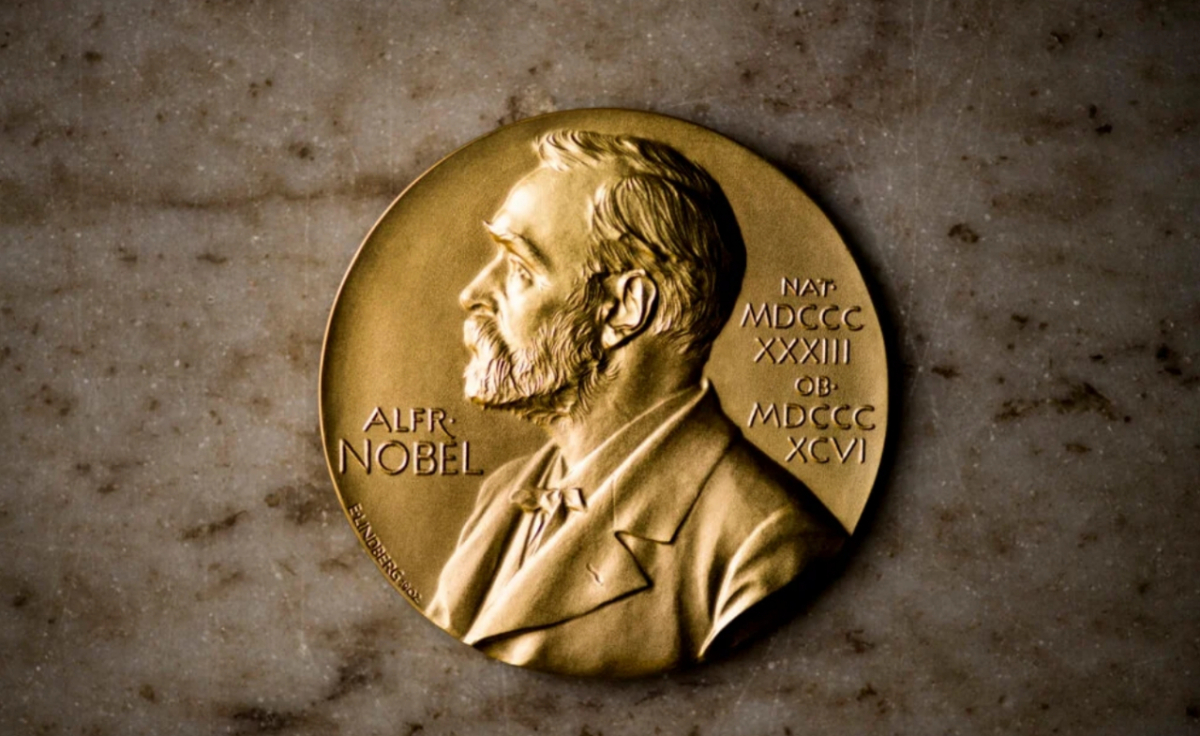
The world's most prestigious Noh Bel-sang (수상) awards will be announced in succession starting next week. Will a Korean name appear on this year's list of Nobel science laureates?
The Nobel Committee of the Royal Swedish Academy of Sciences will announce the Nobel science prize winners, beginning with Physiology or Medicine on the 5th (local time), followed by Physics on the 6th and Chemistry on the 7th.
Predicting the results is not easy, as the Nobel Committee applies strict security protocols to prevent information leaks. In fact, the names of all recommended candidates, discussions among committee members, and voting records are kept strictly confidential for half a century under the "50-year secrecy rule."
Nevertheless, the hit rate of global academic information company Clarivate is considered quite high. Based on citation indices from its large-scale academic database, Web of Science, Clarivate annually identifies likely award categories and candidate researchers. A significant number of these have actually received Nobel Prizes within a few years.

The category Clarivate selected as a candidate for this year's Nobel Prize in Physiology or Medicine is GLP-1 (glucagon-like peptide-1), the foundation of "obesity drugs." GLP-1 is a hormone secreted by the intestines after food intake, which regulates blood sugar and suppresses appetite. GLP-1 treatments dramatically extend the duration of GLP-1 activity.
Nobel science prizes highly value research that begins with basic science and has a clear impact on real human life. Given the widespread commercial success of GLP-1 through major pharmaceutical companies, it emerges as a strong candidate. Candidates include Daniel Drucker, professor at the University of Toronto in Canada, who first elucidated the active principle of GLP-1; Jens Holst, professor at the University of Copenhagen in Denmark; and Svetlana Moise, professor at Rockefeller University in the United States.
Research on "optical coherence tomography" (OCT) and "key cell adhesion molecules in the immune system" is also considered Nobel-caliber work in Physiology or Medicine. OCT is a technology that uses light interference to examine microstructures within biological tissues, widely used in diagnosing various diseases. Immune cell research is evaluated as the core basic science that enabled targeted therapies for autoimmune diseases.
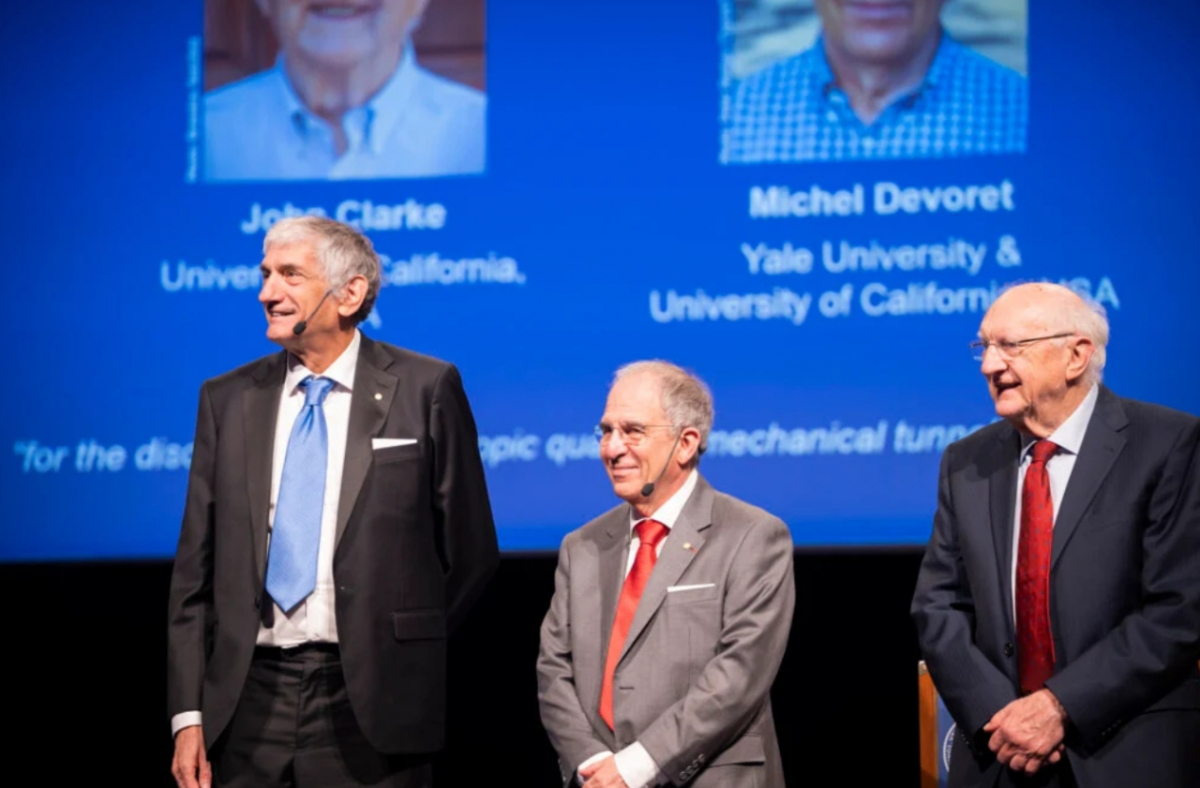
Among the candidate fields for the Nobel Prize in Physics is the underlying display technology applied to Samsung and Apple smartphones: phosphorescent organic light-emitting diodes (PHOLED) and thermally activated delayed fluorescence (TADF). This research is evaluated as having significantly reduced energy loss when converting electrical energy into light, boosting luminous efficiency up to 100%. If this field is selected, scientists from Japan and the United States are expected to sweep the awards. Leading candidates include Chihiro Adachi, professor at Kyushu University in Japan; Stephen Forrest, professor at the University of Michigan in the United States; and Matt Thompson, professor at USC (University of Southern California) in the United States.
Research on "magnetoelectric multiferroics," a new semiconductor material, has also been named as a candidate. Magnetoelectric multiferroics are materials that possess both magnetic properties (properties of magnets) and electrical properties (properties of electricity), with these two properties actively interacting. When applied to semiconductors, this allows for the bidirectional utilization of magnetism and voltage within chips, thereby maximizing power efficiency. Nicola Spaldin, a leading authority in this field and professor at ETH Zurich (Swiss Federal Institute of Technology Zurich), is a candidate.
Following last year, quantum computing-related fields have also been nominated. This refers to the "quantum anomalous Hall effect," where electric current flows due to a material's intrinsic magnetism and spin-orbit coupling in the absence of an external magnetic field. The researcher who first experimentally proved this is Qian Xie, professor at Tsinghua University in China.
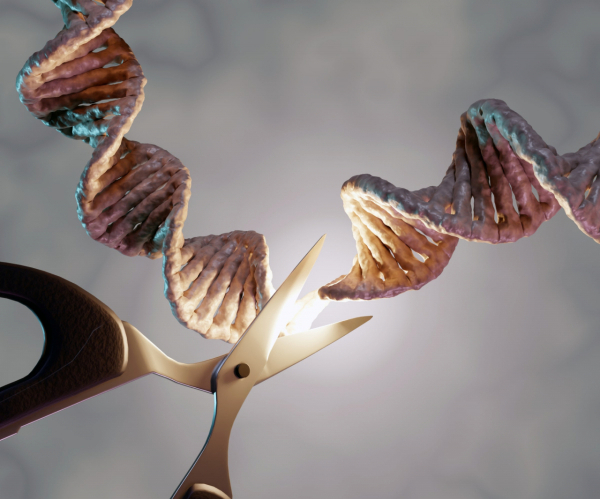
Three leading fields were also selected for the Nobel Prize in Chemistry: △ self-assembly phenomena, △ long-range electron transfer mechanisms within proteins, and △ precision gene editing technology.
"Self-assembly" refers to the phenomenon where organic molecules adhere to the surface of substrates such as semiconductors or glass, forming a flat film of single-molecule thickness with highly aligned structures. It is considered core research that has driven growth in nanotechnology and surface chemistry. This field was led by David Allara at the University of Pennsylvania in the United States, Ralph Nuzzo, professor at the University of Illinois Urbana-Champaign campus in the United States, and Yakov Sagiv, researcher at the Weizmann Institute of Science in Israel.
Additionally, Harry Gray, professor at Caltech (California Institute of Technology) in the United States, who first elucidated the principle of electrons moving across large proteins through his own modeling, and Jay Winkler, also a professor at Caltech, are candidates.
Precision gene editing technology, a core of advanced biotechnology, has also been nominated. If the 2020 Nobel Prize in Chemistry went to scientists who discovered the gene scissors "CRISPR-Cas9," this year's candidate is a technology that goes one step further than the original, correcting genes with greater precision at the single-base level. The authority in this field is David Liu at Harvard University in the United States.
No Korean scientists appear among the 2026 Nobel science prize candidates identified by Clarivate. However, predictions from Korea's science and technology community suggest that a Korean Nobel science laureate is not far off.
The most promising field is perovskite solar cells. Solar cells are materials that convert sunlight into electricity. While silicon-based solar cells have been commercialized, the new material perovskite has emerged as a way to overcome the limitations of silicon. In particular, intensive recent research has brought silicon-perovskite tandem cells close to Yangsan levels, according to evaluations.
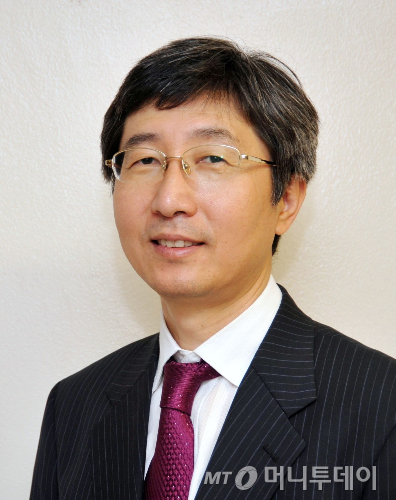
If the perovskite solar cell field is selected as a candidate, Park Nam-gyu, professor at Sungkyunkwan University who developed the world's first solid-state perovskite solar cell in 2012, becomes a strong contender for the award. Tsutomu Miyasaka, professor at Toin University of Yokohama in Japan, and Henry Snaith, professor at the University of Oxford in the United Kingdom, are also predicted to be co-laureates.

 in TECH


