

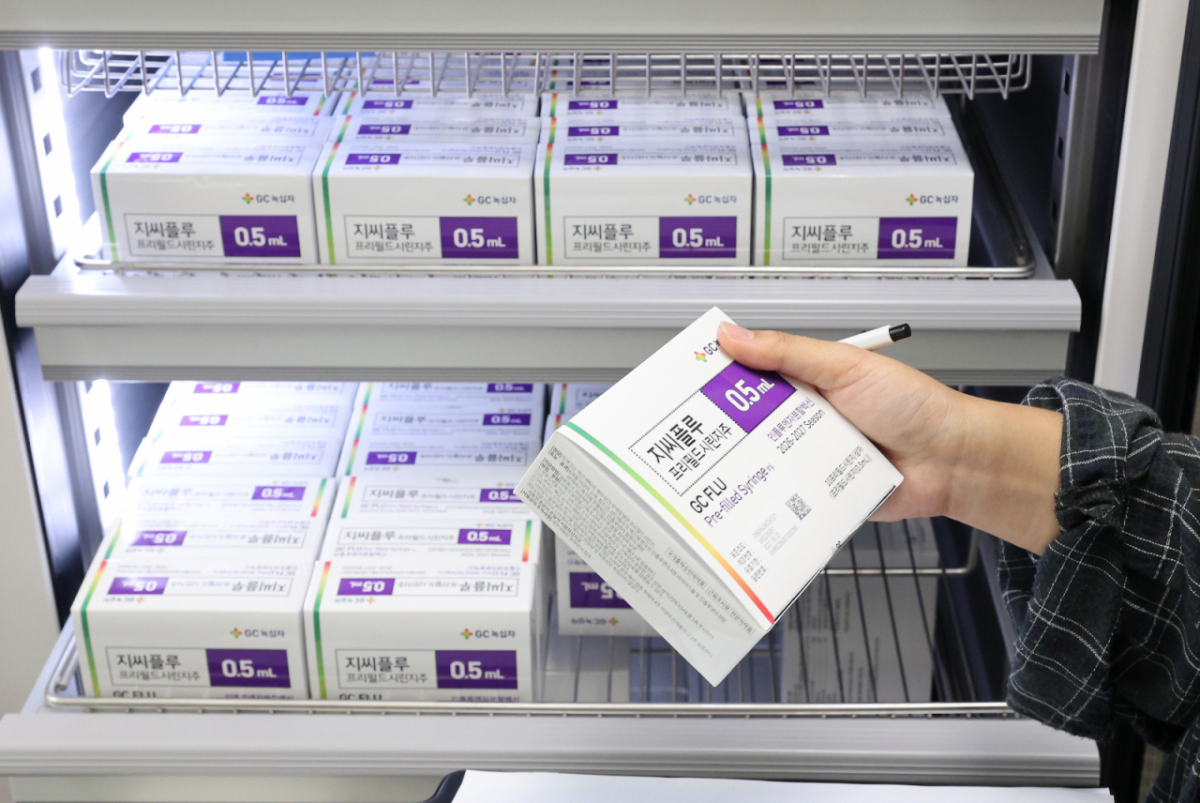
The National Immunization Program (NIP) for high-risk groups began on the 21st. Amid concerns over supply and demand due to an overall decrease in vaccine supply, voices from the field indicate difficulties in securing initial quantities for private sector vaccinations. The disease control authorities expect that more than 90% of this year’s total flu vaccine production, including paid doses scheduled for additional manufacturing, will be shipped by early October at the latest.
According to KDCA, the NIP for the 2026–2027 influenza (seasonal flu) season began on the day for children aged 6 months to 14 years and pregnant women. The initial start date for vaccinations for children eligible for a single dose was scheduled for the 28th, but the schedule was adjusted due to an early flu outbreak. Vaccinations for seniors aged 65 and older (born before December 31, 1961) have been moved up by 3 to 6 days from the original schedule, with dates set as follows: October 6 for those aged 75 and older, October 12 for those aged 70 to 74, and October 15 for those aged 65 to 69.
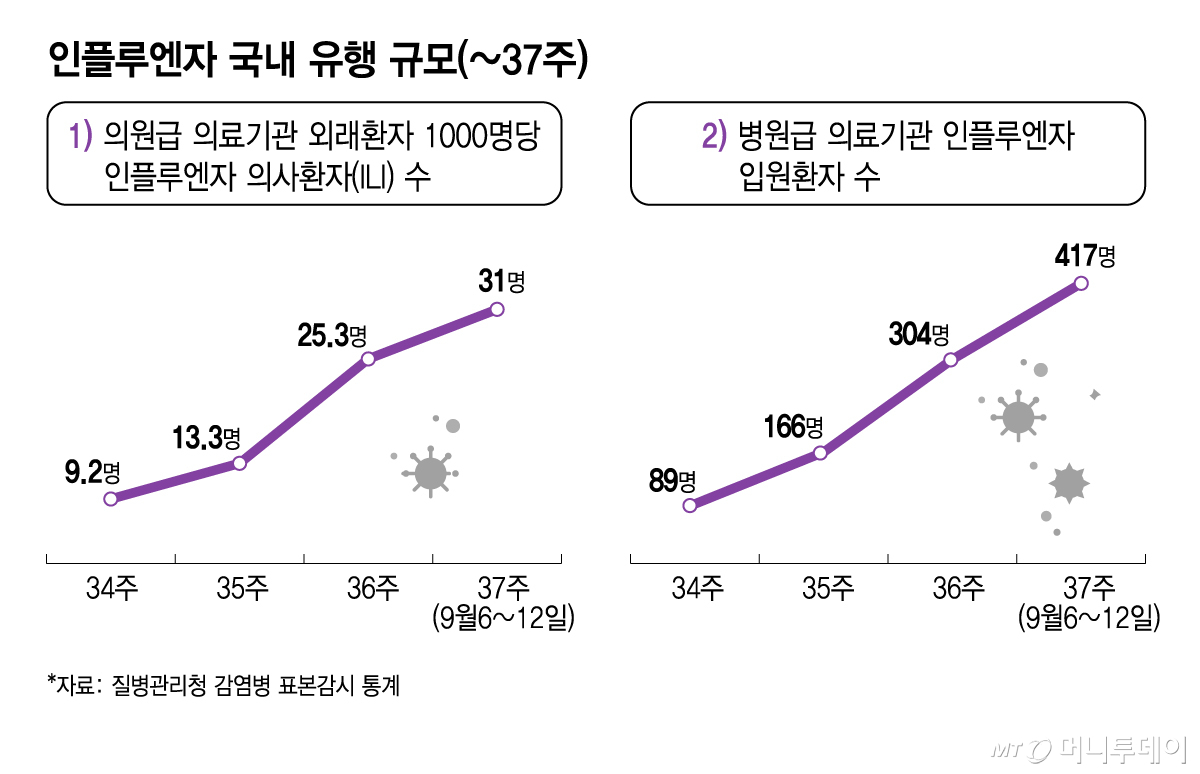
The number of influenza patients has increased for four consecutive weeks. In particular, the rate of suspected cases (patients with suspected infection) surged by more than 90%, from 13.3 per 1,000 people to 25.3 per 1,000 people, between late August and early September (weeks 35–36). The rate of suspected cases in week 37 (the 6th–12) was 31 per 1,000 people, a 22.5% increase compared to Jeonju. This is 4.6 times the level during the same period last year (6.7 per 1,000).
However, concerns persist in the medical field regarding the vaccine supply situation. Although the influenza outbreak arrived earlier than usual, overall vaccine production has decreased. For this influenza vaccine, production yields dropped during the new strain cultivation and process optimization stages, resulting in a decrease of approximately 4 million doses (a dose is one vaccination unit) in total domestic production and imports compared to the previous season.
The Disease Control and Prevention Agency (KDCA) has secured this year’s NIP quantities and reports that there will be no issues with vaccinations for high-risk groups such as children, pregnant women, and seniors. Previously, anticipating delays in the initial supply of Sanofi vaccines, the government replaced 500,000 doses of NIP procurement with domestic GC Green Cross products. It was explained that the government’s NIP quantity of 12.33 million doses remained unchanged. The 500,000 doses Sanofi had planned to deliver to the government are intended for private sector vaccinations.
Lee Hye-rim, Section Chief of the Immunization Management Division at KDCA, stated in a regular back-briefing for accredited reporters on the day, “We have completed 100% of the supply of government procurement quantities related to NIP for children.” She added, “For NIP vaccines supplied through direct purchase and cost reimbursement by pediatric clinics, we prioritized deploying 200,000 doses from the government’s reserve stock to ensure no disruption to the vaccination schedule.” The agency also stated its intention to complete 100% supply of vaccine quantities before the start date for senior vaccinations.
On the other hand, the government acknowledges that the supply of private sector vaccines administered on a paid basis, outside the NIP, is unstable. According to KDCA, this year’s total influenza vaccine supply, including private sector vaccinations, has only secured a surplus of about 10% compared to last year’s total number of recipients. Lee stated, “Pharmaceutical companies’ (vaccine) raw materials have been depleted, and supply shortages are occurring overseas as well,” adding, “There are physical limits to supplying the quantities desired in the field, but we will strive to increase the total supply quantity.”
KDCA plans to secure an additional 370,000 doses for private sector vaccinations through negotiations with vaccine manufacturers and importers. As supply is expected to be completed by early October, government analysis suggests that the supply situation will stabilize within the next two weeks at the latest. The agency explained that Sanofi’s private sector vaccine quantity (500,000 doses) may also become available domestically earlier than anticipated, limiting its impact on private sector supply.
Lee Seung-mok, Section Chief of the Vaccine Supply Division at KDCA, stated, “More than 90% of this year’s total vaccine production is scheduled to be shipped by the end of this month and early October.” He added, “This quantity includes the additionally secured portion (370,000 doses), and we expect supply in private sector fields to stabilize as well.”

 in THEBIO

