

Analysts say that robotic surgery has completed its market validation and effectiveness verification, entering a phase of full-scale expansion. Amid fierce competition, domestic robotic surgery companies are leveraging their respective strengths to expand their business scope beyond Korea to the global stage.
According to industry sources on the 27th, robotic surgery is a method in which a camera and articulated surgical instruments are inserted through small incisions, allowing for precise surgery while confirming the surgical site with an enlarged field of view. Due to smaller incision ranges and lower risks of postoperative complications such as pain, its clinical application fields are expanding.
Robotic surgery is evaluated as imposing less burden on patients compared to conventional laparoscopic and open surgeries. In early this month, a meta-analysis study was published in the international academic journal "Annals of Surgery Open." The study compared the outcomes of surgeries performed using the "Da Vinci" robotic surgical system with those of laparoscopic and open surgeries, based on 366 studies published in 32 countries worldwide between 2010 and 2024 and data from approximately 13.9 million patients.
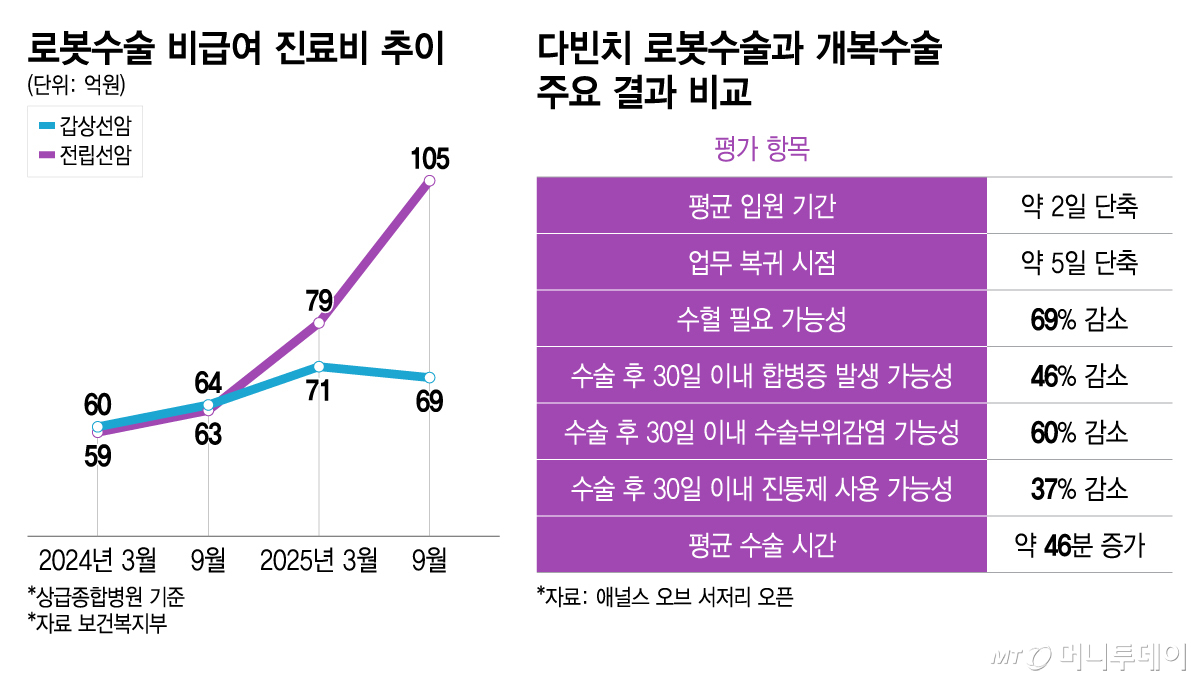
According to the study, compared to laparoscopic surgery, robotic surgery shortened the average hospital stay by about four hours and the time to return to work by about two days. The difference was even greater when compared to open surgery. The average hospital stay was shortened by about two days, and the time to return to work by about five days. Additionally, the likelihood of blood transfusion (69% reduction), complications within 30 days (46% reduction), and infection (60% reduction) all decreased significantly.
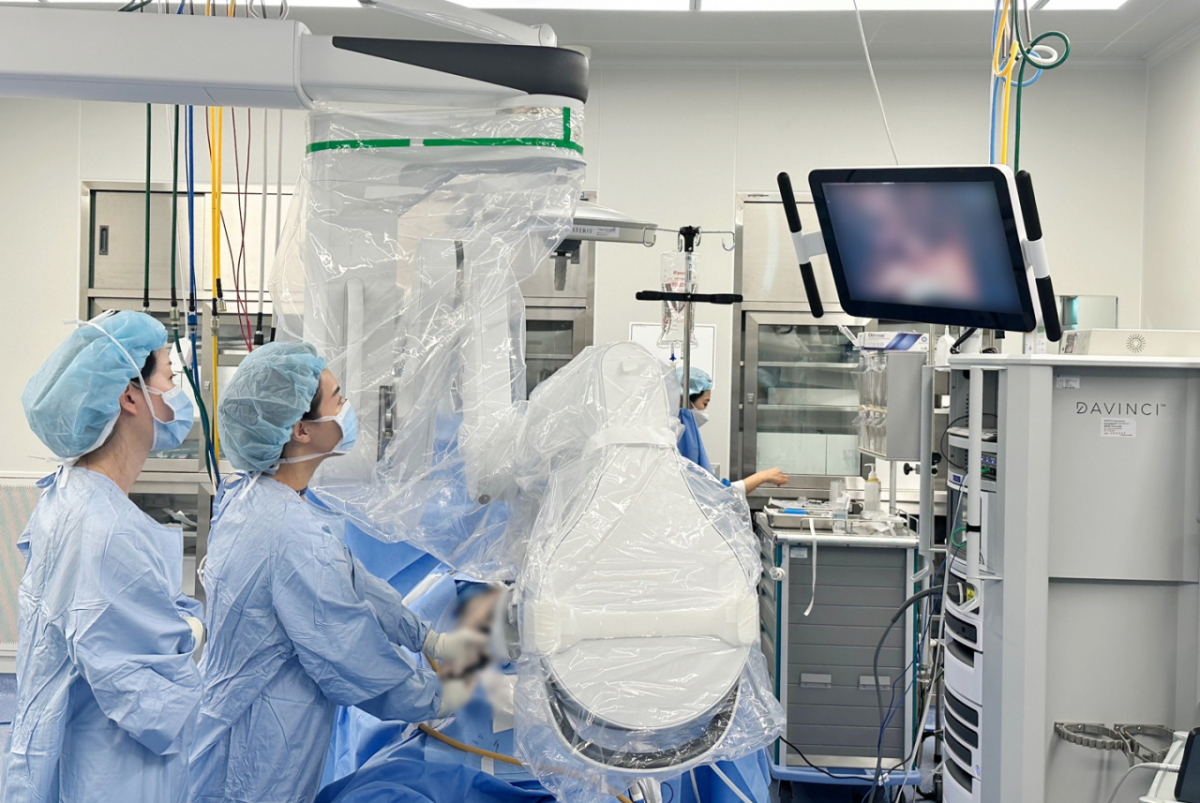
Robotic surgery is welcomed not only by patients but also by medical professionals. Because it is a system where the surgeon operates the robot arms from a console (control station), doctors experience less fatigue and can maintain concentration during surgery. Robotic surgery is a non-covered item that does not qualify for national health insurance, which also benefits hospital management. According to the Ministry of Health and Welfare, non-covered medical fees for robotic surgery for thyroid cancer and prostate cancer at domestic tertiary general hospitals increased from 6 billion won in March 2024 to 6.4 billion won in September, and from 5.9 billion won to 6.3 billion won. The upward trend continued in March and September 2025 as well, rising to 7.1 billion won and 6.9 billion won, respectively, and from 7.9 billion won to 10.5 billion won.
The global robotic surgery market is led by the United States, represented by Da Vinci, and China, which has deployed similar systems such as "Toumai." Despite being latecomers, domestic companies are accumulating concrete results in both domestic and international markets by leveraging their technological capabilities and price competitiveness. Mirae Company, which is expanding its overseas launch countries to include Mongolia and Paraguay, achieved approximately 3.4 billion won in sales for the first half of this year with its laparoscopic surgical robot "LevoEye." This represents an increase of more than three times compared to the same period last year (approximately 1 billion won).
Qureos, which holds robotic systems for artificial joints (CUBE-Joint) and spinal surgery (CUBE-Spine), is also focusing on overseas business centered on India in addition to the domestic market. Sales from its medical robotics business in the first half of this year were approximately 18.3 billion won, a 12% increase from approximately 16.4 billion won in the same period last year, successfully turning a profit.
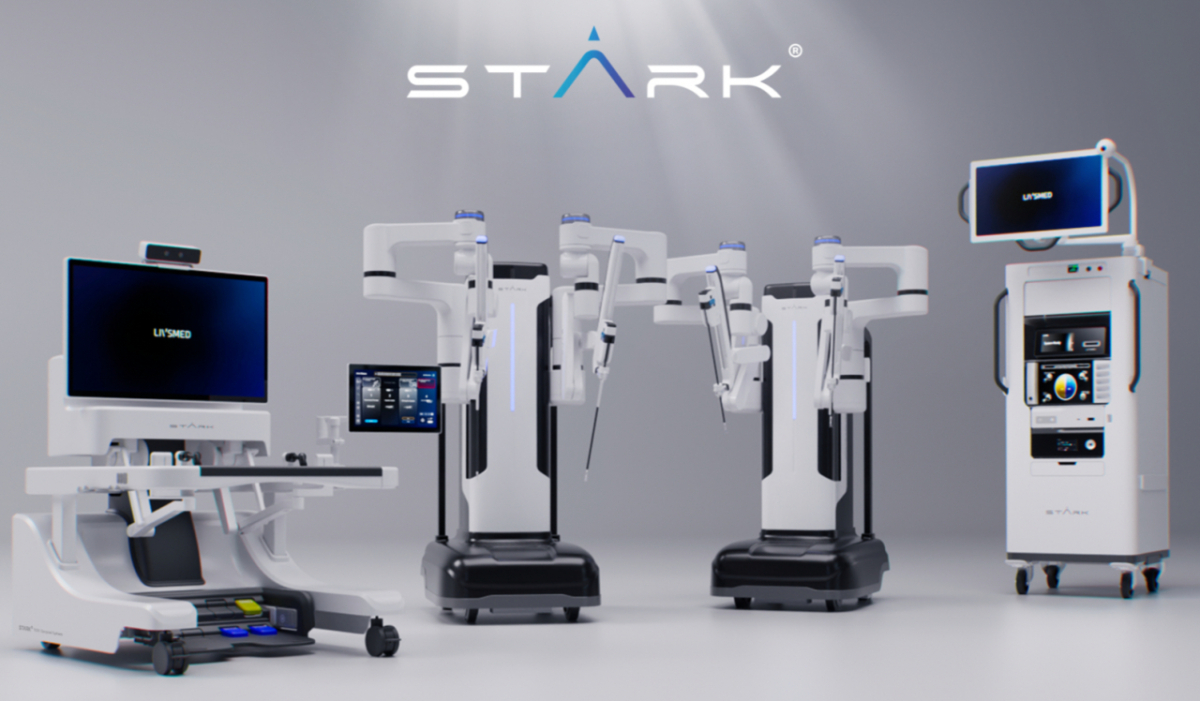
Loen Surgical (for kidney stones, "Jamenix") and LN Robotics (for coronary arteries, "Avia") have entered the global market with surgical robots integrated with artificial intelligence (AI). In particular, Livsmed is drawing industry attention after successfully developing its next-generation laparoscopic surgical robot "Stark," which incorporates the technology of its multi-articulated laparoscopic instrument "Artisential." A key feature is that it has built technological barriers through patents on core technologies and was developed to be compatible with its own products, such as the vascular suturing device "Artiseal," the surgical stapler "Artistapler," and the laparoscopic camera system "Livscam."
A Livsmed official stated, "As the robotic surgery market is growing rapidly, we plan to enter early to secure market dominance and competitiveness." The official added, "Since it is made with purely domestic technology, there are fewer usage restrictions, and our technological capabilities have been recognized through successful remote surgeries on animals. Therefore, once we obtain domestic approval, we will accelerate our efforts to capture the global market."

 in THEBIO


