

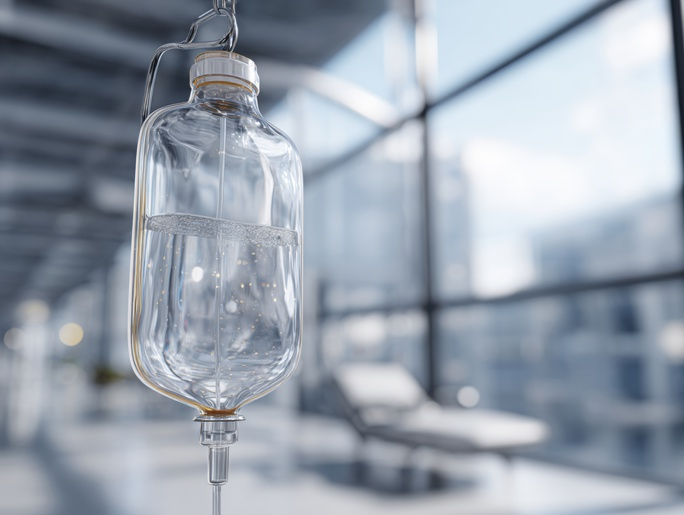
Amid allegations that a major domestic automotive battery factory has been forcibly administering chelation injections to workers for the purpose of heavy metal excretion, serious side effects have emerged among employees who received the injections, raising expectations of significant repercussions.
According to an earlier report by MBC on the 11th, it was confirmed that at DN Automotive's Ulsan plant in Ulsan, workers were periodically administered heavy metal-excretion injections under the guise of "vitamin" shots, despite the risk of side effects. Although the company denies this, workers reportedly believed they were receiving "vitamin injections that make you feel refreshed."
The identity of these injections was revealed to be "chelation" injections, which forcibly excrete heavy metals from the blood through urine. What exactly is a chelation injection, and what risks does it carry?
On the 12th, Lee Yu-jeong (Prof.), a family medicine specialist at Daegu Goeun Hospital, explained in a phone interview with Money Today that "chelation derives from 'chele,' the Greek word for the pincers of crabs and lobsters." He added, "The principle of chelation therapy is to extract harmful substances from the body, such as heavy metals, much like how crabs and lobsters grasp things with their pincers, and expel them outside the body."
Chelation therapy is conducted via injection (intravenous fluid) or oral administration, depending on the type of heavy metal causing the poisoning. All medications used for this purpose are "prescription-only drugs" that require a doctor's diagnosis and prescription.
For lead poisoning, the method involves taking an oral medication containing the ingredient "succimer." For arsenic poisoning, an injection of "dimercaprol" is administered, or "succimer" is taken orally. For iron or aluminum poisoning, an injection containing the ingredient "deferoxamine mesylate" is primarily administered.
What is important here is that the criteria for chelation therapy are extremely strict. Professor Lee stated, "Even if a blood test shows high lead levels, we comprehensively assess factors such as the person's age, how high their blood lead concentration is, whether they have symptoms of lead poisoning, their exact age, (if female) whether they are pregnant, and their kidney function, before determining whether to proceed with chelation therapy and the dosage." He noted, "This treatment is primarily performed at university hospitals; in our hospital, it is so rare that we see only one case every five years."
Symptoms of heavy metal poisoning range from mild conditions such as abdominal pain, constipation, headaches, and fatigue to representative neurological symptoms characterized by declining consciousness. If these symptoms are absent, a patient is excluded from chelation therapy regardless of how high their heavy metal levels are.
The stringent criteria for chelation therapy exist because serious side effects may follow. In the aforementioned report, one employee who claimed to have been forcibly administered chelation injections testified, "My blood pressure soared to 180 mmHg, and my vision suddenly appeared as two separate images."
![[Seoul=NEWSIS] Reporter Kim Jin-a = Senior Spokesperson Kang Yu-jung, during a briefing at the Cheong Wa Dae Chun Chuwan Hall on the 12th, announced that President Lee Jae-myung stated that allegations of habitual administration of injections to forcibly excrete heavy metals at an automotive battery manufacturing plant constitute "a serious human rights violation" and ordered a strict response. October 12, 2026. bluesoda@newsis.com /Photo=Kim Jin-a](https://thumb.mt.co.kr/cdn-cgi/image/f=avif/21/2026/10/2026101216253789079_1.jpg)
In fact, when chelation therapy is conducted using deferoxamine mesylate for patients with iron poisoning, it is explicitly stated that "visual impairment may occur even after a single dose." Additionally, the risks of flushing, hives, hypotension, shock, and visual or auditory impairment increase. Cases have also been reported where "acute respiratory distress syndrome (ARDS)" occurred in patients with iron poisoning or thalassemia when this drug was administered at high doses intravenously.
In addition to these, a representative side effect of chelation therapy is "kidney damage." In the United States, preventive administration of chelation has been legally prohibited due to the risk of side effects such as kidney damage. This means it should only be administered in appropriate doses to patients who are actual treatment candidates.
Professor Lee emphasized, "WHO guidelines also recommend that if there are no symptoms of heavy metal poisoning, one should not unconditionally start chelation therapy, but rather reduce exposure to heavy metals first and monitor the progression." He added, "Just because someone is diagnosed with heavy metal poisoning does not mean they automatically qualify for chelation therapy."
The report suggested that the company attempted to lower lead levels to avoid becoming subject to government management and supervision. One employee also testified that they received instructions from the company stating, "Your lead level is too high, so go home and rest for two weeks without pay. Do not come in. If you rest, the level will drop. Get a chelation injection while you are resting and then come back."
In response to this, Professor Lee pointed out, "Lowering blood heavy metal levels is a therapeutic goal for patients who require heavy metal treatment. However, if someone receives it simply knowing it as a 'vitamin injection' to avoid abnormal heavy metal levels during a health checkup, it cannot be avoided that ethical issues arise."

 in THEBIO

