

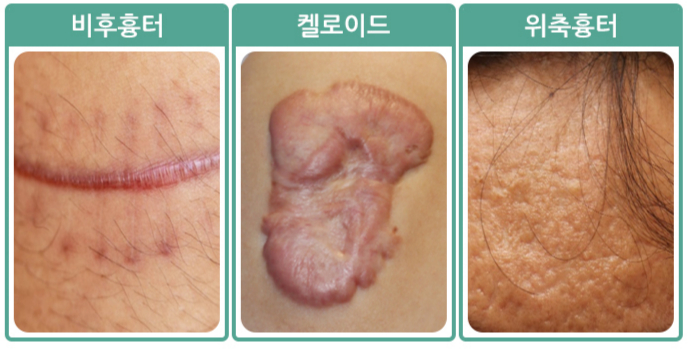
There are lesions that swell up like red bean or soybean seeds, accompanied by redness, itching, and pain during the healing process of skin wounds or inflammation. These are known as “keloid scars.”
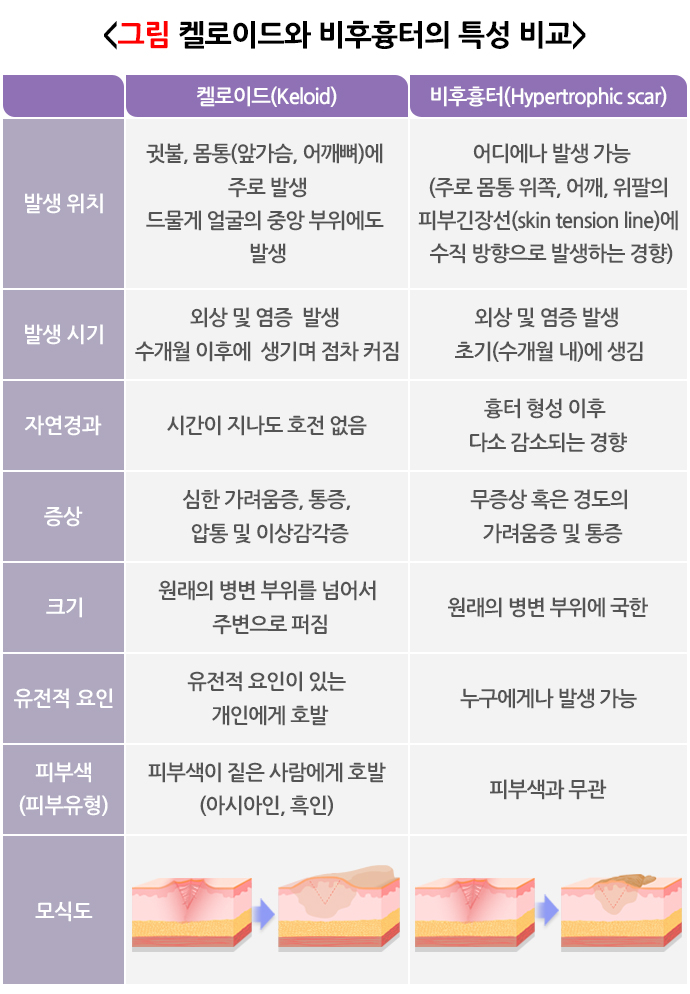
Common raised scars typically appear immediately after a wound or inflammation heals and mostly maintain their shape. However, keloid scars are characterized by appearing approximately three to six months after skin damage and growing larger by invading the boundary areas with the surrounding skin.
On the 12th, Kim Yeong-gu (CEO), director of Yonsei Star Dermatology Gangnam branch (former Lee (President) of the Korean Medical Laser Society), explained, “Keloid scars are prone to forming in areas close to bones and where tension and friction are frequent.”
According to a paper published in a medical journal, keloid scars most frequently occur on the upper chest (48.9%), scapula (26.9%), chin and jawline (12.1%), upper arm (4.8%), and back (2.5%). Cases have also been reported at cesarean section sites and vaccination injection marks.
Factors that increase the risk of keloid scar formation include △young age groups (ages 10 to 30) △female gender △family history △previous experience with keloids, and △pregnancy.
The direct causes leading to keloid scars are wounds resulting from inflammation, trauma, surgery, insect bites, and ear piercings. Therefore, treating wounds and inflammation is also important for preventing keloid scars.
A representative example is “acne.” The areas on the face where acne most frequently occurs are the cheeks (40.5%), chin and jawline (34%), and forehead (18%). Early treatment of jawline acne can also help prevent keloid scars.
Many acne patients believe that “keloid scars will remain after all the acne is gone.” However, this is a misconception. Keloid scars can form as acne develops, and another keloid scar may arise from an adjacent pimple. There are also cases where other pimples exist inside a keloid scar, which can be a cause of delayed keloid treatment.
Accurate diagnosis and treatment are also important when keloid scars develop alongside raised scars. Recently, laser therapy and steroid injection therapy have been primarily applied in the treatment of keloid scars.
Director Kim (CEO) stated, “There are cases where patients assumed their acne had healed because it shrank to 1 to 2 mm and casually ignored it, only for it to grow back to the size of a red bean seed and become a keloid scar.”
He added, “Recent studies show that people with keloids have the characteristic of excessively prolonged inflammatory responses to skin damage,” advising that “if acne inflammation on the chest or jawline becomes red and swollen, or is painful to touch, seeking treatment from a dermatologist can help prevent keloid scars.”

 in THEBIO

