

As influenza arrives earlier than usual, many people are rushing to get their flu shots. However, doctors emphasize that it is also a critical time to prepare strongly for pneumonia alongside the flu. Why should one be mindful of pneumonia prevention during flu season? We spoke with Prof. Choi Cheon-woong, Department of Pulmonology and Allergy, Gangdong Kyung Hee University Hospital, about the importance and effectiveness of pneumococcal vaccination.
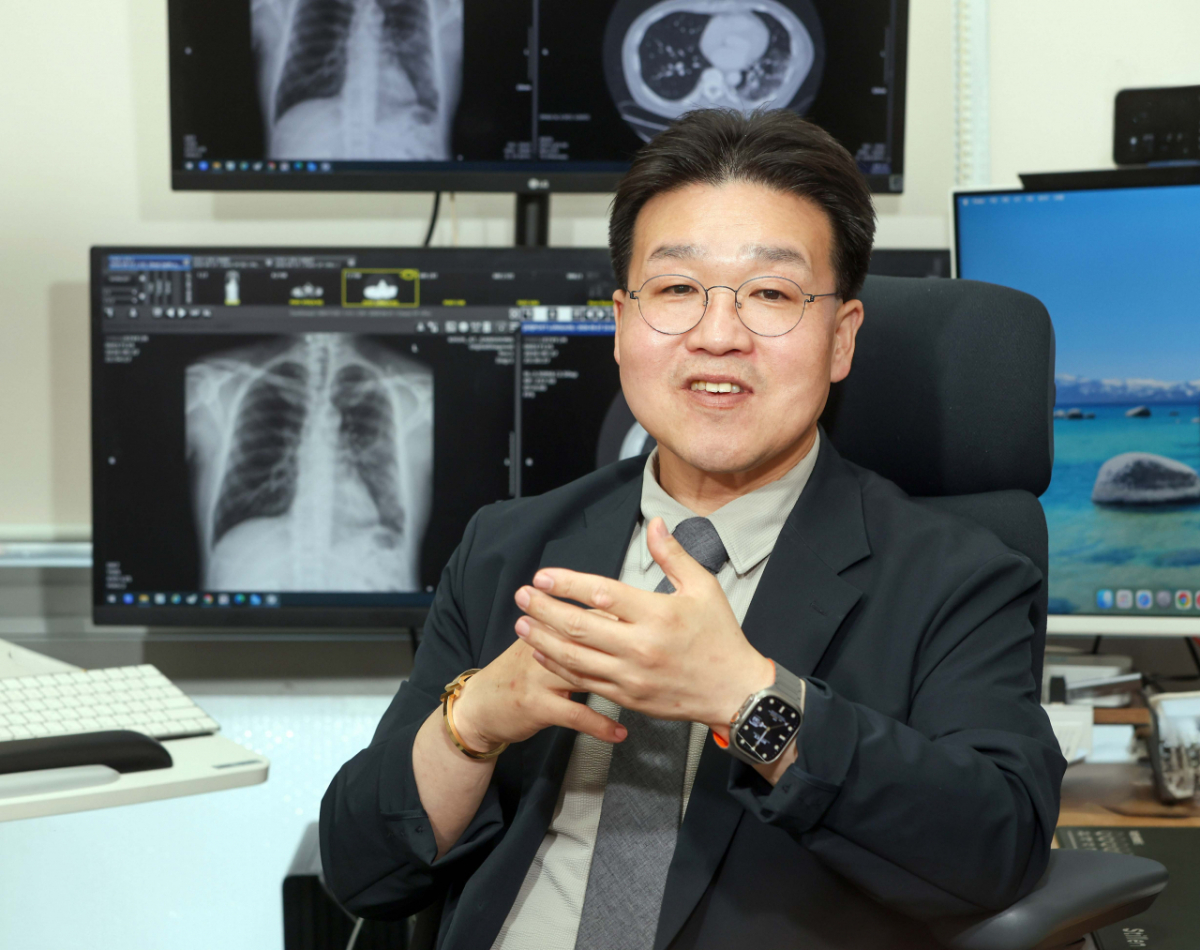
Q. What is the connection between influenza and pneumonia?
"Pneumonia can be caused by viruses or bacteria. Influenza itself can directly cause 'viral pneumonia' (simultaneous infection), but it can also lead to 'bacterial pneumonia' (secondary infection) if a person infected with the flu subsequently becomes infected with bacteria that cause pneumonia. Among these, the primary bacterial cause of bacterial pneumonia is the pneumococcus. When the influenza virus that causes the flu invades the respiratory tract, it damages epithelial cells and weakens defense functions. In such cases, if pneumococci penetrate the respiratory tract via droplets from a carrier, or if one cannot resist pneumococci already present in the nasopharynx before contracting the flu, bacterial pneumonia can be induced. It is reported that this type of pneumococcal pneumonia accounts for up to 70% of all pneumonia cases."
Q. Who is recommended to receive the pneumococcal vaccine?
"We actively recommend pneumococcal vaccination for △the elderly aged 65 and older, △those with chronic diseases, △smokers, and △infants and young children aged 2 to 59 months. Among these groups, the elderly have weakened immunity and are vulnerable to both influenza and pneumonia. Even if one is young, we recommend pneumococcal vaccination if they have chronic diseases. Among chronic conditions, chronic respiratory diseases (chronic obstructive pulmonary disease, asthma, institutional investor emphysema, etc.), chronic liver disease, chronic heart disease, diabetes, and hypertension can lower overall immune regulatory function, leading to slower recovery or worsening of respiratory diseases like pneumonia. Smokers may have weakened respiratory defense functions even if they are young and free of chronic diseases. Smoking reduces lung capacity and causes institutional investor inflammation, making one vulnerable to respiratory infections."
![[Daegu=NEWSIS] Reporter Lee Mu-yeol = An elderly person receives a vaccine at the Family Health Center of the Daegu Gyeongbuk Branch of the Population and Family Welfare Association in Seo-gu, Daegu, on the 6th, when the national influenza vaccination program for those aged 75 and older began. October 6, 2026. lmy@newsis.com /Photo=Lee Mu-yeol](https://thumb.mt.co.kr/cdn-cgi/image/f=avif/21/2026/10/2026101309044661178_2.jpg)
Q. There are various types of pneumococcal vaccines.
"When choosing a pneumococcal vaccine, one should consider both the number of serotypes (antigen-antibody reactions) included and the type of vaccine. There are approximately 100 pneumococcal serotypes, categorized as 13-valent, 20-valent, 21-valent, or 23-valent based on how many serotypes are included. Additionally, vaccines are classified into polysaccharide vaccines (PPSV) and protein-conjugate vaccines (PCV) depending on which antigens (polysaccharides, proteins, etc.) the serotypes react with. Three methods are recommended: △a single dose of PCV20 (20-valent protein-conjugate vaccine), △a single dose of PCV21 (21-valent protein-conjugate vaccine), and △sequential vaccination with PPSV23 (23-valent polysaccharide vaccine) following PCV15 (15-valent polysaccharide vaccine). Currently, the National Immunization Program supports unvaccinated individuals aged 65 and older with the 23rd-valent polysaccharide vaccine (PPSV23). However, the Korean Society for Infectious Diseases has recommended to the KDCA that PCVs be added to the National Immunization Program. This is because PCVs have a broader range of pneumonia prevention effects than existing polysaccharide vaccines and form long-term immune memory, maintaining defense for a longer period. In response, the Disease Control and Prevention Agency stated in its 2027 budget proposal that it plans to switch the nationally supported pneumococcal vaccine for the elderly to PCVs. If the related budget is passed, both PCV20 and PCV21 may be included in the National Immunization Program, but since specific support details have not yet been determined, we recommend that high-risk groups get vaccinated as soon as possible."
Q. Should existing recipients also consider additional doses?
"If you previously received the 23rd-valent polysaccharide vaccine (PPSV23), it is worth considering an additional dose of the 20th-valent protein-conjugate vaccine (PCV20). Also, even if you have received both the 13th-valent protein-conjugate vaccine (PCV13), whose supply was suspended on July 13, and the 23rd-valent polysaccharide vaccine (PPSV23), it is recommended to receive PCV20 if one year has passed. Personally, I believe that given the serotype situation in our country, the 20th-valent protein-conjugate vaccine (Prevnar 20) approved domestically in 2024 is the most suitable option. This is because sufficient usage experience and safety and efficacy data have accumulated following its predecessor, PCV13. PCV20 is a vaccine that adds seven serotypes to PCV13. On the other hand, since PCV21 is a recently released vaccine, its relatively limited usage experience may influence the choice. It is acceptable to receive both PCV20 and PCV21, but there are concerns regarding cost and some overlap in serotypes. If one intends to receive both, it is better to space them one year apart rather than administering them simultaneously; the order does not matter. Since it is difficult for recipients to directly judge differences in serotypes or between vaccines, it is best to consult with a primary care physician for the actual choice."

 in THEBIO

