

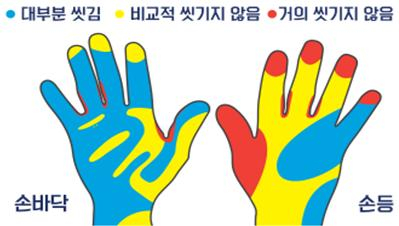
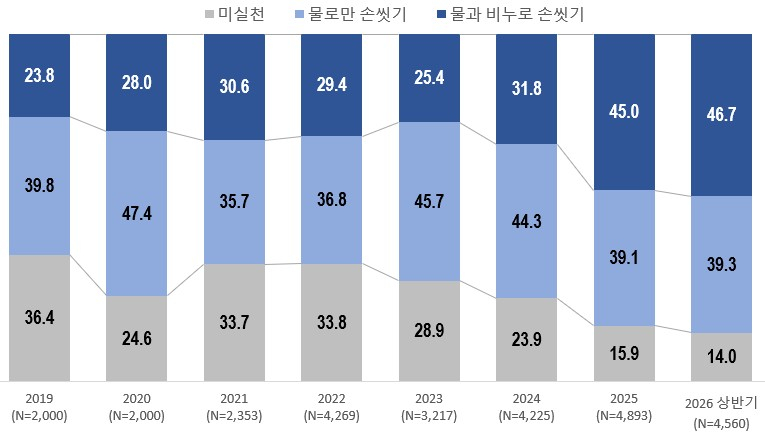
It was found that 14 out of every 100 people (14%) in Korea do not wash their hands after using a restroom. While 46 out of 100 (46.7%) use soap to wash their hands after using the restroom, only 5 out of 100 (5.3%, which is 11.4% of the 46.7%) actually practice "correct handwashing" by lathering with soap for more than 30 seconds.
On the 15th, KDCA announced the results of the "2026 First Half Infectious Disease Prevention Behavior Survey," conducted in collaboration with the National Medical Center to assess the current state of handwashing practices in daily life and reflect findings in policy improvements, on the occasion of World Handwashing Day (October 15).
The survey was conducted from May 28 to June 30 at 120 public restrooms in multi-user facilities nationwide, targeting 6,360 adults aged 19 and older (4,560 through observational surveys and 1,800 through exit surveys).
According to the survey results, the "handwashing practice rate after restroom use" was 86%, an increase of 1.9 percentage points (p) from the previous year (84.1%). Among these, 46.7% used soap to wash their hands, a 1.7%p increase from the previous year (45%). In contrast, 39.3% washed their hands with water only, and 14% did not wash their hands at all.
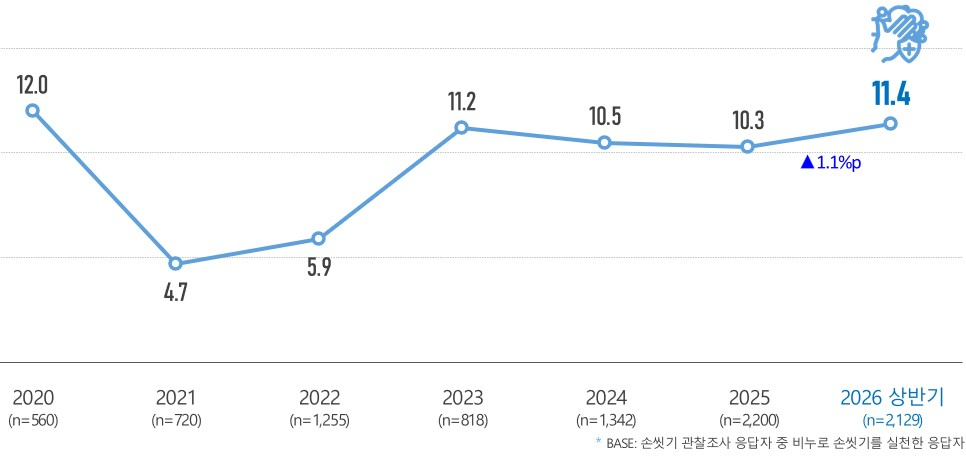
However, among those who used soap to wash their hands, the practice rate of "correct handwashing" for more than 30 seconds was 11.4%. This is an increase of 1.1%p from the previous year (10.3%). Correct handwashing is a behavioral guideline that involves rubbing all surfaces of the hands with soap under running water for at least 30 seconds.
In actual observational surveys, the average total time spent washing hands after restroom use was 13.9 seconds, and the average time spent scrubbing hands with soap lather when using soap was 5.8 seconds. This represents an increase of 1.7 seconds and 1 second, respectively, from the previous year (total time 12.2 seconds, soap scrubbing time 4.8 seconds), indicating that handwashing times have improved overall.
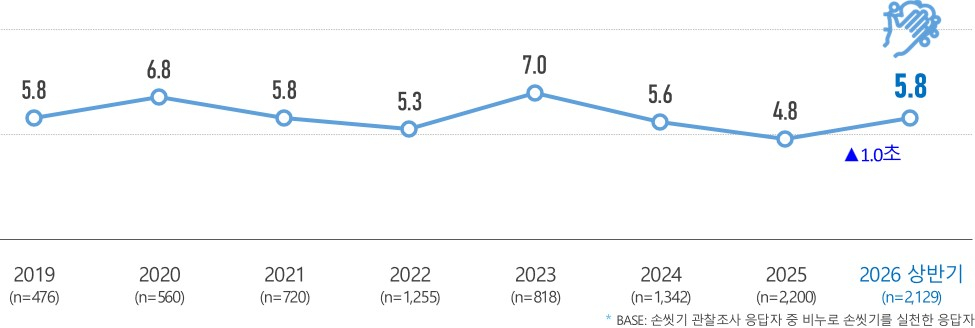
However, compared to the 30th-second standard for "correct handwashing," actual handwashing time remains at a short level, indicating that it is necessary to establish the habit of washing hands for a sufficient duration in conjunction with soap use.
In exit surveys, 51.2% responded that they "usually practice correct handwashing," but in actual observational surveys, the proportion of those who used soap and washed their hands correctly for more than 30 seconds was only 11.4%.
The KDCA explained, "These results show that awareness of correct handwashing is not sufficiently translated into actual behavior," adding, "Continuous promotion and education by local communities are needed to enable the practice of correct handwashing in daily life."
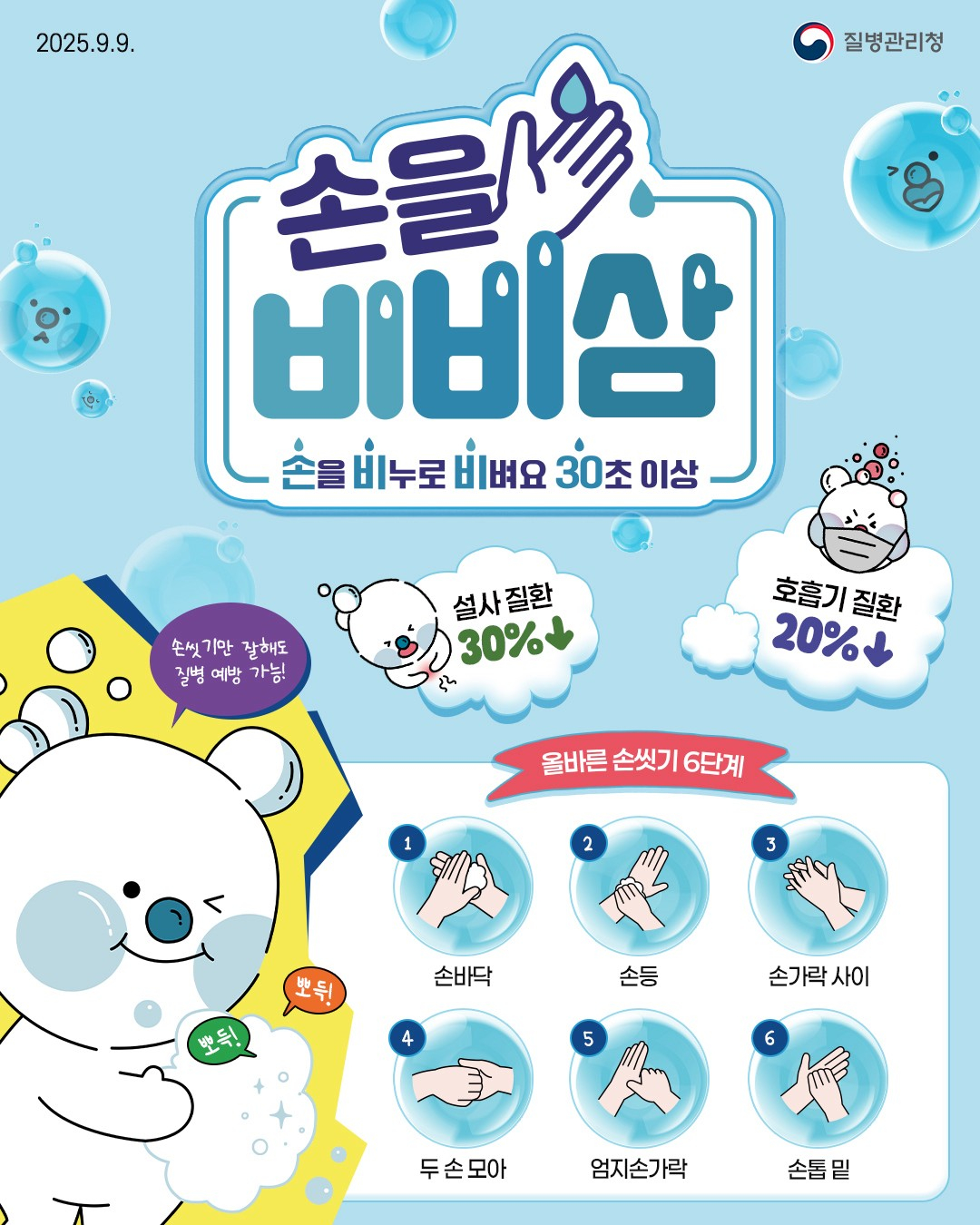
This year, KDCA is distributing public service announcement videos on correct handwashing to each local community and relevant institutional investors, while also running a citizen-participation event called the "Correct Handwashing Challenge Event (the 12-31)" via social media.
KDCA Director Im Seung-gwan stated, "Handwashing is a basic infectious disease prevention measure that anyone can easily practice in daily life without financial burden," and urged, "In particular, to prepare for the prevalence of winter respiratory infectious diseases such as influenza, please strictly adhere to personal hygiene guidelines such as handwashing and cough etiquette."
He also emphasized, "It is essential to make it a habit to wash hands correctly with water and soap for 30 seconds in daily life, before and after preparing or consuming food, and before and after going out."

 in THEBIO


