

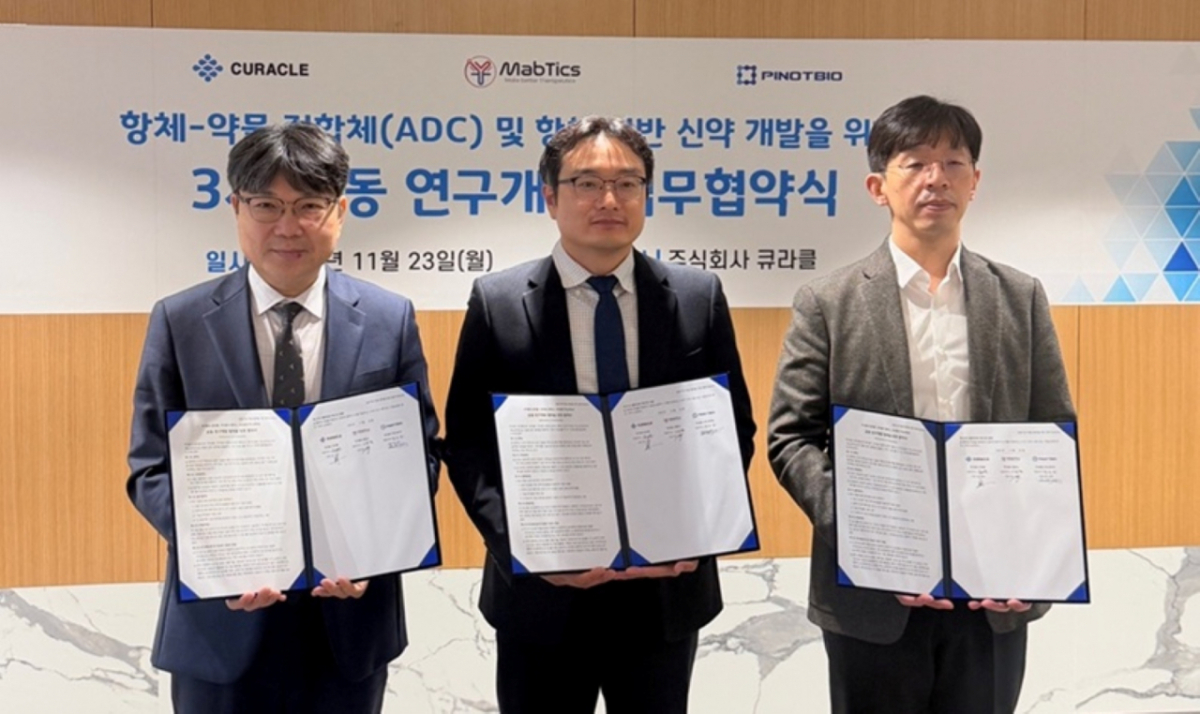
Curacle, a company developing treatments for intractable and age-related vascular diseases, said Monday it has signed a memorandum of understanding (MOU) with MapTics and Pinotbio to jointly research and develop antibody-based cancer treatments, including antibody-drug conjugates (ADCs).
The three companies agreed to establish a cooperative framework for developing next-generation cancer drugs by combining their core technologies and research and development capabilities.
Key areas of cooperation include identifying and developing new antibody- and ADC-based drug candidates and pursuing their commercialization; evaluating and utilizing each company's technologies, including antibodies, linkers and payloads; and exchanging technology, personnel and research resources. Specific development projects, scopes and timelines will be determined through further discussions.
The companies plan to first evaluate the potential application of ADC technology to antibody candidates for cancer treatment, including MT-40X, which Curacle and MapTics are jointly studying at the early research stage.
Based on existing research data, they will consider various development approaches, including monoclonal antibodies, bispecific and multispecific antibodies, and ADCs, depending on the targets and mechanisms of action. They aim to collect comparative data on anticancer efficacy and safety to identify the most promising drug candidates.
Curacle and MapTics have worked together on antibody discovery, evaluation, further development and commercialization, drawing on Curacle's expertise in developing small-molecule compounds and MapTics' antibody library and engineering technologies.
With the latest agreement, the companies will expand their existing antibody-focused collaboration into the ADC field by incorporating Pinotbio's linker and payload platform.
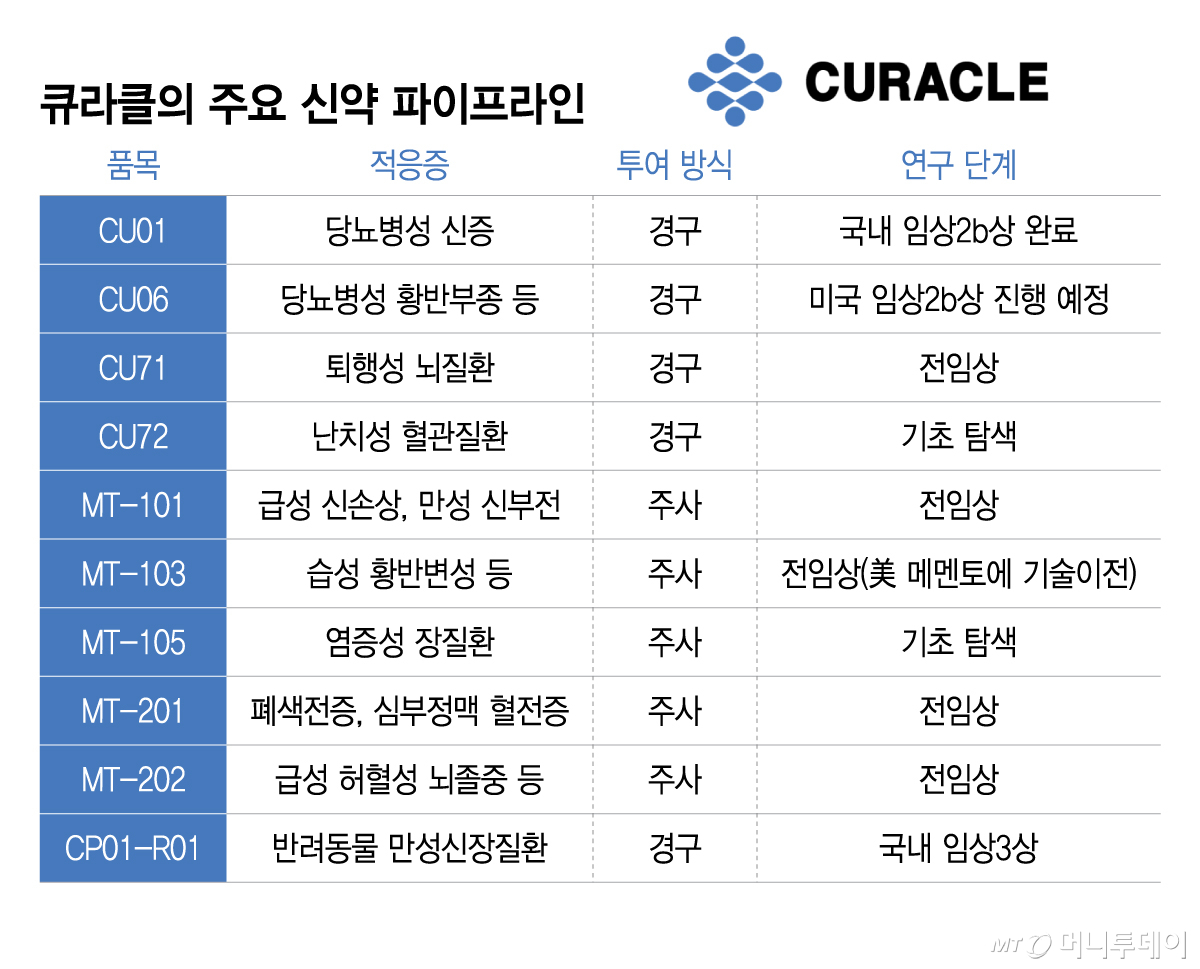
In May, Curacle and MapTics demonstrated the results of their collaboration by licensing MT-103, a bispecific antibody developed for retinal diseases, to U.S.-based Memento Medicines in a deal worth up to $1.07775 billion (approximately 1.5 trillion won). The candidate is currently undergoing further development under the code name MMT-205.
Curacle plans to accelerate the commercialization of innovative treatments through global partnerships, leveraging its R&D assets in areas with significant unmet medical needs, including retinal, kidney and thrombotic diseases.
"We are pleased to collaborate with Pinotbio, which has outstanding ADC development technologies," officials of Curacle and MapTics said. "By applying ADC technology to our existing antibody pipelines, we will establish optimal development strategies for each candidate and accelerate the development of next-generation cancer treatments with strong efficacy and safety profiles."
A Pinotbio official said, "We aim to identify differentiated ADC candidates and turn them into competitive next-generation cancer treatments."

 in THEBIO

