

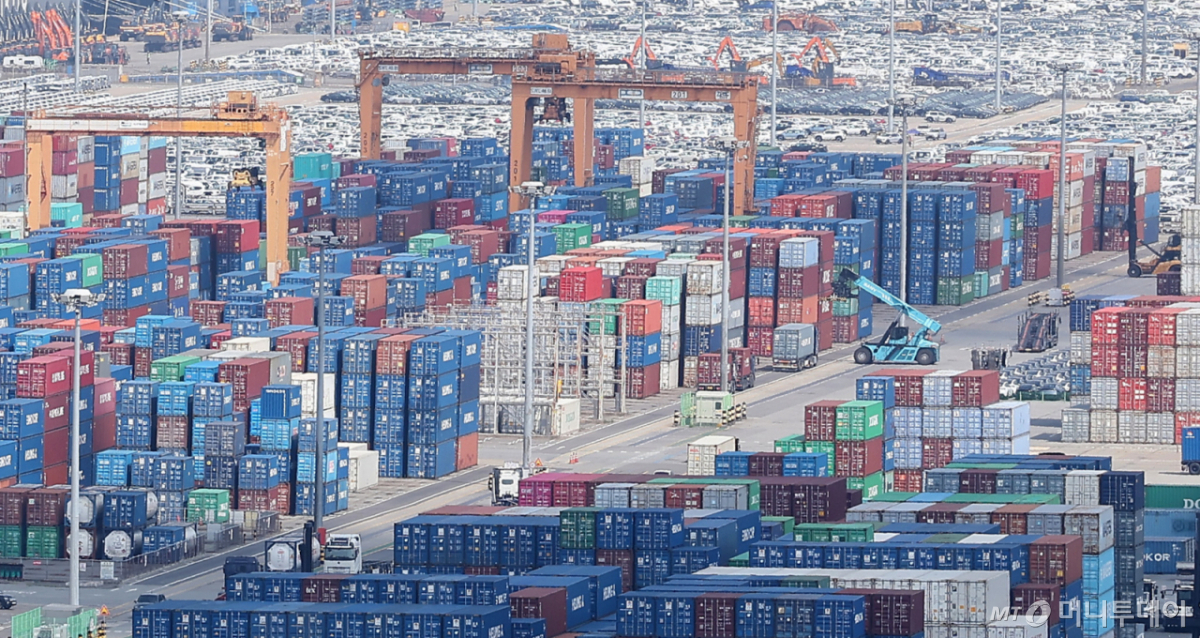
The government has revived discussions on joining the Comprehensive and Progressive Agreement for Trans-Pacific Partnership (CPTPP) after four years to respond to rapidly changing global trade conditions. With the United States strengthening its protectionist stance and supply chain restructuring gaining momentum, calls for membership have emerged from industry circles, prompting the government to begin formalizing related discussions.
Recent shifts in the trade environment due to the rise of protectionism and conflicts in Ukraine and the Middle East appear to have led the government to consider the practical need to strengthen cooperation with countries sharing similar levels of trade norms. Industry also recognizes that South Korea, which has a high dependence on exports, needs to secure stable supply chains through mid-tier trade cooperation frameworks and diversify its export markets.
Industry expects that joining CPTPP will lay the groundwork for entering the Mexican market, where no free trade agreement (FTA) has been signed, and facilitate expanded trade with member countries such as Japan, Vietnam, and Australia.
South Korea attempted to join CPTPP in 2022, but ratification procedures were effectively halted due to concerns over expanding market access for agricultural and livestock products and political controversies.
At that time, the government also stepped back, prioritizing the preparation of compensation measures and building social consensus. This time too, if the government proceeds with membership, it must go through inter-ministerial consultations, prepare compensatory measures, and obtain ratification approval from the National Assembly.
The agricultural sector views the CPTPP as posing a greater burden in terms of sanitary and phytosanitary (SPS) regulations than in expanding market access. This is because demands to relax quarantine standards could lead to market opening pressures beyond simple tariff reductions.
Park Jun-ki, president of the Korean Association of Agricultural Economics, stated, "The part of CPTPP that the agricultural sector worries about most is not just tariff reductions but sanitary and phytosanitary (SPS) regulations." He added, "If demands to relax quarantine standards become reality, they could create market opening pressures on a different scale than tariffs."
Experts emphasize the importance of preparing compensatory measures that the agricultural sector can accept during the membership discussion process. It has been pointed out that the Rural-Urban Mutual Prosperity Fund established during the Korea-China FTA negotiations failed to reach its target size and did not produce significant perceived benefits for the agricultural community.
Kim Han-ho, a professor at Seoul National University's Department of Agricultural Economics and Sociology, said, "While there are significant concerns about CPTPP in the agricultural sector, most member countries already have individual FTAs with South Korea, so the shock will not be as severe as during the Korea-U.S. or Korea-China FTA negotiations." He added, "Since market opening is inevitable, it is crucial to fully prepare compensatory measures that the agricultural sector can accept."
Lee Jeong-hee of Chung-Ang University Gyeong Je-hak-gwa (Prof.) also stated, "Ultimately, like existing FTAs, CPTPP requires balancing interests across industries," and added, "Rather than creating new systems, it is important to enhance the effectiveness of existing compensatory measures such as the Rural-Urban Mutual Prosperity Fund so that the agricultural sector can feel tangible benefits."
The government is analyzing impacts on both industry and agriculture through inter-ministerial coordination led by the Ministry of Trade, Industry and Energy and the Ministry of Agriculture, Food and Rural Affairs, while also gathering opinions from stakeholders and reviewing compensatory measures for sectors expected to face losses.

 in ECONOMY
