

Growth continues next year as well… Forecasts also point to "breaking through $1.3 trillion in exports"
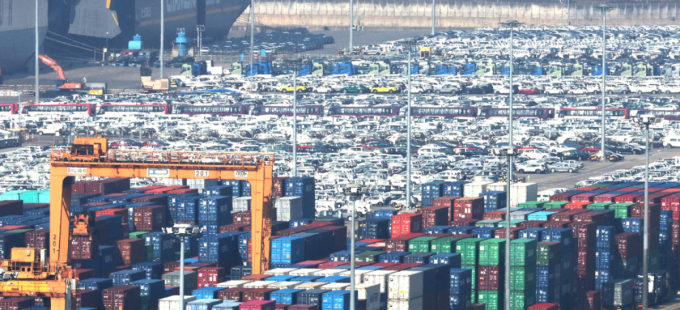
As South Korea's exports surpassed $1 trillion annually for the first time in history, analysts say that the export growth trend centered on semiconductors will continue next year as well. While the growth rate is expected to be lower than this year, it is projected that a high growth rate of around 20% can still be achieved.
According to the financial investment industry on the 19th, major financial institutions report that the export growth trend will continue next year following this year's performance. This year's exports are analyzed as potentially surpassing $1 trillion, reaching over $1.1 trillion, an increase of approximately 60% from the previous year.
Experts analyze that while next year's export growth rate may not be as high as this year's, achieving a double-digit growth rate is possible. Jung Sung-tae, a researcher at Samsung Securities, stated, "Semiconductor exports (a key product) are expected to increase by around 50% due to rising prices of HBM (High Bandwidth Memory) and expanded volumes," adding, "I forecast a 20% export growth rate for 2027." If this year's export value reaches $1.1 trillion, it is projected to exceed $1.3 trillion next year.
Semiconductors are also the key to next year's exports. Semiconductor export value through October this year was $396.8 billion, surging 193.1% from the previous year. The share of total exports expanded to 42.7%. This rapid growth in exports is attributed to the global AI (Artificial Intelligence) investment boom and the resulting surge in demand for memory semiconductors.
The semiconductor demand driving South Korea's export growth is not expected to ease easily next year. While supply remains limited, demand continues to grow, accelerating the depletion of memory inventories. SK hynix also revealed that its DRAM and HBM volumes are effectively sold out through 2029 due to long-term supply agreements (LTAs) and consultations with customers.
Moon Seo-hyun, a researcher at Shinhan Investment Corp, stated, "Although the growth rate of global AI capital investment is approaching its peak, equipment installation demand from existing data center construction will continue through next year," adding, "I place weight on the possibility that strong semiconductor exports will persist as volume increases are added to the carryover effect of high memory prices."
However, the global trend of rising interest rates and moves toward AI regulation following the U.S. midterm elections are cited as variables for next year's exports. While it is unlikely that a strong economic shock sufficient to break the semiconductor boom will occur immediately, there are warnings that export momentum may slow down in the medium to long term.
Kim Yu-mi, a researcher at Kiwoom Securities, analyzed, "It is necessary to be wary of the fact that concerns over demand contraction are gradually becoming apparent as the recent sharp rise in semiconductor prices burdens consumer prices," adding, "While the medium- and long-term growth outlook remains positive, interest rate stability and improved funding conditions are needed to support investment sustainability."
Domestic demand remains cold despite breaking through $1 trillion in exports… Where is the trickle-down effect?
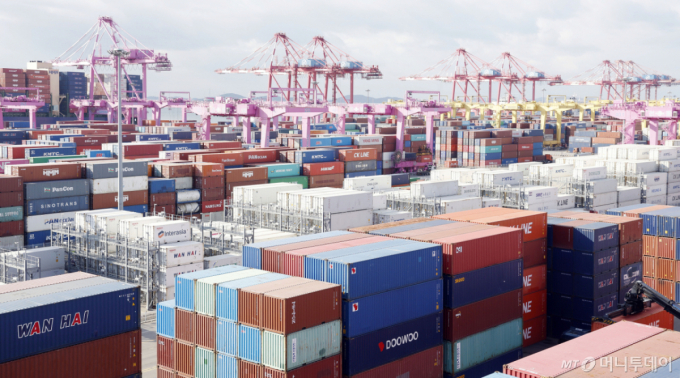
Although South Korea has opened the era of its first-ever $1 trillion in exports, the economy felt by citizens remains cold. While exports surged sharply centered on semiconductors, private consumption took a step back. Whether the export boom can lead to expanded employment and consumption is the key to domestic demand recovery.
According to the Ministry of Trade, Industry and Energy on the 19th, cumulative export value this year has surpassed $1 trillion. This makes it the fourth in the world after the United States, China, and Germany. Increased semiconductor demand due to expanded artificial intelligence (AI) investment and rising export unit prices drove the export performance.
In contrast to strong exports, consumption indicators were sluggish. Real gross domestic product (GDP) in the third quarter of this year increased by 1.0% from the previous quarter, but private consumption decreased by 0.2%. During the same period, exports increased by 2.3% and equipment investment increased by 4.1%. While exports and investment drove economic growth, private consumption actually dragged down the growth rate by 0.1 percentage points.
Regionally, sluggish consumption was observed in 13 of the 16th metropolitan cities and provinces. According to the National Data Office, national retail sales decreased by 0.5% from the same period last year in the third quarter. While some regions such as Seoul (0.7%) and Incheon (0.3%) saw increases, 13 metropolitan cities and provinces, including Sejong (-10.0%) and Gyeongnam (-6.5%), experienced declines.
The income growth trend and consumption flow of the entire national economy also diverged. Real gross domestic income (GDI) in the third quarter increased by 3.4% from the previous quarter, driven by improved terms of trade, significantly exceeding the GDP growth rate (1.0%). While the real purchasing power of the national economy rose due to factors such as rising semiconductor export prices, private consumption actually decreased.
Behind the fact that consumption is not reviving despite the export boom lies the characteristics of the semiconductor industry. Semiconductors have a low employment generation effect and a high import dependency for manufacturing equipment, limiting the effect of increased exports on domestic employment and income expansion. The concentration of wage increases and capital gains in the high-income, high-asset class with a low propensity to consume is also cited as a factor constraining the ripple effect on domestic demand.
The Bank of Korea predicted that if income increases from the semiconductor boom lead to expanded employment and increased consumption, the ripple effect on domestic demand will grow. According to the report "How Will Consumption in Semiconductor Beneficiary Regions Be?" released by the Bank of Korea last August, monthly consumption in semiconductor beneficiary regions such as Icheon, Hwaseong, and Cheongju was up to 4% higher than in other regions after companies paid performance bonuses.
The cumulative increase in consumption due to performance bonuses from last year through the end of this year is estimated to reach approximately 1.7 trillion won. The proportion of after-tax performance bonuses that translated into increased consumption was analyzed at 27% last year and 21% this year.
Going forward, the increase in new employment due to expanded production capacity by semiconductor companies is key. If increased income flows into consumption rather than asset markets such as savings or real estate, and if increased consumption spreads from high-priced consumer goods like automobiles and home appliances to various industries such as services, the effect on stimulating domestic demand could be further enhanced.
However, signs of recent consumption recovery are also emerging. Retail sales in September increased by 3.6% from the previous month, and the growth rate of card approval amounts in October also rose to 5.9%. It is analyzed that temporary factors such as automobile company strikes and decreased stock trading affected the decline in private consumption in the third quarter.
In this context, the expansion of performance bonuses by semiconductor companies next year is expected to help boost consumption recovery. The Bank of Korea estimated that the scale of performance bonuses next year will increase by approximately five times compared to this year, and that the resulting increase in consumption will raise the GDP growth rate by 0.06 to 0.09 percentage points.

 in ECONOMY

