

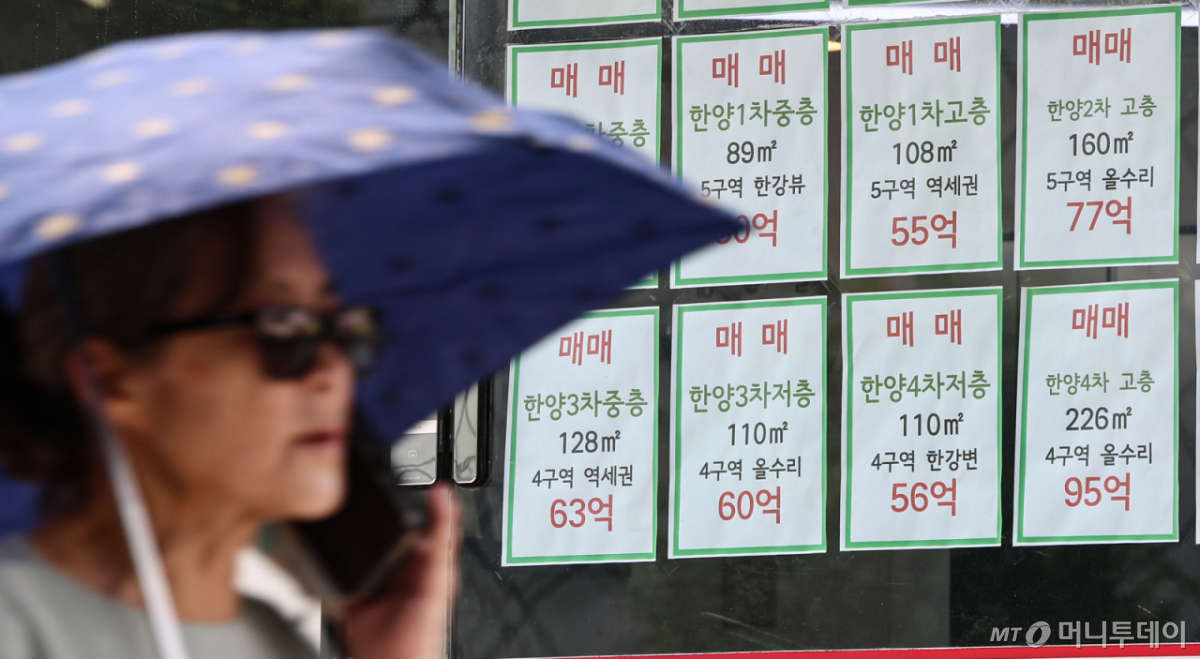
Although the government described its tax reform plan's goal as "normalization of tax burden," critics argue it is closer to "punitive tax hikes." Some evaluations also suggest that strengthening property taxes and capital gains taxes may instead lock up housing supply and shift burdens, making it unclear whether this will contribute to stabilizing housing prices.
Koo Yun-cheol, Minister of Economy and Finance, emphasized at the announcement of the tax reform plan that a home is not for "buying" but for "living." This signals the government's rejection of speculation and its encouragement of actual residence.
In fact, the core of this tax reform plan involves increasing tax burdens on non-residential properties and multi-household owners while reducing burdens on single-family homes used as primary residences. Under the comprehensive real estate tax reform, the basic deduction for owner-occupiers with one home will be raised from 1.2 billion won to 1.4 billion won, easing their burden. Conversely, the deduction for non-resident single-home owners will be lowered to 0.9 billion won. Additionally, the fair market value ratio used in calculating the supplementary land tax will be increased from 60% to 80% for multi-household owners.
The supplementary land tax rate will shift from being based on the number of homes to being based on property value, aiming to prevent concentration in "one solid home." For taxable income between 60 million won and 1.2 billion won (corresponding to market values of approximately 3.2 billion won to 4.5 billion won), the tax rate will be raised by 0.3 percentage points to 1.3%. Subsequent brackets will apply tax rates of 2%, 3%, 4%, and 5% respectively.
The government explained that under this structure, properties valued below 3 billion won will see reduced supplementary land tax burdens, those between 3 billion won and 4 billion won will face higher taxes than before, and those above will bear even greater burdens. It defined this as "normalization of tax burden."
However, some critics argue that such normalization amounts to little more than punitive tax hikes. By shifting from a system based on the number of homes to one based on property value, owner-occupiers with single homes face increased burdens under the guise of targeting high-value properties. Although the basic deduction has been expanded by 0.2 billion won, this is offset by the effects of higher fair market value ratios and increased tax burden caps.
Taxation based on property value also fails to clearly distinguish between speculation and actual residence. For example, owning one home worth 3 billion won versus three homes each worth 1 billion won — the latter being closer to speculative behavior — would still be subject to the same supplementary land tax rate. This has led to calls for greater caution in applying a value-based system.
Concerns also exist regarding the cap on supplementary land tax burdens being raised to 200%, and the gradual reduction of the supplementary land tax deduction limit from 8 million won in 2027 to 6 million won starting in 2028. Hong Ki-yong, a professor at Incheon University, stated, "The biggest issue is setting a deduction cap on the supplementary land tax exemption for first-generation single-home owners." He added, "People plan to hold or sell properties based on legal stability and predictability. Limiting what was previously reduced by tens of millions of won to just 6 million won is inappropriate."
When raising property taxes, transaction taxes such as acquisition tax and capital gains tax should be lowered to encourage trading. However, evaluations suggest that increasing capital gains tax burdens may not contribute to housing price stability, leaving the outcome uncertain.
Currently, the long-term holding special deduction for capital gains tax allows single-home owners to receive unlimited deductions of up to 40% each based on ownership and residence duration, totaling up to 80%. Starting in 2029, however, this will be limited to a maximum of 80% over 10 years at an annual rate of 8%, with a deduction cap of 1 billion won. For multi-home owners, the deduction will be limited to a maximum of 30% over 15 years at an annual rate of 2%. With the introduction of a deduction cap, increased capital gains tax burdens may lead to concerns that sellers will choose to hold onto properties rather than sell them.
Especially, tax hikes on non-residential properties are likely to exacerbate confusion in the rental market. As more people move into owner-occupied homes due to tax incentives favoring actual residence, rental housing supply could shrink. There is also a possibility that higher property taxes will be passed on to rental prices. Analyses suggest that the effect on stabilizing housing prices may not be significant.
Most importantly, since properties valued below approximately 2 billion won are excluded from supplementary land tax liability, demand is expected to surge, likely driving up prices. This has drawn criticism that the government effectively set a benchmark that encourages such behavior.
Oh Moon-seong, a professor of Tax and Accounting at Hanyang Women's University, pointed out, "If supplementary land tax burdens become too high, people will simply not sell their homes." He added, "Who would sell when capital gains taxes are so severe? The idea that sellers will hold onto properties is common sense. Most people may be willing to endure paying property taxes until the end of the current administration rather than face heavy capital gains taxes."

 in ECONOMY
