

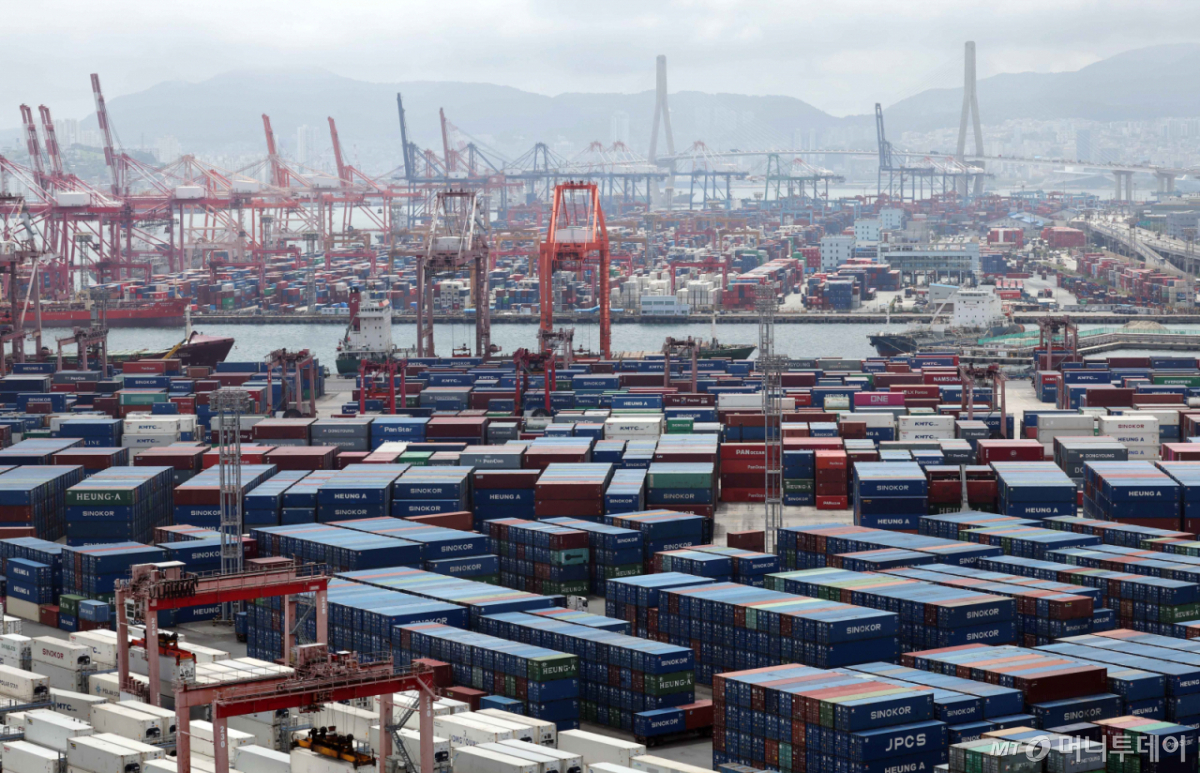
Amid growing global trade uncertainties stemming from U.S.-led tariffs, the government is accelerating efforts to expand its trade network, ranging from improving existing free trade agreements (FTAs) with major countries such as China and India to launching new or resuming negotiations with Mexico and Mercosur (the Southern Common Market). Including those FTA expansions already completed and awaiting implementation, the number of target countries and groups for FTA expansion this year reaches 22.
According to the Ministry of Trade, Industry and Energy on the 27th, negotiations have been initiated or are being resumed with seven countries and groups: Morocco, Egypt, Argentina, Uruguay, Mercosur, Mexico, and Tanzania. New negotiations are underway with Thailand and Pakistan, while talks to improve existing agreements are in progress with India, China, ASEAN (Association of Southeast Asian Nations), and Singapore.
Nine countries and groups, including Guatemala, Ecuador, the Gulf Cooperation Council (an economic cooperation body of the Arabian Peninsula), Georgia, Malaysia, the United Kingdom, Serbia, Mongolia, and Bangladesh, have already concluded agreements or completed signing, with implementation imminent. Including these, a total of 22 countries and groups are targeted for expanding the scope of FTA this year.
Currently, in the negotiations, China is the top priority for the government. The 15th round of negotiations on services and investment has been conducted with China, while the 12th round of improvement negotiations has been held with India. In terms of new or resumed negotiations, Mexico and Mercosur are identified as priorities. Mexico sees active Korean corporate entry and trade but currently lacks a free trade agreement (FTA), while Mercosur also includes major South American countries such as Brazil, Argentina, Uruguay, and Paraguay but has no FTA foundation with Korea.
Morocco and Egypt are pursuing negotiations despite their relatively small economic scales due to their strategic value as gateways for entering Africa. In particular, it is explained that Morocco has free trade agreements with both the EU (European Union) and the United States, making it a potential hub for Korean companies to access European and U.S. markets through local production.
The FTA is expected to not only reduce tariffs but also expand investment, enhance economic cooperation, and increase consumer benefits. The government believes that given South Korea's small domestic market size, it is necessary to expand markets overseas through FTAs.
Trade strategy has also shifted more proactively than in the past. The government explains that while trade relations with the United States will be managed according to circumstances, free trade agreements (FTAs) with other countries are being pursued more aggressively as a safety measure against uncertainty.
In particular, the government believes that rather than focusing solely on major economic blocs, it is necessary to build long-term relationships with relatively smaller countries as well. This is because FTA agreements do not eliminate tariffs on all items immediately upon entry into force; instead, depending on the item, tariffs may be phased out gradually over 10 or 15 years, meaning the effects of such agreements can extend over a long period.
Park Geun-oh, the Minister of Trade, Industry and Energy for Trade Agreement Policy, emphasized the necessity of trade agreements by stating, "We cannot guarantee that small countries will remain small from our perspective even 15 or 20 years from now." He added, "If we do not plant seeds now and suddenly pretend to be close with those countries only after they have prospered later on, how can we easily establish relationships at that time?"
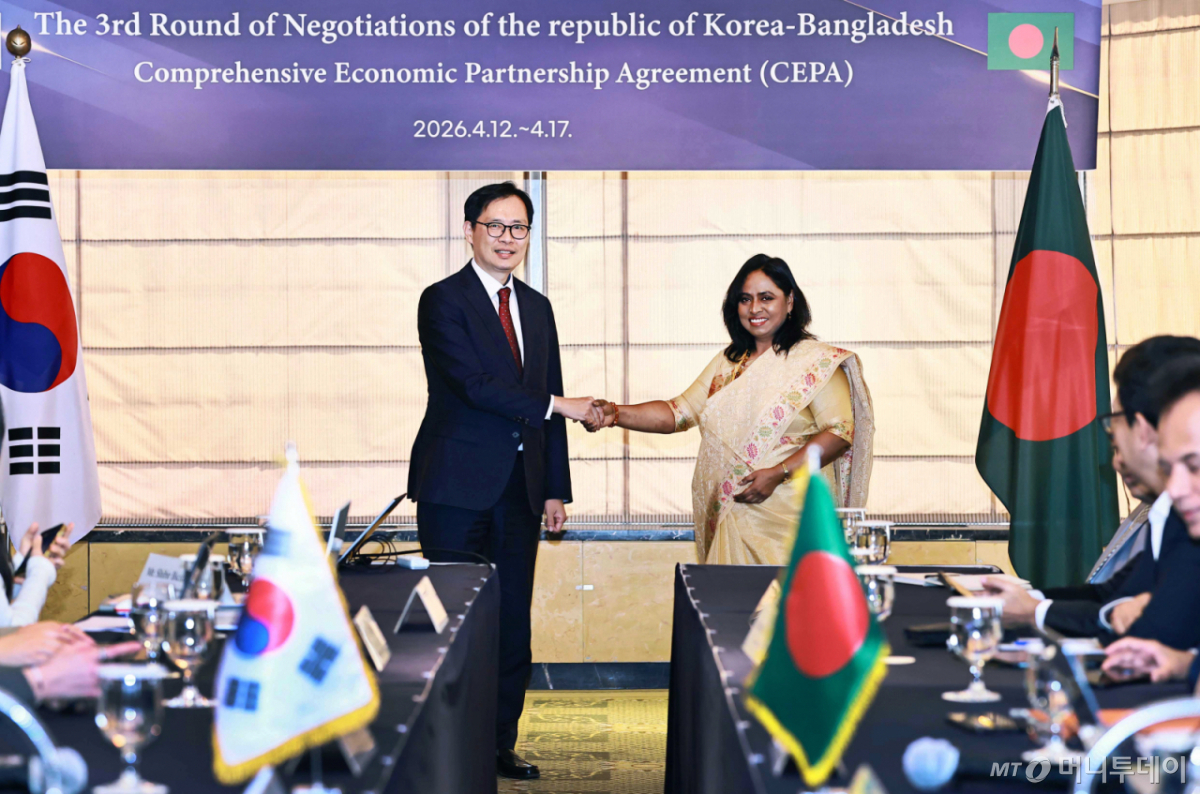
Bangladesh, which recently reached a principled agreement, is a representative case. With a population of approximately 170 million, Bangladesh is expected to improve export conditions for Korean companies through the Korea-Bangladesh FTA, with transit tariffs reduced from 6% to 0% and lubricant tariffs lowered from 28% to 0%.
The government believes that, similar to Bangladesh, countries with relatively small current economic scales should prepare trade foundations in advance by considering future growth potential and population size. Since it is uncertain whether Korea's current key industries such as semiconductors and automobiles will be able to support the Korean economy decades from now, the strategy is to build trade relationships across diverse markets to disperse risks.
However, as multiple negotiations are being pursued simultaneously, the workload on trade authorities is increasing. The Ministry of Trade, Industry and Energy has decided to handle multiple negotiations in parallel by optimizing the deployment of existing personnel and strengthening expertise in the trade sector rather than expanding new staffing.

 in ECONOMY

