

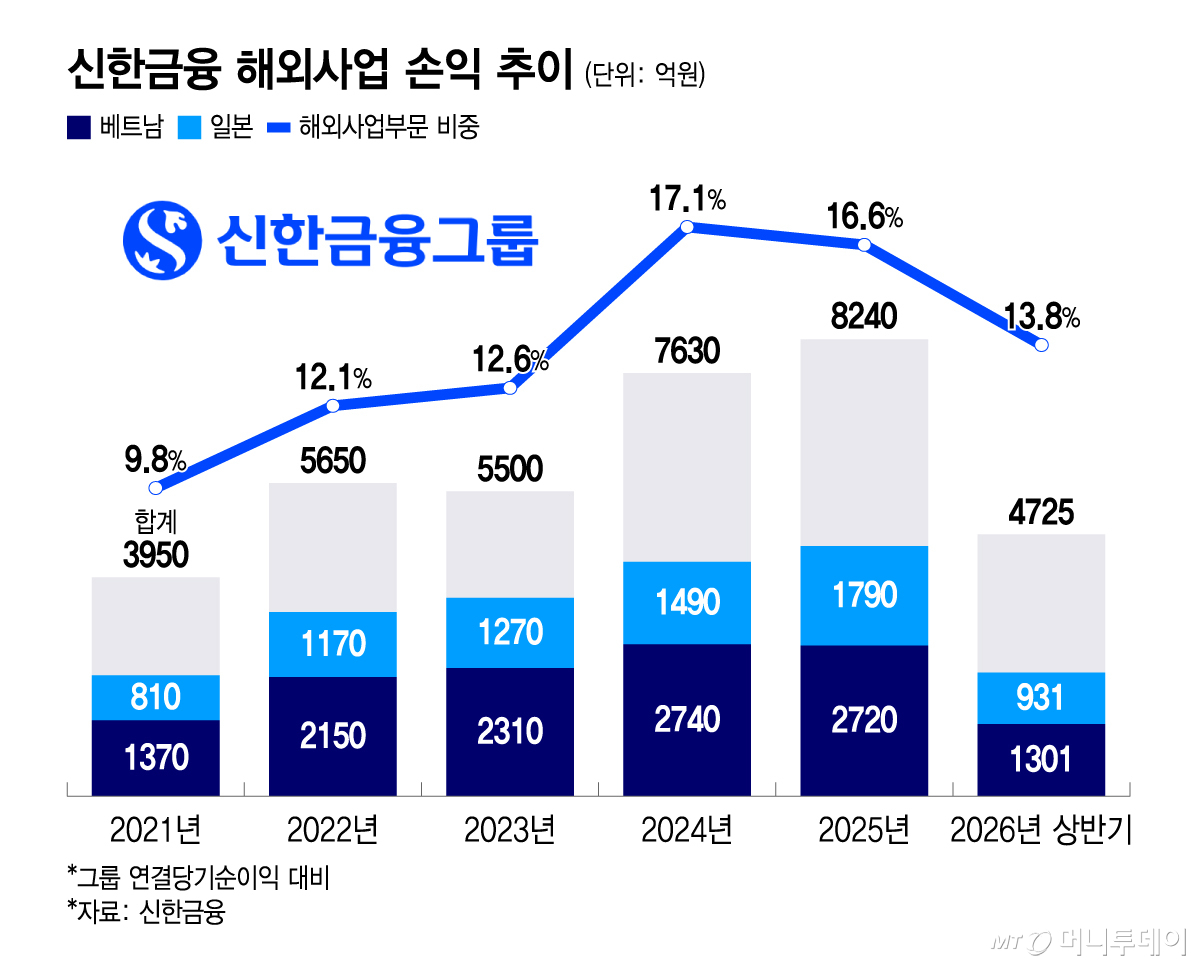
Hana Financial Group's overseas business continues to show robust growth despite global uncertainties. Under the leadership of Jin Ok-dong (Chairman), the group's global strategy is proceeding smoothly, generating a profit and loss of 472.5 billion won in the first half alone—already outpacing last year’s record performance.
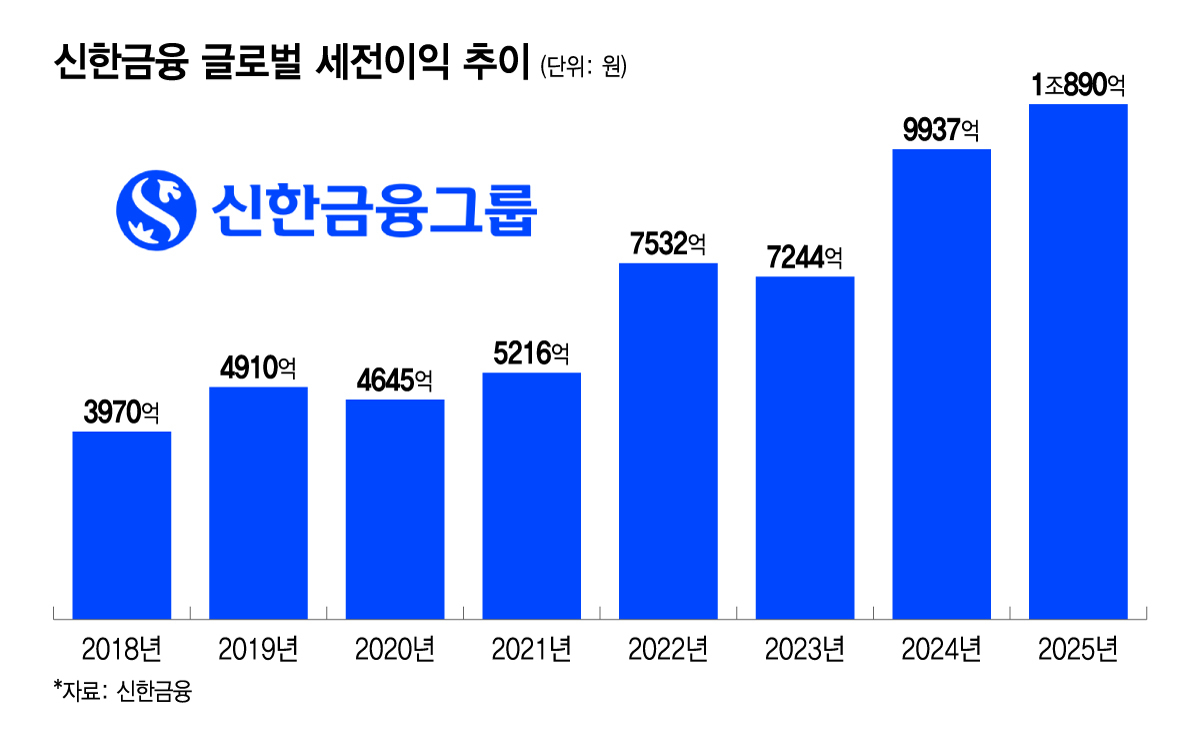
According to Hana Financial Group on the 3rd, overseas business profit and loss for the first half reached 472.5 billion won, up 9.5% from 431.5 billion won in the same period last year. Hana Financial is being evaluated as continuing its unparalleled growth momentum after becoming the first domestic financial holding company to surpass 1 trillion won in pre-tax profits globally last year.
By quarter, the growth trend has steepened further in the second half of the year. Overseas business profit and loss in the second quarter reached 250.7 billion won, a 13.0% (28.9 billion won) increase from the first quarter's 221.8 billion won. Growth at key subsidiaries in Japan and Vietnam drove the second-quarter results.
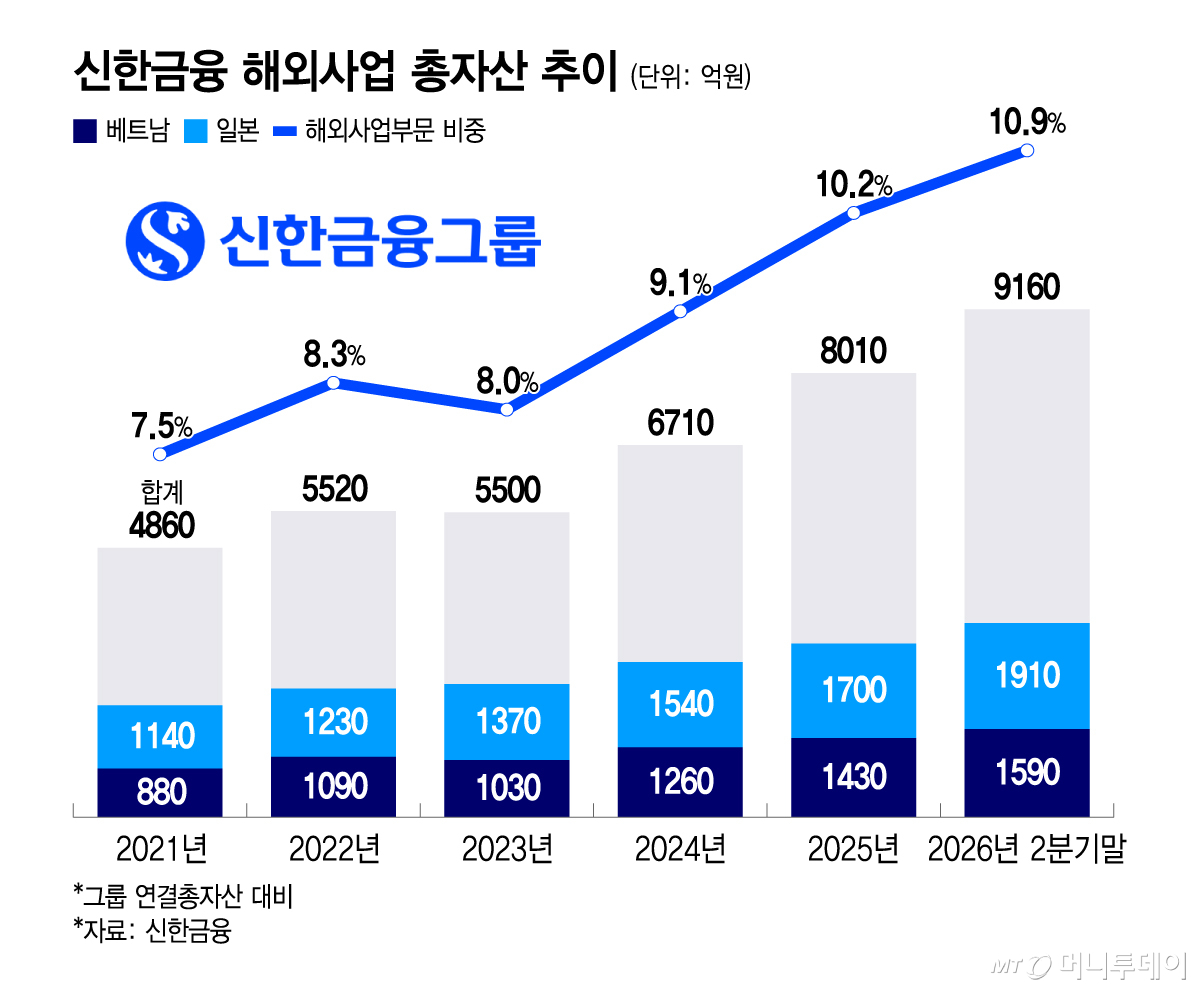
The scale of overseas business assets is also expanding rapidly. As of the end of the second quarter, total overseas assets reached 91.5656 trillion won, an increase of 6.3551 trillion won (7.5%) from the end of the first quarter's 85.2105 trillion won. Compared to the beginning of the year (80.1211 trillion won), overseas assets grew by 11.4445 trillion won (14.3%) in just the first half. The share of overseas business in the group’s total assets also rose to 10.9%, up 0.4 percentage points from the end of the first quarter (10.5%) and 0.7 percentage points from the beginning of the year (10.2%).
By country, SBJ Bank, the Japanese subsidiary, showed particularly strong growth. Its first-half profit and loss reached 93.1 billion won, up 9% from 85.4 billion won in the same period last year. In the second quarter alone, it posted 50.8 billion won, a 20% increase from the first quarter's 42.3 billion won. Assets grew primarily through corporate loans, especially real estate loans, with loan balances up 7.3% compared to the end of last year. Net interest margin (NIM) management was strengthened through expanded variable-rate lending and diversified deposit sourcing. Additionally, increased handling fees from expanded loan operations combined with revenue growth from DNX (digital transformation) initiatives led to a sharp 31.3% surge in non-interest income compared to the same period last year.
The Vietnamese subsidiary recorded first-half profit and loss of 130.1 billion won, down 1.8% (2.4 billion won) from 132.5 billion won in the same period last year, but the second-quarter trend was markedly different. Second-quarter profit and loss reached 72 billion won, a 24% increase from the first quarter's 58.1 billion won, showing a clear turnaround. As concerns over shrinking interest margins due to rising borrowing costs from sharp local interest rate hikes since last year's fourth quarter gradually eased, loan balances increased by 6% compared to the end of last year, driven largely by lending focused on high-quality assets. Market expectations also point toward stabilization of local interest rates in the second half of the year.
The Bank MMC (combined branches in Hong Kong, London, New York, and Singapore) segment also posted 109.7 billion won in the first half, up 43.1% from 76.6 billion won in the same period last year, demonstrating solid operational strength. However, looking only at the second quarter, it fell to 51.2 billion won, a 12.5% decrease from the first quarter's 58.5 billion won, indicating a brief pause in growth. Separately, Hana Financial is also implementing global business efficiency measures, including the withdrawal of its securities operations in New York.
Additionally, the Cambodian subsidiary improved interest income by managing assets primarily through fixed-rate mortgage loans and expanding institutional investor borrowing lines to lower funding costs. Delinquency rates remained below 2%, significantly underperforming the local banking average (above 8%), earning praise for successful asset quality management. The Indonesian subsidiary saw loan balances increase by 9.4% compared to the end of last year, but interest income stagnated due to margin compression. The Chinese subsidiary experienced a decline in interest income due to product reductions stemming from rising non-performing loans on mid-rate platform lending. In Kazakhstan, corporate tax expenses increased due to tax reforms including hikes in local reserve requirements and corporate tax rates.
Hana Financial has set "securing differentiated competitiveness" and "sustainable growth" as the core keywords for its global business this year, with plans to achieve number-one channel market positions in each country of entry. To this end, it will strengthen collaboration with policy financial institutions supporting domestic companies' overseas expansion and fully launch strategies where overseas branches directly form partnerships and agreements locally to broaden customer coverage. Additionally, the group plans to gradually introduce AI services at overseas branches to boost productivity and enhance digital competitiveness, while diversifying channel strategies centered on capital efficiency, including equity investments in promising high-quality enterprises in target regions.
Internal control measures are also being accelerated. The group will strengthen continuous monitoring systems for each overseas branch, increase dedicated inspection personnel to build effective, field-focused internal control frameworks, and enhance the funding and capital market support functions of overseas branches to proactively respond to expanding market uncertainties.
Meanwhile, as of late July, Shinhan Bank's global network spans 20 countries with 162 locations, comprising 14 branches, 10 local subsidiaries (including 143 branch offices, one subsidiary company, and one standalone legal entity), and three representative offices in Hungary, Uzbekistan, and Georgia.

 in FINANCE


