

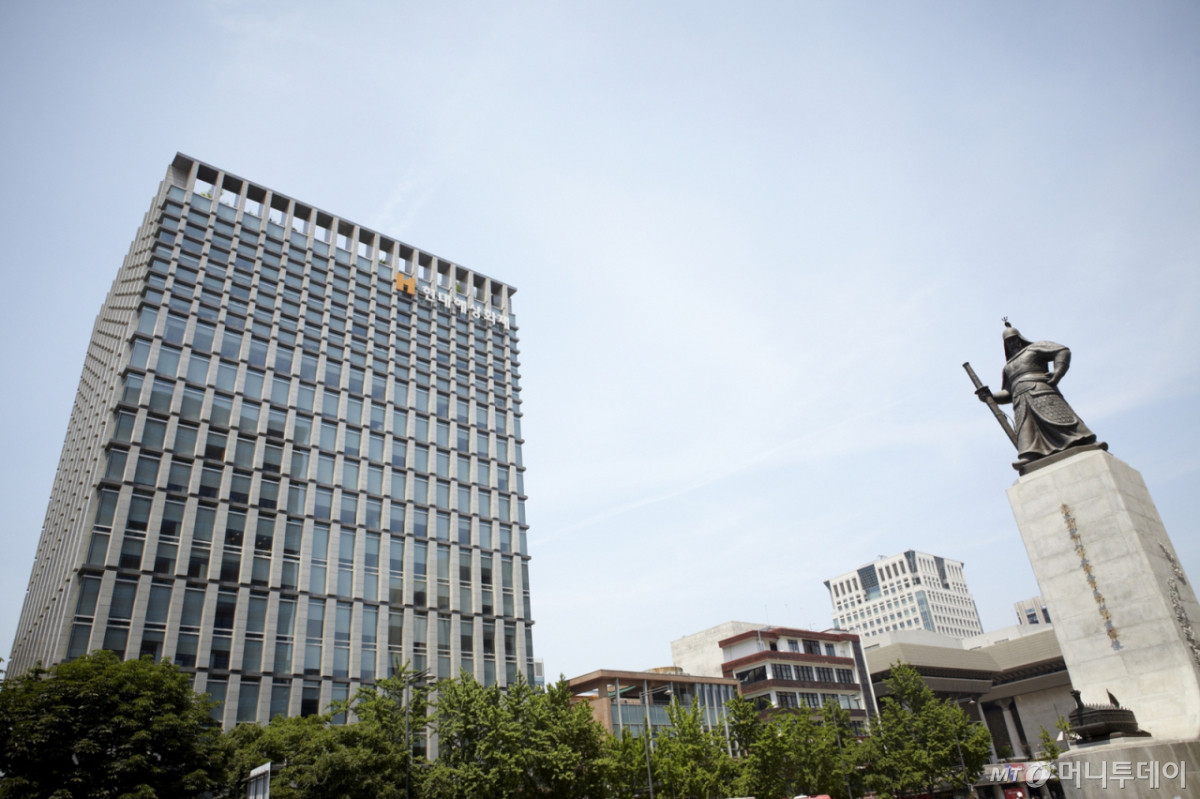
Hyundai Marine & Fire announced on the 14th that its net profit for the first half of the year reached 615.1 billion won. This represents a 36.4% increase compared to the same period last year and significantly exceeds the securities industry's forecast of 500 billion won.
The key driver behind Hyundai Marine & Fire's performance this time was insurance underwriting results. Insurance underwriting profit for the first half reached 705.8 billion won, marking an 81.6% growth compared to 388.6 billion won in the same period last year. Long-term insurance net income totaled 613.9 billion won, a 105.7% increase from the previous year's corresponding period, driven by a narrowing gap between expected and actual insurance benefits (expected vs. actual payout difference) and the implementation of advanced actuarial guidelines, which triggered one-time reversals. In the second quarter this year, Hyundai Marine & Fire's expected-actual benefit loss was 5.6 billion won, a significant reduction from the 39.3 billion won loss recorded in the second quarter last year.
General insurance underwriting results stood at 102.2 billion won, up 38.9% compared to the same period last year, as high-value claims decreased and overall loss ratios stabilized. However, automobile insurance underwriting recorded a loss of 10.2 billion won. This is attributed to factors including cumulative premium reductions despite February premium hikes, rising costs, and delays in implementing the "8-week rule."
In contrast, investment results amounted to 105.8 billion won, half of the 236.4 billion won recorded in the first half of last year. This decline was influenced by increased interest expenses on held bonds due to rising interest rates. However, Hyundai Marine & Fire explained that evaluation losses from the first quarter are expected to be recovered starting in the second quarter, indicating a recovery trend.
Additionally, Hyundai Marine & Fire's duration gap (asset duration minus liability duration) has approached "0" this year. A duration gap closer to "0" indicates lower sensitivity to interest rates, while a larger gap implies higher sensitivity. Historically, Hyundai Marine & Fire was known to have the highest duration gap among all insurance companies. In fact, in the first quarter last year, it recorded "-3.2 years," showing capital (net assets) reacting sensitively to interest rate changes. However, since this year, the company has actively focused on asset-liability management, bringing the first-half duration gap close to "0" and maintaining it at around "0.7 years" in the second quarter.
New contract insurance contract margin (CSM) for the first half totaled 950.9 billion won, with a remaining CSM balance of 989.44 billion won. The solvency ratio (K-ICS), a key health indicator, stood at 209.0%, representing an improvement of 18.9 percentage points compared to last year.
A Hyundai Marine & Fire official stated, "During the first half, profits increased due to a narrowing gap between expected and actual insurance benefits, and K-ICS reached 209%, securing capital stability. Moving forward, we will continue to focus intensively on enhancing profit generation capabilities to build a foundation for improving corporate valuation through sustained efforts in securing stable capital strength."

 in FINANCE
