

[For more diverse corporate information on the startup mentioned in this article, please visit the Unicorn Factory Big Data Platform 'Data Lab'.]
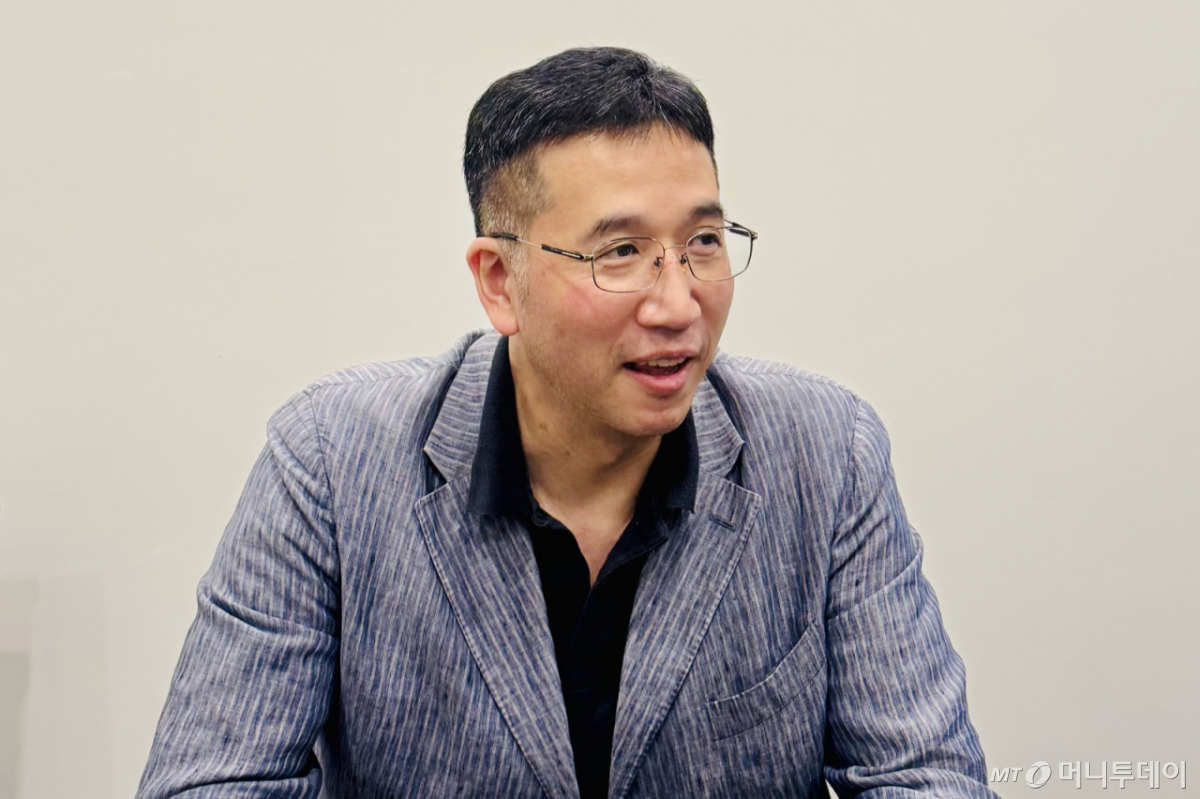
"Our goal is to establish SVNet, an ADAS (Advanced Driver Assistance Systems) software, as having unparalleled competitiveness in the global automotive market. Ultimately, we aim to expand our market share so that our technology is applied to one out of every three vehicles on the road."
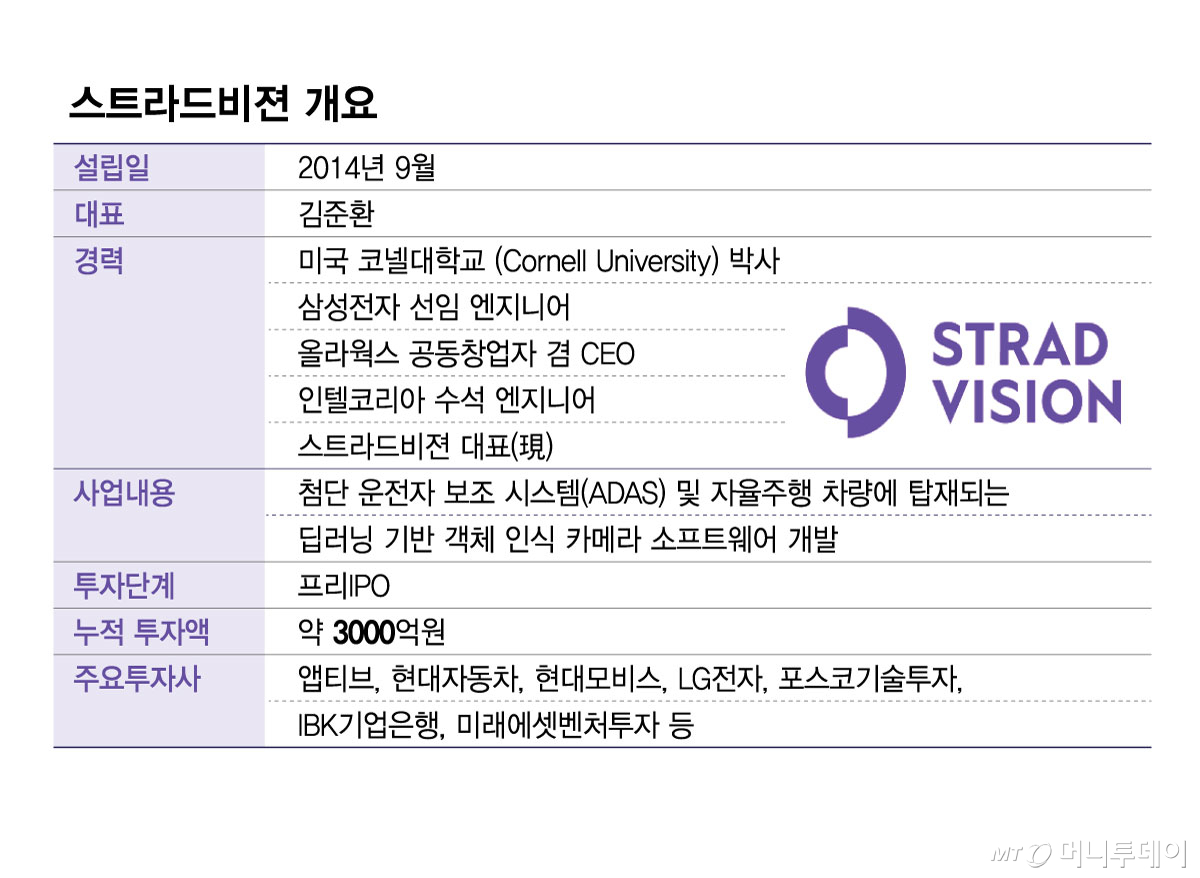
Kim Jun-hwan of StradVision made these remarks regarding the company's mid-to-long-term plans. Established in 2014, StradVision began supplying SVNet to global automakers in 2019 and has since been installed in over 5 million vehicles cumulatively.
Recently, StradVision received approval for its KOSDAQ listing preliminary review from the Korea Exchange and is preparing for an IPO (initial public offering) this June. This marks the first case among autonomous driving startups. The company plans to accelerate global market expansion and enhance autonomous driving data infrastructure based on funds raised through the public offering.
Aiming to Join the Global Top Three… Targeting Emerging Markets with Low-Spec Chip Optimization
StradVision's core competitiveness lies in its 'lightweight AI' technology, which implements ADAS using only cameras without expensive equipment. Leveraging optimization technology that operates stably even on low-spec semiconductors, the company has entered supply chains of Chinese and European automakers and is now accelerating efforts to penetrate the Indian market.
Consolidated revenue last year reached 18.1 billion won, a 57% increase from the previous year. Although operating losses amounted to 58.5 billion won, the loss margin was reduced by 8.2% compared to the prior year. The company's revenue target for this year is 30 billion won.
Currently, about 80% of revenue comes from development-stage NRE (Non-Recurring Engineering) projects, while the remainder consists of running royalties generated after Yangsan. The company expects that since most ongoing NRE projects are based on Yangsan, royalty revenue will account for half of total revenue starting in 2027.
Additionally, StradVision anticipates benefits as the Indian government mandates ADAS installation in commercial vehicles from next year. Kim stated, "Since vehicles based on low-cost semiconductors dominate India, SVNet, which delivers high performance even on low-spec chips, is well-suited for the market. We have also completed localization tailored to local road conditions, such as roads without lane markings and mixed traffic with cattle."
StradVision is expanding its global market share through collaborations with strategic investors (SIs) including Aptiv, Hyundai Motor Group, and LG Electronics. In particular, it is building a long-term supply chain by jointly securing various OEM projects with global Tier 1 supplier Aptiv.
Kim noted, "Projects underway with Aptiv will take at least five to seven years from Yangsan initiation to completion. The fact that Aptiv has continuously invested in StradVision reflects its commitment to maintaining long-term cooperation." Aptiv first participated as an investor in the Series C round in 2022 and, through two subsequent investments, currently holds a 41.6% stake in StradVision.
Challenging the Global E2E Autonomous Driving Market
StradVision first attempted to list in 2024. Although it received 'A' and 'A' ratings in technical evaluations at that time, the company postponed its listing to improve performance and achieve a higher corporate valuation before reapplying. It successfully passed the technical evaluation again last year.
Kim explained, "After discussions with shareholders and investors, we decided to delay the listing once to strengthen the company further before making another attempt. We will prove to the market that we are an autonomous driving software company with a proven track record in Yangsan."
The company plans to invest IPO funds primarily in global expansion and enhancing data infrastructure such as 'SV Data Flow.' SV Data Flow is a technology that automates the collection and processing of autonomous driving training data. Kim stated, "In the long term, we plan to strengthen our technological capabilities for full autonomous driving (E2E). We also forecast that Level 2 (L2) and Level 2+ (L2+) markets will account for over 40% of the total market even by 2030."
He added, "First, we plan to secure stable revenue in major markets such as India and China to reinvest in future technology development. In the long run, we aim to expand into adjacent fields such as robotics and industrial mobility."
Kim also highlighted his experience of focusing on technology development despite challenging conditions during the COVID-19 pandemic. He expressed his ambition to expand operations primarily in areas generating actual revenue after listing while simultaneously advancing future technologies.
He remarked, "Although we faced difficulties due to project cancellations during the COVID-19 period, we were able to enhance our technological capabilities by concentrating on internal R&D during that time. After the pandemic subsided, we rapidly expanded orders based on upgraded technologies."
Furthermore, he added, "While end-to-end (end-to-end) technology is gaining attention, its market share remains small. We will focus on areas where we can generate stable profits in the largest current markets while preparing for future autonomous driving technologies."
[MoneyToday startup media platform Unicorn Factory]

 in FUTURE

