

More diverse corporate information about the startups mentioned in this article can be found on Unicorn Factory's big data platform, Data Lab.

"Changing the way a cup of coffee is made can transform the entire revenue structure."
As the recession persists, rising coffee bean prices and labor costs, coupled with intensifying competition within the industry, are driving an increase in the number of closing specialty coffee shops. Amid this situation, Coffee Sapient, a coffee franchise brand, is challenging the coffee market by introducing its new model, "Tap Coffee," which aims to fundamentally address the labor costs, expenses, and operational efficiency issues facing the cafe industry.
According to Jeong (CEO), the existing cafe operation model based on espresso was plagued by inefficiencies, including a high reliance on skilled baristas, significant variability in production speed and quality, and excessive use of coffee beans. In particular, frequent turnover among part-time workers, recurring training costs, and the continuously rising burden of minimum wage have persistently squeezed store owners' profitability. He explained, "While revenue is generated, the actual profit structure continues to shrink," adding that "a new operational model was needed that could reduce both ingredient and labor costs while maintaining taste."
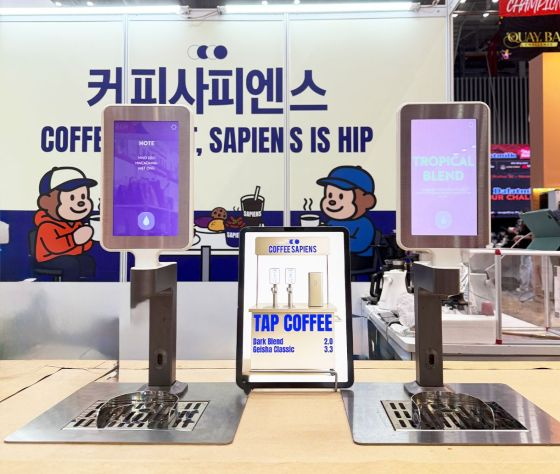
Innovating cafe operations with 'Tab Coffee'... capturing speed, cost, and profitability all at once.
Starting from this awareness, "Tap Coffee" was developed. Tap Coffee operates by brewing and storing a large volume of coffee for multiple servings at once, then immediately dispensing it upon receiving an order. It can prepare up to 30 servings at a time, allowing customers to receive their coffee in about seven seconds after ordering. With a maximum production capacity of 514 cups per hour, it achieves overwhelming speed compared to traditional coffee brewing methods.
Jeong (CEO) emphasized that "instead of brewing one cup at a time, the system extracts multiple cups at once for storage and serves them quickly when needed," adding that "this approach maintains the unique taste of drip coffee while maximizing operational efficiency through mass production." As a result, manufacturing time has been significantly reduced, and stable store operations are now possible with minimal staffing.
The actual cost-saving effect is also significant. While a conventional espresso machine requires about 20 grams of coffee beans and approximately one minute to produce a single cup, Tap Coffee achieves uniform yet deep flavor with only about 11 grams of beans. Consequently, bean usage is reduced by roughly 40%, dependence on professional baristas is lowered, and labor costs can be cut by approximately 30%. Beyond improving production speed, quality variations caused by differences in staff skill levels have been virtually minimized.
Operational efficiency also offers significant competitiveness. Jeong (CEO) explained, "Previously, stores required four employees during the lunch peak hour, but after introducing tap coffee, operations can run smoothly with just two people. In normal times, the structure allows for essentially one-person operation." He further evaluated that this represents a shift beyond simple equipment replacement, transforming the cafe business itself from labor-intensive to system-centric.
Coffee Sapiens directly sources specialty beans from around the world and has established a differentiated product lineup including Dark Blend, Fruity Blend, and Geisha Classic Blend. By integrating its own roasting system with bakery production facilities to internalize cost structures, it operates the entire value chain in an integrated manner.
Profitability indicators are also noteworthy. According to data provided by Coffee Sapiens, the average profit margin for stores operating conventional coffee machines is around 20%, whereas stores that have adopted tap coffee recorded a profit margin of approximately 45%, demonstrating more than double the profitability. The initial investment cost is also relatively low compared to existing major franchises, which is evaluated as favorable for shortening the payback period for store owners.
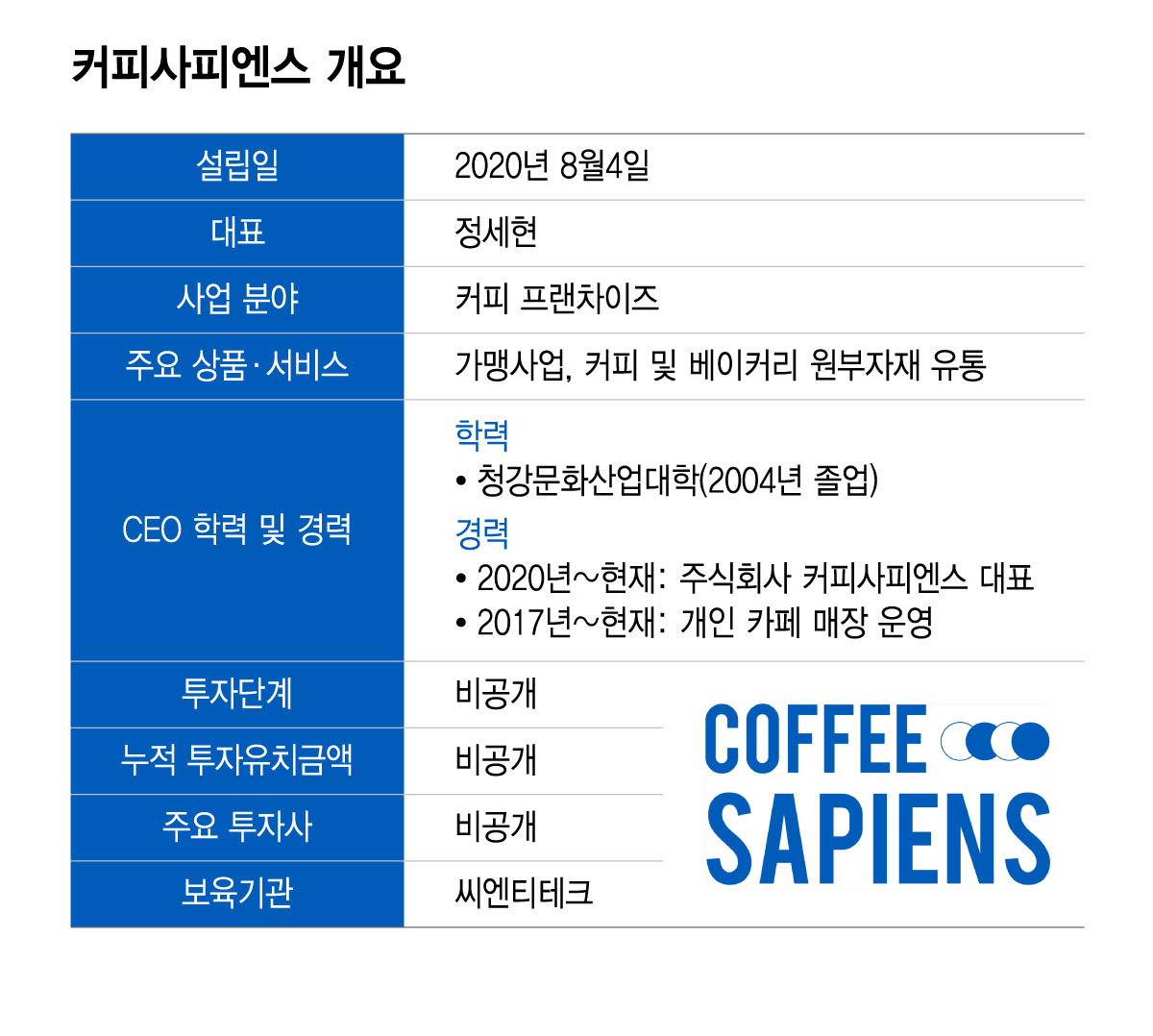
Evolving into an AI Smart Retail Platform... Targeting Southeast Asia as Well
Jeong (CEO) announced that it is currently conducting research and development (R&D) to integrate artificial intelligence (AI) technology into its Tap Coffee system. The company is developing the 'SAPI TAP 1.0' platform, which includes features such as face recognition-based identification of regular customers, voice ordering, automated QR code recipes, multi-language services for foreign customers, and personalized menu recommendation functions. Through this initiative, the company aims to expand beyond simple coffee sales into an AI-powered smart retail platform.
For example, when a regular customer visits a store, the system can automatically recognize them and recommend their usual favorite menu items. Additionally, older customers who are not familiar with using kiosks can easily complete complex orders tailored to their preferences simply by issuing voice commands such as "Make me a warm coffee with low caffeine and rich-flavored beans."
Coffee Sapiens is pursuing market entry into Southeast Asia as a key growth strategy. Jeong (CEO) stated, "Through participation in the Vietnam Coffee Expo, we directly confirmed positive responses from the local market," and explained that "the Southeast Asian market has high demand for fast service and Korean-style premium coffee experiences rather than labor cost reduction effects like in Korea." He further added, "These market characteristics demonstrate growth potential for the Tap Coffee model to secure competitiveness in another way."
[Money Today Startup Media Platform Unicorn Factory]

 in FUTURE


