

[For more diverse corporate information on startups, visit Unicorn Factory's Big Data Platform Data Lab.]
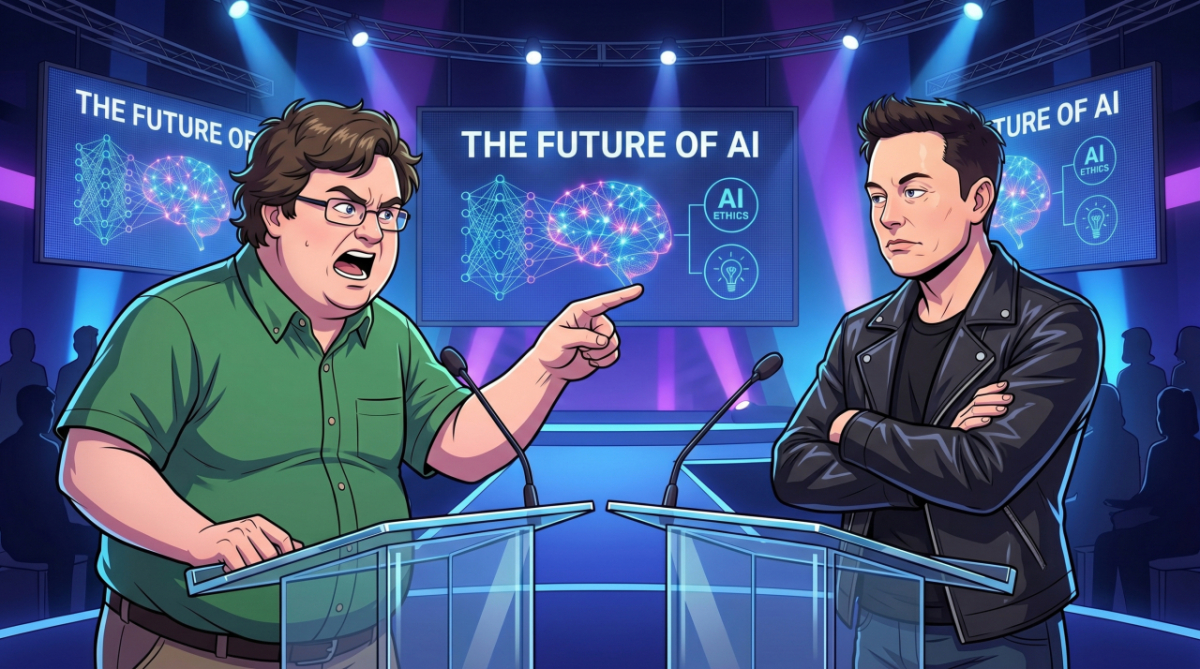
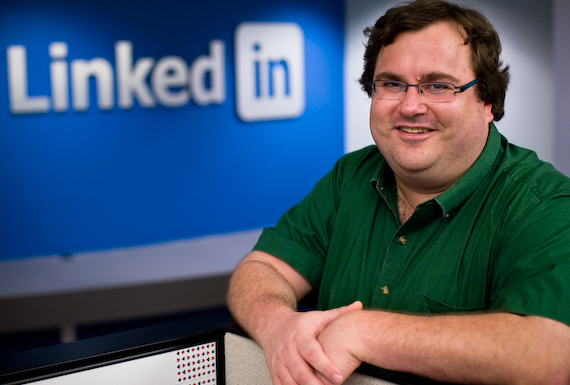
LinkedIn co-founder Reid Hoffman directly criticized Elon Musk's AI (artificial intelligence) business. In a recent podcast with Lala El Kaliouby, founder of Affinity, he stated, "SpaceX is not an AI company," and added that xAI is "a complete train wreck," as even Musk himself has admitted.
Hoffman, who has invested in both Anthropic and OpenAI, served on Microsoft's board for about 10 years. Earlier this month, he announced his resignation from the board to focus on Manas AI, an AI drug discovery startup.
"OpenAI and Anthropic Have Strong Potential for Success"
xAI's crisis is also evident in talent exodus. Many of its 12 early co-founders have left the company, and in February, key talents Tony Wu and Jimmy Ba resigned one after another, accelerating the departure trend.
The performance of its flagship AI model, "Grok," is also controversial. On SWE-Bench, a benchmark for coding capabilities, Grok has remained in the 40th% range, significantly lagging behind OpenAI and Anthropic models that achieved scores in the 70th% range. This is the context behind Hoffman's description of it as a "train wreck" in building foundation models.
Hoffman pointed out that SpaceX's acquisition of the AI coding platform Cursor is not evidence of AI capability but rather proof of its absence. He compared SpaceX to IAC, which grew through mergers and acquisitions (M&A) during the early internet era, calling it an "AI version of IAC," and said it is trying to merely put on an AI facade through acquisitions.
Hoffman believes that OpenAI and Anthropic have strong potential for success. He stated, "When AI becomes as ubiquitous as electricity, both companies will become core utilities."
Anthropic, known for its strength in coding, is expanding into design and law. Meanwhile, OpenAI's ChatGPT serves as the frontend for consumer search, and its coding product, Codex, is undervalued. Regarding Cursor, which SpaceX acquired, he assessed that it "peaked a few months ago and is now setting beyond the horizon."
Given Hoffman's role as an investor in both Anthropic and OpenAI, some analysts argue his comments are influenced by competitive interests. However, others note that his critique of the essence of AI companies is worth attention. An industry insider remarked, "Ultimately, the competitiveness of proprietary foundation models will be the benchmark."
Menlo Ventures Marks 50th Anniversary with $3 Billion Fund for 'All-In on AI'
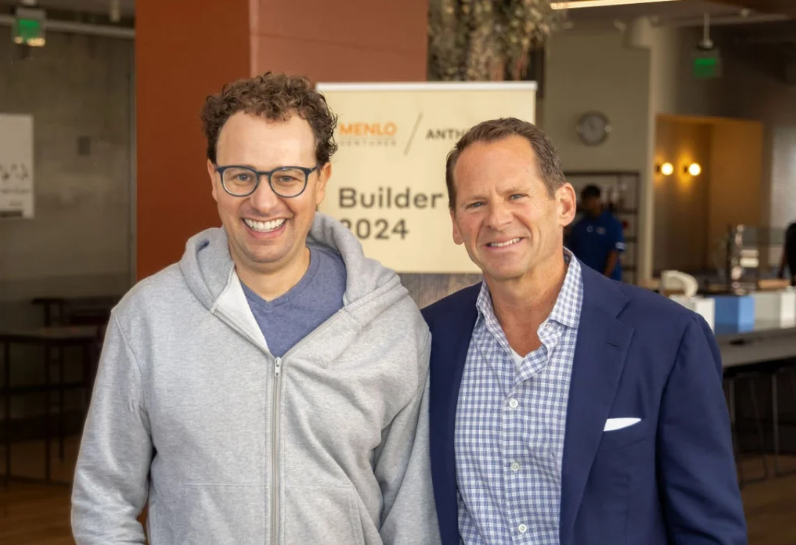
U.S. venture capital firm Menlo Ventures has raised a new fund of $3 billion (approximately 4.6 trillion won) to celebrate its 50th anniversary. This is the largest fund in its 50-year history, and it plans to fully support the growth of Anthropic among its AI portfolio companies.
The fund will be split into two vehicles: "Menlo Ventures 17," which invests in seed to early Series A startups, and "Menlo Inflexion 4," which provides growth capital for high-growth companies from Series B onward. Menlo Ventures stated, "We aim to meet founders at any stage and grow with them through all subsequent rounds."
Menlo's history dates back to 1976, when DuBois Montgomery, a 27-year-old electrical engineer from Bell Labs, opened an office on Sand Hill Road. He said, "The most impactful companies are built long before the market assigns them value."
The bet on Anthropic is a prime example of that belief paying off. Menlo first invested in Anthropic's Series C round in 2023, when the company had neither products nor revenue. At a time when ChatGPT was already mainstream and the prevailing view was "the LLM competition is over," Menlo saw room for another foundation model company to enter.
The following year, in 2024, Menlo led Anthropic's Series D round with its largest check ever, investing $750 million (approximately 1 trillion won) and quadrupling the corporate valuation to $18.4 billion (approximately 28 trillion won). At the time, insiders recalled that they were "so afraid they were white-knuckling" their bet.
The result was a huge success. Anthropic's ARR (annual recurring revenue) surged from 1 billion won (1.5 trillion won) in early last year to $47 billion (approximately 72 trillion won) by May this year. Menlo participated in Series E and F as well, executing a "triple down" (three consecutive large-scale bets). Anthropic is now preparing for the largest IPO (initial public offering) in its history.
In addition, Menlo has established itself as a leading AI investor by building a portfolio of recently prominent AI startups across infrastructure and application areas: OpenRouter, Goodfire, Cider Discovery, Skilled AI in infrastructure; and Rubble, Hixfield, Rigora, Open Evidence, Suno in applications.
Menlo plans to focus on AI for the next 50 years. The firm stated, "Companies that will define the next era are being built today," adding, "We are concentrating our company's capabilities on identifying undervalued companies like Anthropic before the market does."
Canadian Early-Stage Startups Hit by 'Investment Drought'... 40% Drop in Q1

Early-stage startups in Canada have been hit hard by an investment drought. According to a recent report released by RBCx, a subsidiary of the Royal Bank of Canada (RBC), both the number and total amount of pre-seed and seed-stage companies raising funds dropped sharply by 40% year-on-year in the first quarter of this year.
RBCx tracked over 700 pre-seed and seed-stage companies headquartered in Canada over two years. The number of companies securing funding peaked at 162 (totaling $510.7 million CAD) in January 2025, then plummeted to just 61 (approximately $189.8 million CAD) by March this year—a 31% decline from the previous quarter.
Notably, the average round size remains stable at around $3 million CAD (approximately 3.2 billion won). This means that while the funding demand of early-stage startups themselves has not changed, fewer founders are actually entering the market to seek money. The diagnosis is that funds have not dried up but are instead concentrated among a select few.
The core issue in Canada's VC market is "concentration." In 2023, the top five funds accounted for 46% of total funding raised, and last year that share surged to 83%. Capital has flowed into a small number of large funds such as Radical Ventures, Portage Ventures, Yale Town, Version One, and Garage Capital.
Total funding raised by all funds excluding the top five dropped sharply from $4.5 billion CAD at its peak in 2021 to $444 million CAD in 2025—a decline of about 90%. The "big players" capable of providing funds are concentrated in a tiny minority, while others have dried up, creating a polarized structure.
New VCs managing only one to three funds have been hit particularly hard. These are the "venture capital of the VC ecosystem," most active in early-stage and high-risk bets. Over the past three years, they managed to raise only about $2.8 billion CAD, falling short of the projected $4.3 billion CAD.
An industry insider warned, "If new VCs cannot secure funds, the funding pipeline that flows down to early-stage startups will dry up in a chain reaction," adding, "This is not just a funding gap but could lead to an innovation vacuum."
[MoneyToday Startup Media Platform 'Unicorn Factory']

 in FUTURE


