

[More diverse corporate information on the startups mentioned in this article can be found on the Unicorn Factory big data platform 'Data Lab'.]
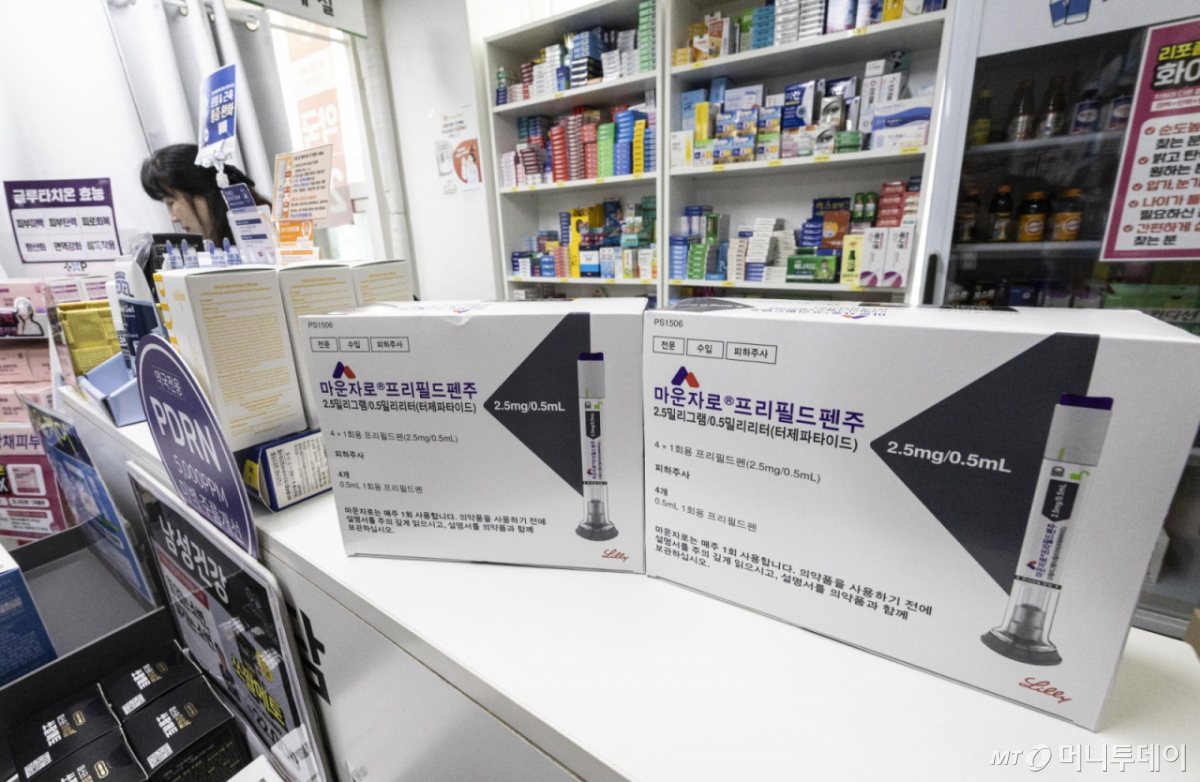
As GLP-1 class obesity drugs represented by Wegovy and Mounjaro have landed in Korea, health care and med-tech services, including 'diet apps' that were expected to face extremely low survival rates, are instead gaining new business opportunities thanks to the obesity drugs. Non-face-to-face consultation apps, which serve as the gateway to receiving prescriptions, have seen a surge in users. New management apps targeting only drug users have emerged, and existing apps have shifted their focus to AI (artificial intelligence) coaching and blood sugar management. Rather than the market disappearing with 'one shot,' a new demand layer has been created.
A Fantasy Drug? Side Effects Persist
While the power of GLP-1 class obesity drugs is strong, not all consumers are at ease. A study by listening mind, a search big data analysis firm, analyzing 86,314 diet-related search terms from July 2022 to June this year revealed that 3,628 keywords related to Wegovy and Mounjaro focused on price burdens, administration inconveniences such as splitting doses and storage, and side effects, alongside expectations for therapeutic effects. In the side effects category, diarrhea was the most frequent with an average of 11,831 cases per month, followed by pancreatitis (9,211 cases), muscle pain (8,253 cases), and hair loss (7,036 cases).
However, users searching for side effects did not lead to abandoning the drugs or seeking alternatives. It was analyzed that consumers only seek to be aware of side effect risks in advance but ultimately move toward high-purchase-intent keywords such as prescription hospitals and prices. The demand is to continue using the drug while separately addressing inconveniences.
The 'Gateway' Selling Drugs, the 'Secretary' Managing Medication, 'Accompanying Care' Preventing Side Effects
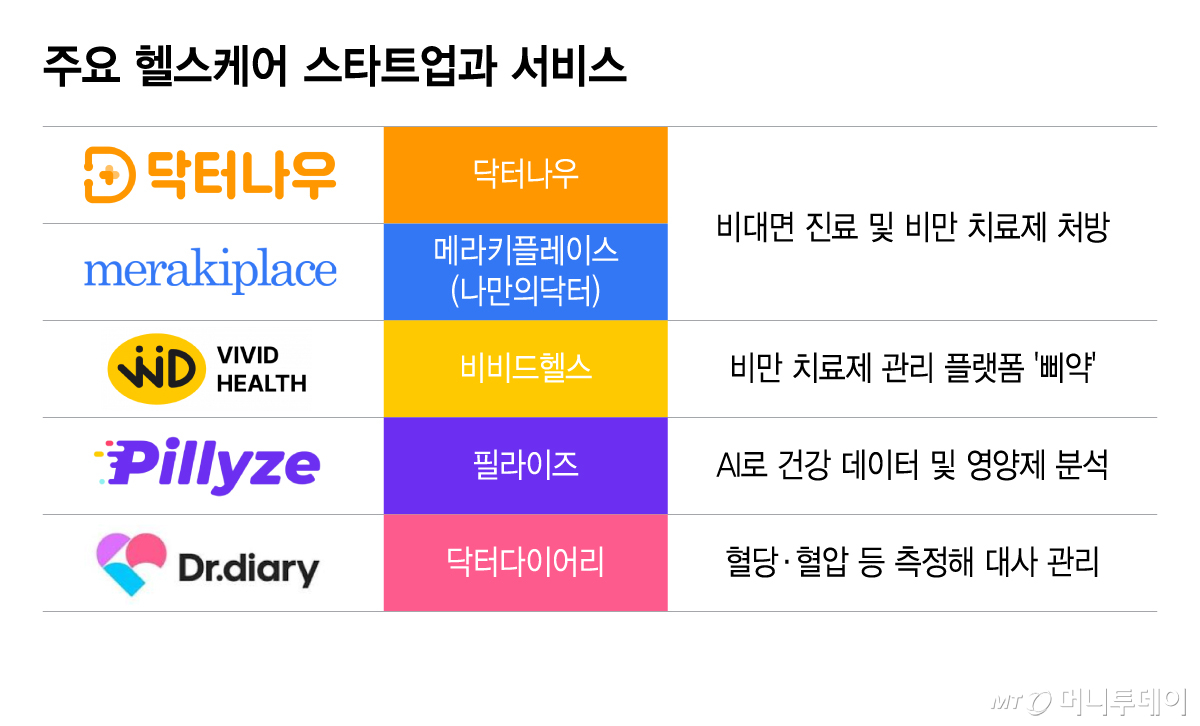
The most direct beneficiaries of obesity drugs were non-face-to-face consultation platforms first. According to Mobile Index, users of major non-face-to-face consultation services Doctor Now and Meraki Place's 'My Own Doctor' surged in line with the domestic launch of Wegovy and Mounjaro. Doctor Now's MAU (monthly active users) increased by 43% from 160,505 in September 2024 to 229,599 within a month. In July last year, it rose by 22% from 222,894 to 272,270 within a month. MAU this July soared to 500,285. 'My Own Doctor' also saw a surge, rising from 116,898 to 152,051 within a month of the Wegovy launch and from 262,900 to 294,671 during the Mounjaro launch period, reaching 523,159 by July this year. Obesity drugs have emerged as a revenue source for the non-face-to-face consultation industry, which relied on advertising and value-added services, alongside hair loss drugs.
Released in January last year, Vivid Health's 'Ppyak' is an obesity drug management platform that cares for problems of users taking obesity drugs like Wegovy, not dieting itself. By recording injection dosage and administration dates, the next scheduled injection date is automatically calculated, and changes in drug concentration in the body after administration or inventory and prices by hospital/pharmacy can be checked. As reviews on side effects and satisfaction by category accumulated, it even attracted users searching for information before prescription. Following the 2024 launch of Wegovy, Mounjaro entered Korea in August last year, making Ppyak an app used by 180,000 people. Kakao Ventures conducted a seed investment in March 2024, even before the app was released.
The new market created by obesity drugs is also being grouped under a new category called 'drug accompanying care.' As GLP-1 classes remove not only weight but also muscle, there is growing interest in minimizing gastrointestinal and blood sugar-related side effects alongside protein supplements that prevent muscle loss. A health care startup executive stated, "In the field of drug accompanying care, existing large pharmaceutical companies are approaching by releasing new drugs such as treatments for sarcopenia," and added, "Unlike new drug development which takes a long time for clinical trials, it is also possible for startups to enter the market quickly in the form of health functional foods."
'AI Coach·Blood Sugar Management' Diet Apps Change Places

Past diet apps evolved through stages such as 'recording tool → community/challenge → device linkage/automation.' After the era of calculators that summed up the calories of eaten food, a challenge model emerged where users posted verification photos with their target weight or paid participation fees and received returns upon success. Later, smartwatches, scales, and continuous glucose monitors (CGM) began connecting via Bluetooth, causing data to accumulate automatically.
Since the emergence of GLP-1 obesity drugs, diet apps have moved once again beyond simple calorie recording to 'AI analysis' and 'metabolic management.' Philize, established in 2021, started with supplement analysis but expanded its scope to include diet, weight, blood sugar, and exercise. AI analyzes health data and supplement ingredients to inform users of deficient or excessive components and ingredients with side effect risks. It has accumulated 1.4 million members.
Doctor Diary focused on blood sugar. It records and measures blood sugar, blood pressure, body composition, and glycated hemoglobin, connecting with measuring devices via Bluetooth. This is a case where the focus shifted from weight loss itself to metabolic management. In addition, apps like InOut and Dato also lead with AI-based automatic analysis of calories and nutritional components.
A health care startup executive noted, "One of the drawbacks of GLP-1 is that weight increases again if medication is stopped, known as 'yo-yo,' but there is still ample room for diet apps to operate in the management area after discontinuation." He also predicted, "As Wegovy and Mounjaro administration data accumulates on platforms, it will not eat into the market of existing diet apps but rather play a role in making it more abundant."
[MoneyToday startup media platform Unicorn Factory]

 in FUTURE


