

[For more diverse corporate information on startups mentioned in this article, visit the Unicorn Factory big data platform 'Data Lab'.]
The formula of "going public equals a jackpot," where venture companies list on the KOSDAQ market and deliver high returns to investors, is crumbling. Venture capital (VC) firms that invested in early-stage companies while accepting risks such as business failures are increasingly finding themselves powerless to stop stock prices from plummeting immediately after listing due to being tied down by "voluntary lock-ups" (mandatory holding periods) that do not even exist under current regulations.
According to Korea Exchange data on the 25th, among the 20th new KOSDAQ listings (excluding SPACs) from January to July this year, only four recorded returns exceeding their initial offering prices as of the closing price on the 21st. Seven companies, including Peace Studio (-75.86%), Strad Vision (-73.92%), and Hanpass (-72.89%), failed to even reach half of their offering prices.
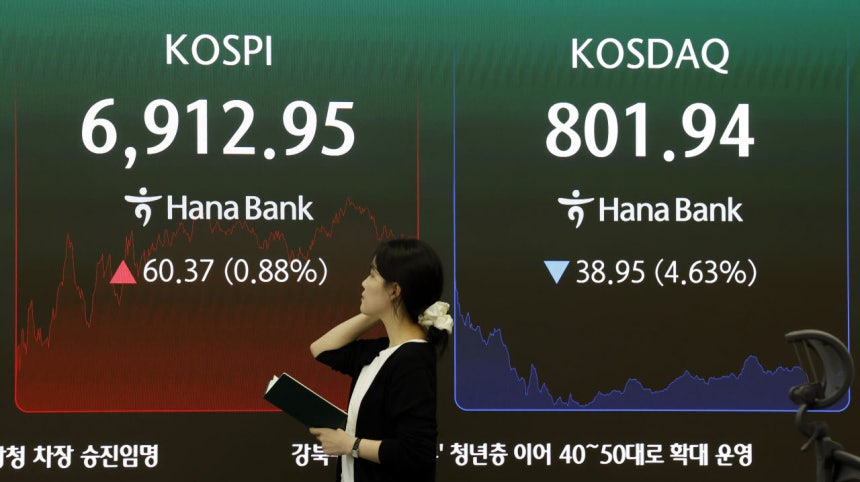
The fundamental causes are identified as a general decline in KOSDAQ market strength and bubbles in initial offering prices. The KOSDAQ index, which started the year around 930 points and surged to 1,170 points at one point in May, has been hovering around the 800th-point level since this month as the IPO bubble burst. As market uncertainty grows, many institutional investors are dumping their holdings on the first day of listing, triggering a vicious cycle that further drives down stock prices.
Critics also argue that inflated corporate valuations during the pre-listing phase lead to necessary adjustments once companies go public. Given the characteristic of the Korean stock market where liquidity concentrates in KOSPI blue-chip stocks, demand for new KOSDAQ listings remains weak, leading to a recurring pattern where stock prices rise on the first day of listing and collapse immediately the next day.
Another analysis suggests that the absence of large-cap leaders like Samsung Electronics and SK Hynix is hindering capital inflows into KOSDAQ. In fact, the number of companies entering KOSDAQ from January to July this year was only half of the 41st firms that listed in the first half of last year.
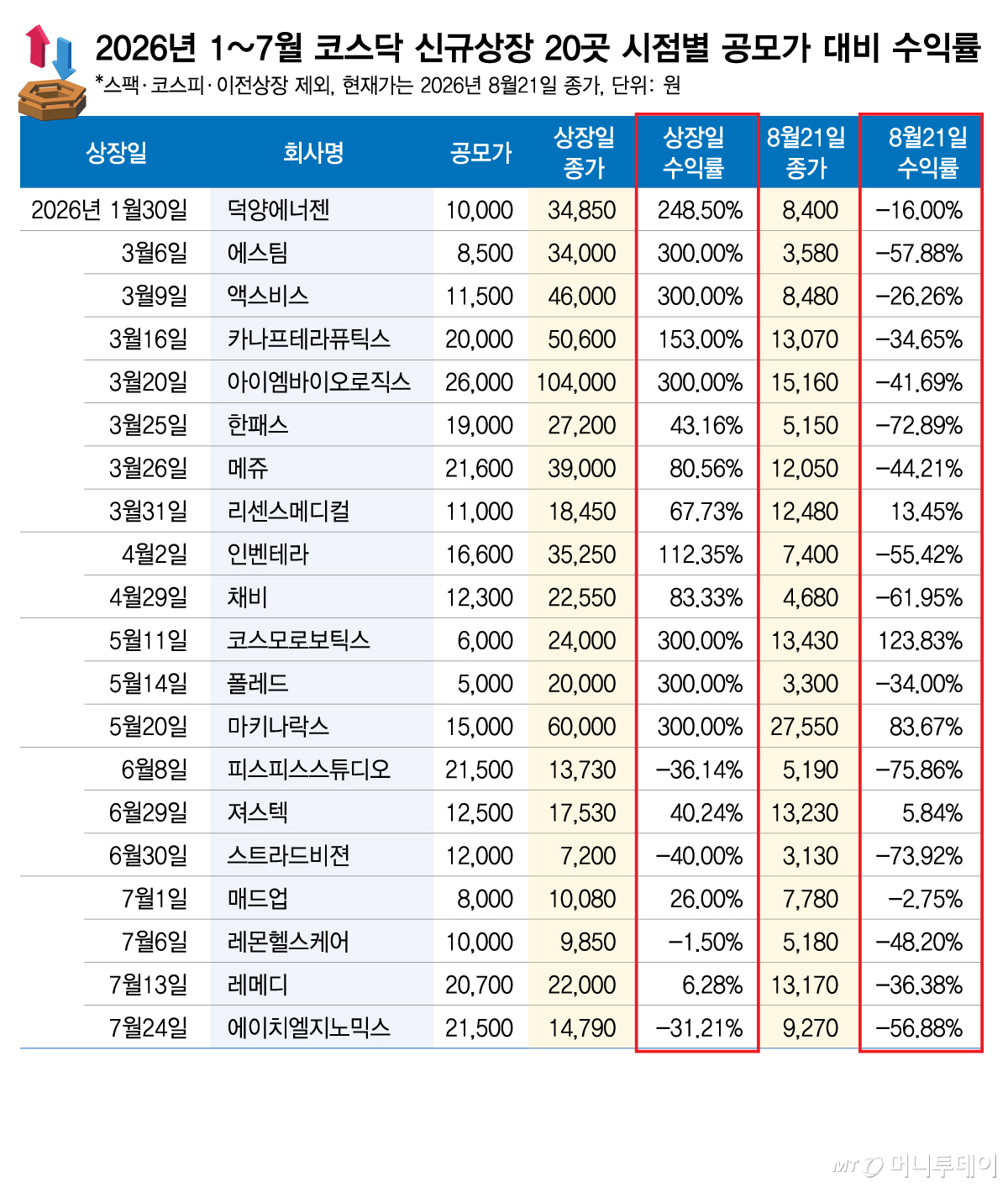
The problem is that sharp stock price declines immediately after listing directly impact the exit returns for VC firms that have invested over long periods. Peace Studio, which listed this year, serves as a prime example. Although the average acquisition price per common share held by multiple VCs was under 10,000 won—far below the initial offering price of 21,500 won—investment firms that committed to a one-to-three-month mandatory holding period are now facing inevitable losses due to the sharp stock price drop.
A representative from an investment firm stated, "It is frequent for exchanges to pressure companies into lock-ups through their lead underwriters in the form of 'window guidance.' Although there is no legal obligation, many firms reluctantly agree to lock-up terms and then suffer greatly when they cannot prevent stock prices from falling."
He further added, "Some argue that early investors can still profit even with mandatory holding periods due to their low acquisition costs, but this ignores the fundamental nature of venture investment, which carries significant loss risks. As more investment cases fail to achieve expected multiples (exit multiples), it will inevitably affect new investments."
[MoneyToday Startup Media Platform Unicorn Factory]

 in FUTURE

