

[For more diverse corporate information on the startup featured in this article, please visit the Unicorn Factory big data platform 'Data Lab'.]
Space has long been a domain explored by nations through massive budget allocations. However, as reusable launch vehicles deployed by U.S.-based SpaceX drastically reduced space transportation costs, the field transformed into an industrial sector.
Furthermore, following the Russia-Ukraine war, it emerged as an issue of "space sovereignty" directly tied to national security. With low Earth orbit (LEO) satellite communication networks and ultra-precise observation assets becoming key variables that can alter the course of conflict, countries around the world are engaged in fierce competition to secure independent space assets.
As thousands of satellites worldwide densely populate the 500th to 600 km low Earth orbit, South Korea has also been left with the heavy task of building an independent satellite network and, ultimately, securing space sovereignty.
Hanwha Group is the entity stepping forward from the private sector to solve this challenge. Hanwha has unveiled a vision to invest a total of 55 trillion won in the aerospace and AI sectors by 2040. This is a large-scale project in which Hanwha Aerospace will invest approximately 23 trillion won in the launch vehicle division, while Hanwha Systems will invest approximately 20 trillion won in building satellite networks, space data centers, and low Earth orbit communication infrastructure.
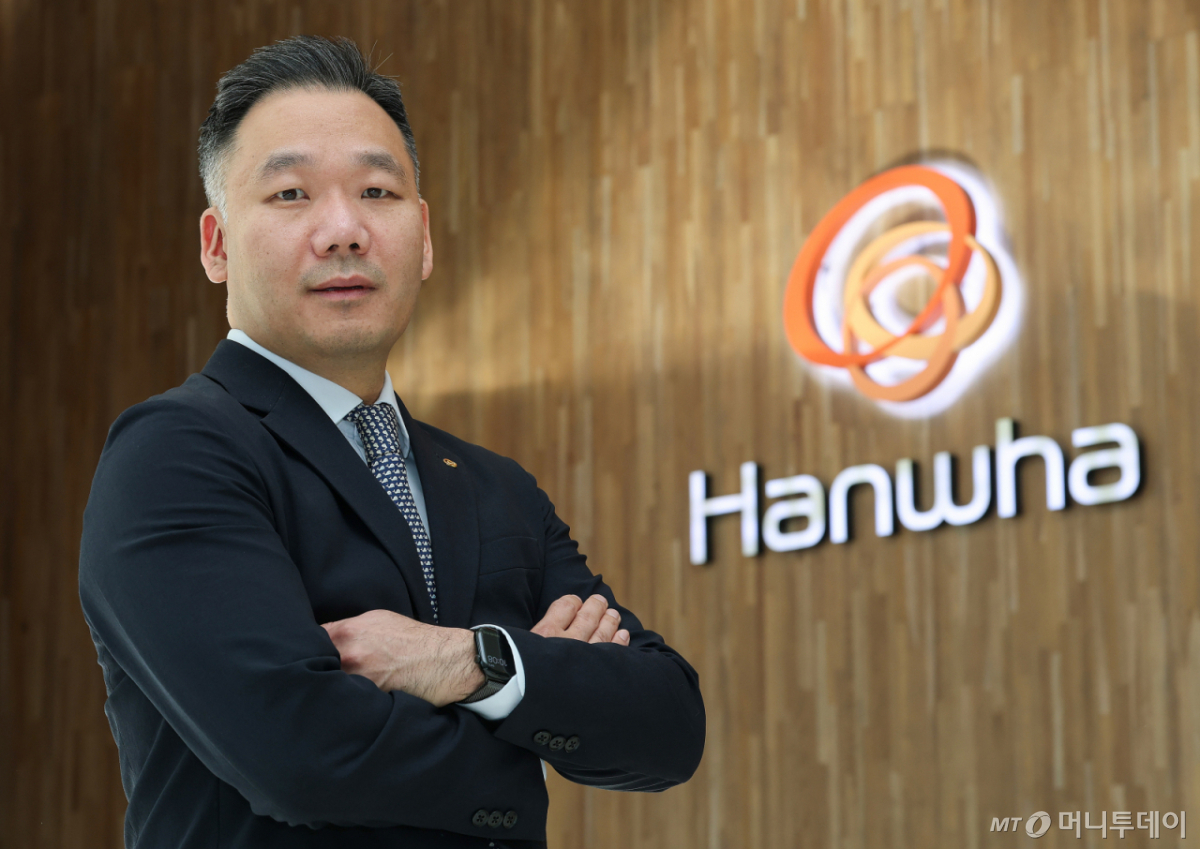
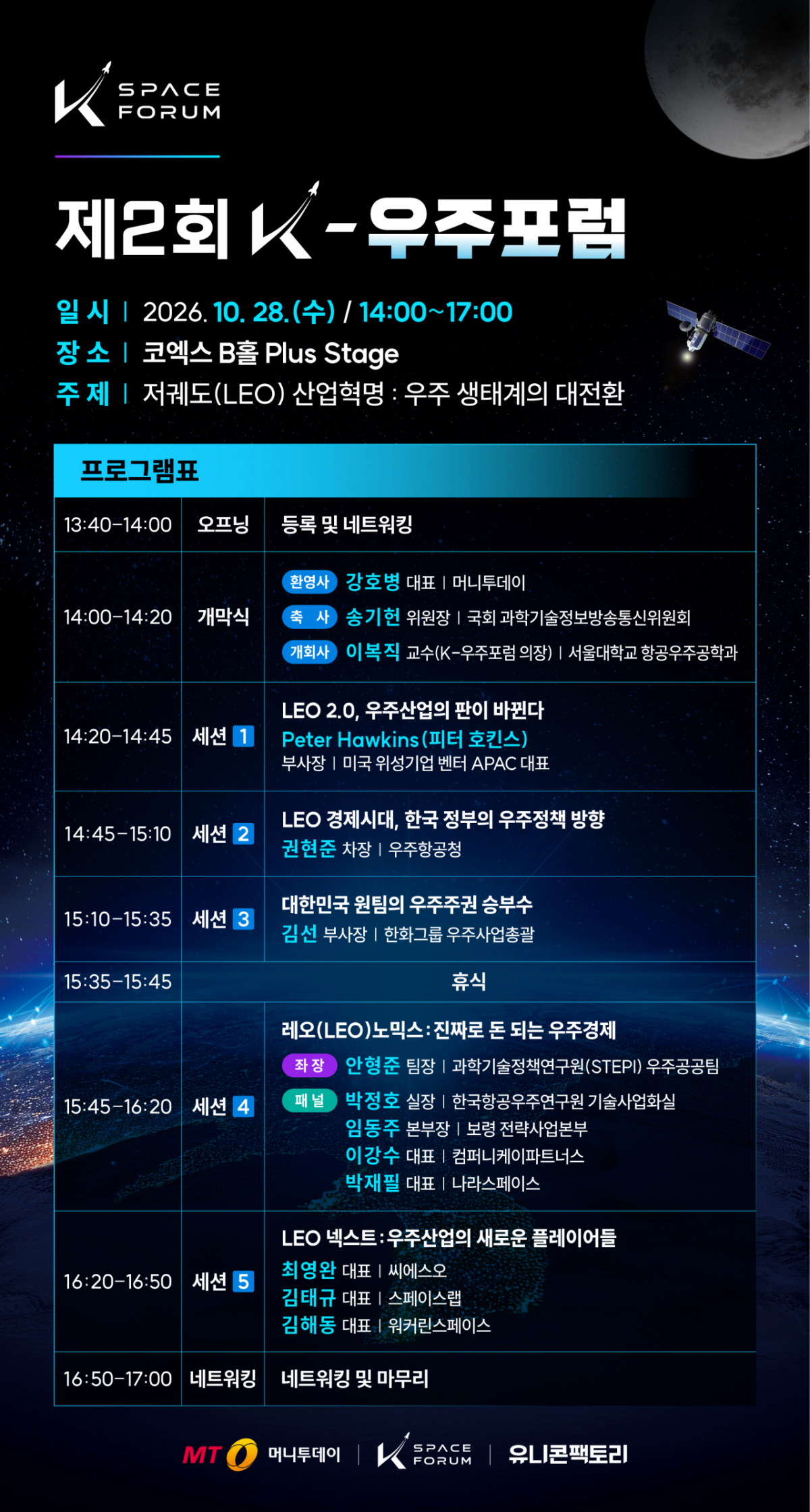
Kim Sun, vice president and Head of Space Business at Hanwha Group, who is leading this strategy, will take the stage as a speaker at the "2nd K-Space Forum" on Oct. 28 in Seoul, where the theme is "Low Earth Orbit (LEO) Industrial Revolution: The Daejeon of the Space Ecosystem." He is scheduled to present Hanwha's integrated space infrastructure concept under the keyword "South Korea's One-Team Gamble for Space Sovereignty."
In a recent interview with Money Today, Kim said, "Space sovereignty is the ability to directly utilize space at the time and in the manner we desire, without relying on other countries," adding, "We must first secure three things: an independent launch vehicle that can be deployed when needed, the orbit for launching satellites and the frequencies to use, and stable service demand."
He further emphasized, "To accelerate the securing of sovereignty, the government, space institutional investors, private enterprises, and others must establish a tight collaborative structure and move as South Korea's One Team."
Differentiation strategy: "Lower down, more precisely"
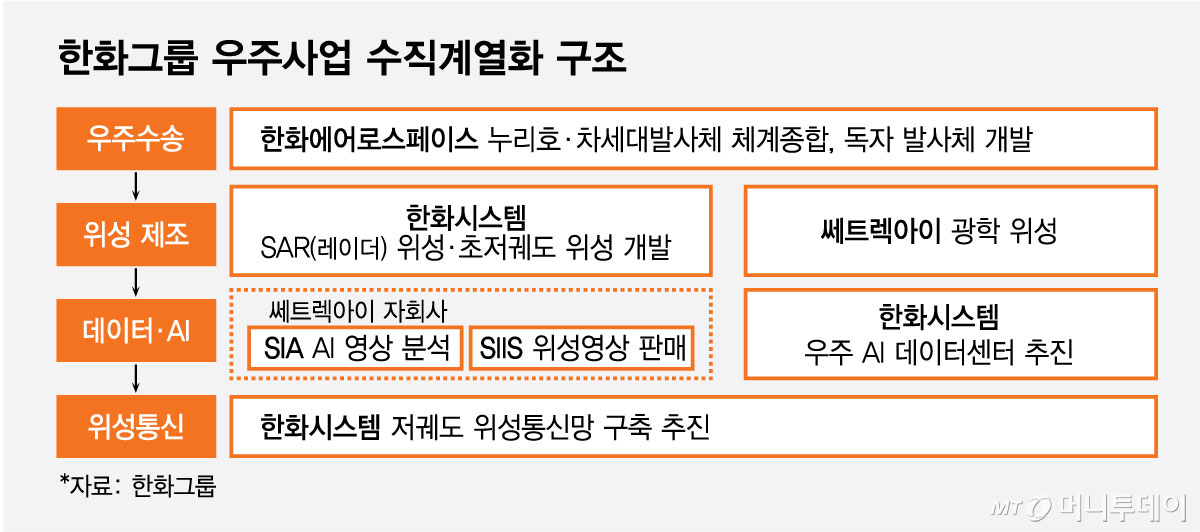
The basic concept of Hanwha Group's space business is to bundle five affiliated companies, including Hanwha Aerospace, Hanwha Systems, and Satrec Initiative, into a collaborative structure and build competitiveness by linking them with land, sea, and air weapon systems. The core points are "ultra-low Earth orbit (VLEO)" and "ultra-high resolution (UHR)." The strategy is to deploy satellites in lower orbits (300 to 400 km) than the commercial low Earth orbit satellites at 500 to 600 km already secured by global foreign companies, thereby ensuring world-class resolution.
Kim said, "We aim to provide commercial services in ultra-low Earth orbits that are lower than the low Earth orbit where competition with the U.S., China, and others is fierce," adding, "We will operate high-resolution satellites capable of precise reading down to 15 cm for Synthetic Aperture Radar (SAR) and 10 cm for Electro-Optical (EO), opening new markets."
Hanwha plans to complete development in the third quarter of next year and launch its first ultra-low Earth orbit satellite in 2028. Since ultra-low Earth orbits have high atmospheric density and thus high technical difficulty, they will find the optimal altitude through precise exploration. Starting in 2029, the company plans to deploy 64 radar satellites in stages, aiming to complete a system with a 30-minute revisit cycle (re-imaging the same location) by 2031.
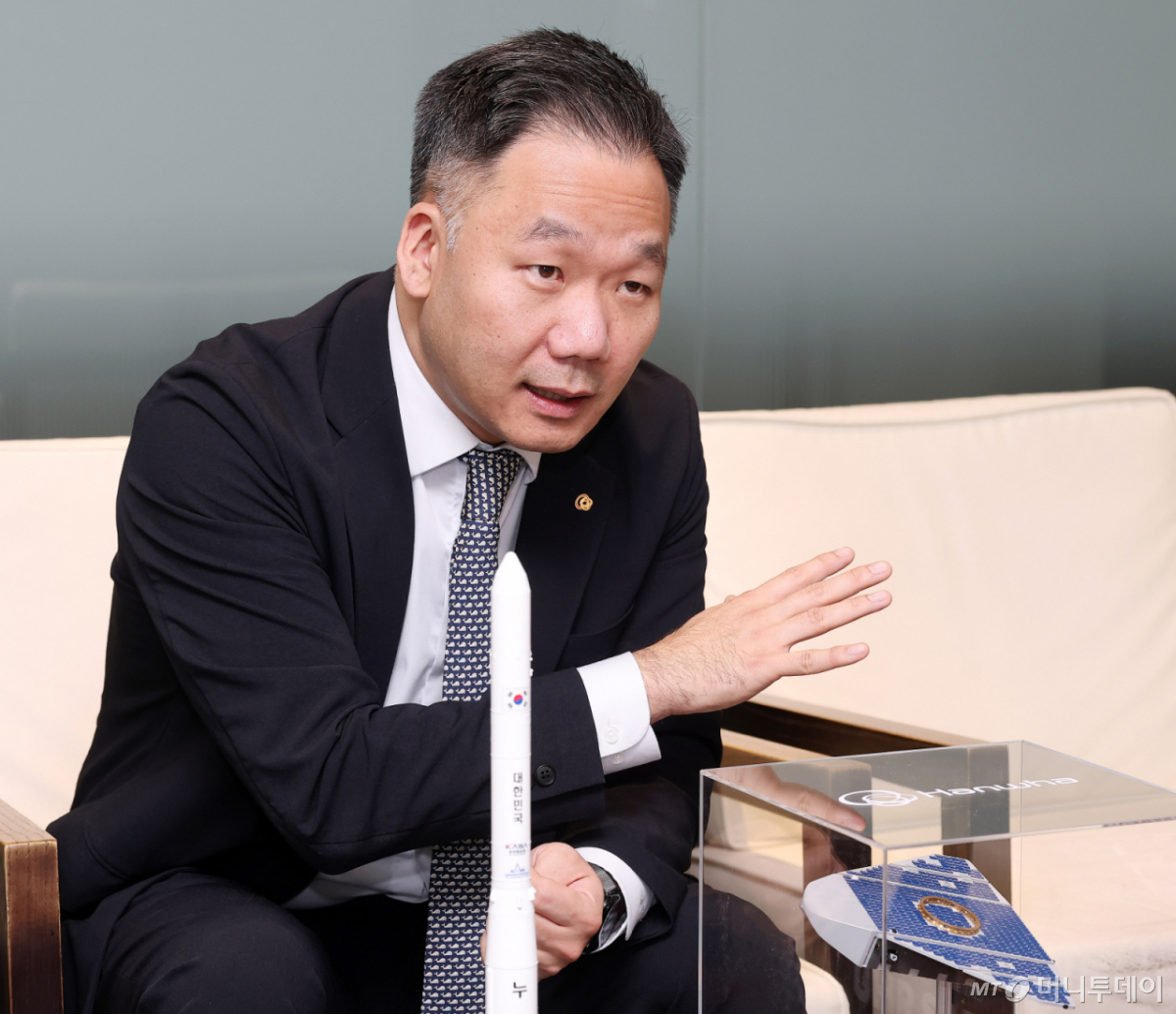
Efforts to secure the transportation capability to place satellites into orbit are also being carried out simultaneously. Through the independent launch vehicle currently under development by Hanwha Aerospace, commercial launches are expected to be conducted at least once a month starting in 2029. Ultimately, the company aims to build an integrated infrastructure that subdivides and links low Earth orbits by altitude.
Kim said, "We are conceptualizing a three-layer structure: placing observation satellites in ultra-low Earth orbit, space AI (artificial intelligence) data centers above them, and satellite communication networks at even higher altitudes," adding, "The space data center will integrate and analyze vast amounts of satellite data, sending only the results down to the ground, while the communication network will be connected to the group's land, sea, and air weapon systems." He further added, "AI is the key link that ties space and defense together to enhance completeness."
Vice President Kim emphasizes that for such a concept to succeed, active collaboration among related institutional investors is necessary under the overarching theme of "space sovereignty." He stated, "Neither the government, research institutions, nor enterprises can achieve meaningful results through their own efforts alone," adding, "Only when all players in the space industry ecosystem form a One Team and join forces can we take one more step toward securing South Korea's space sovereignty."
2nd K-Space Forum: Low Earth Orbit Industrial Revolution - The Daejeon of the Space Ecosystem;
Date/Time: Wednesday, October 28, 2026, 14:00 ~ 17:00
Location: Seoul COEX Hall B Plus Stage
Target Audience: VCoCVC reviewers and those interested in space industry investment
Key Content: Global low Earth orbit market trends, anchor company (Hanwha) space business strategy presentation, space startup IR
Registration: https://url.kr/2hgl5j
[Money Today Startup Media Platform 'Unicorn Factory']

 in FUTURE


