

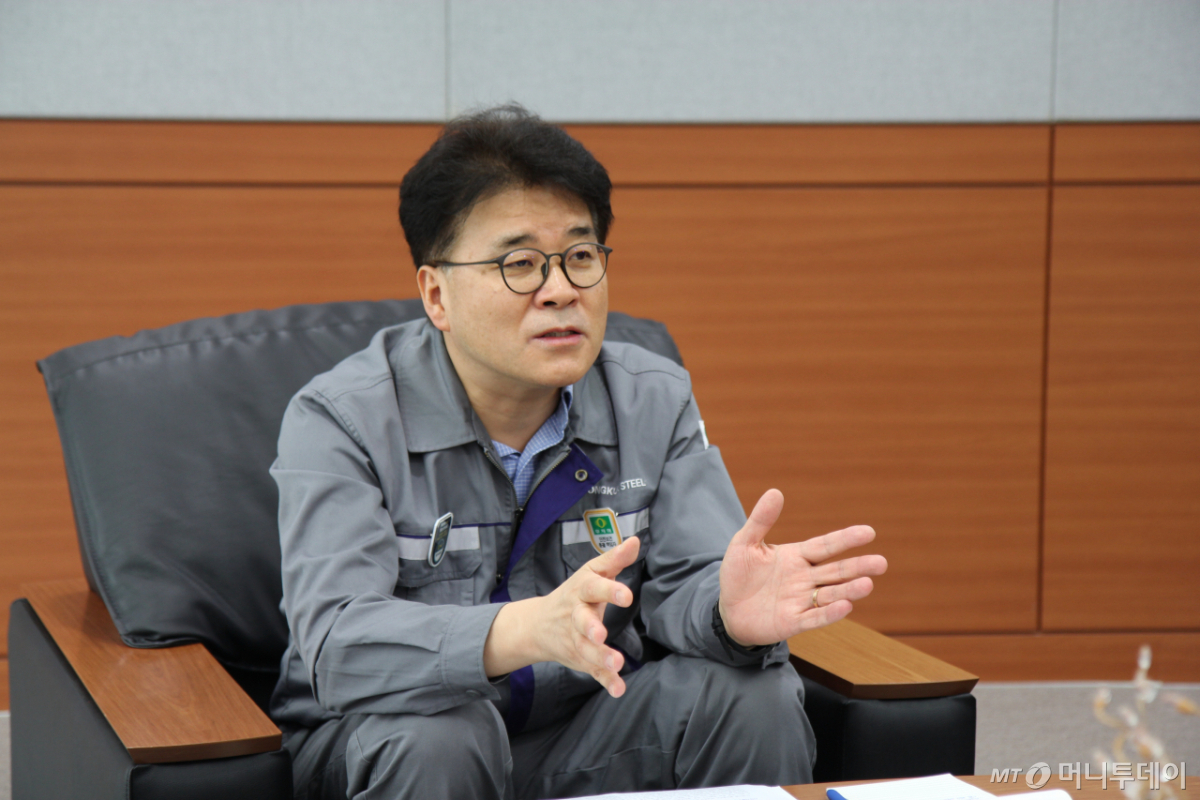
"D-Mega Beam (D-Mega Beam) is a 'hooking product' that allows us to enter markets we previously could not access."
On the 28th of last month, Park Byeong-gyu, CTO of Dongkuk Steel's Central Technology Research Institute, introduced Dongkuk Steel's ultra-large structural shape 'D-Mega Beam' in this manner and confidently stated that it "will establish itself as a representative high-value-added product." D-Mega Beam is an ultra-large structural shape produced by welding steel plates to achieve heights of up to 3 meters. It was developed targeting super-high-rise buildings and long-span (distance between columns) structures.
Recently, amid the AI (artificial intelligence) boom, it has gained attention as steel for data centers and semiconductor factories. Park stated, "There is growing demand for large cross-sections and customized structures that are difficult to address with conventional rolled H-beams," and emphasized, "D-Mega Beam can realize the cross-sections customers desire, making it a product capable of targeting new markets driven by AI infrastructure expansion."
What differentiated D-Mega Beam was its welding technology. H-beams consist of a vertically elongated central part called the 'web' and two horizontal parts on either side called the 'flange.' Conventional rolled H-beams create cross-sections by rolling heated steel multiple times, whereas D-Mega Beam is manufactured using a built-up method where webs and flanges are individually produced from steel plates and then welded together. Park explained, "Other companies weld the connection points one side at a time for a total of four welds, but D-Mega Beam was developed to weld both sides simultaneously, requiring only two welds—top and bottom." He added, "As Korea's first dual-side simultaneous welding facility, there were no operational experiences or standard production conditions to reference in the early stages."
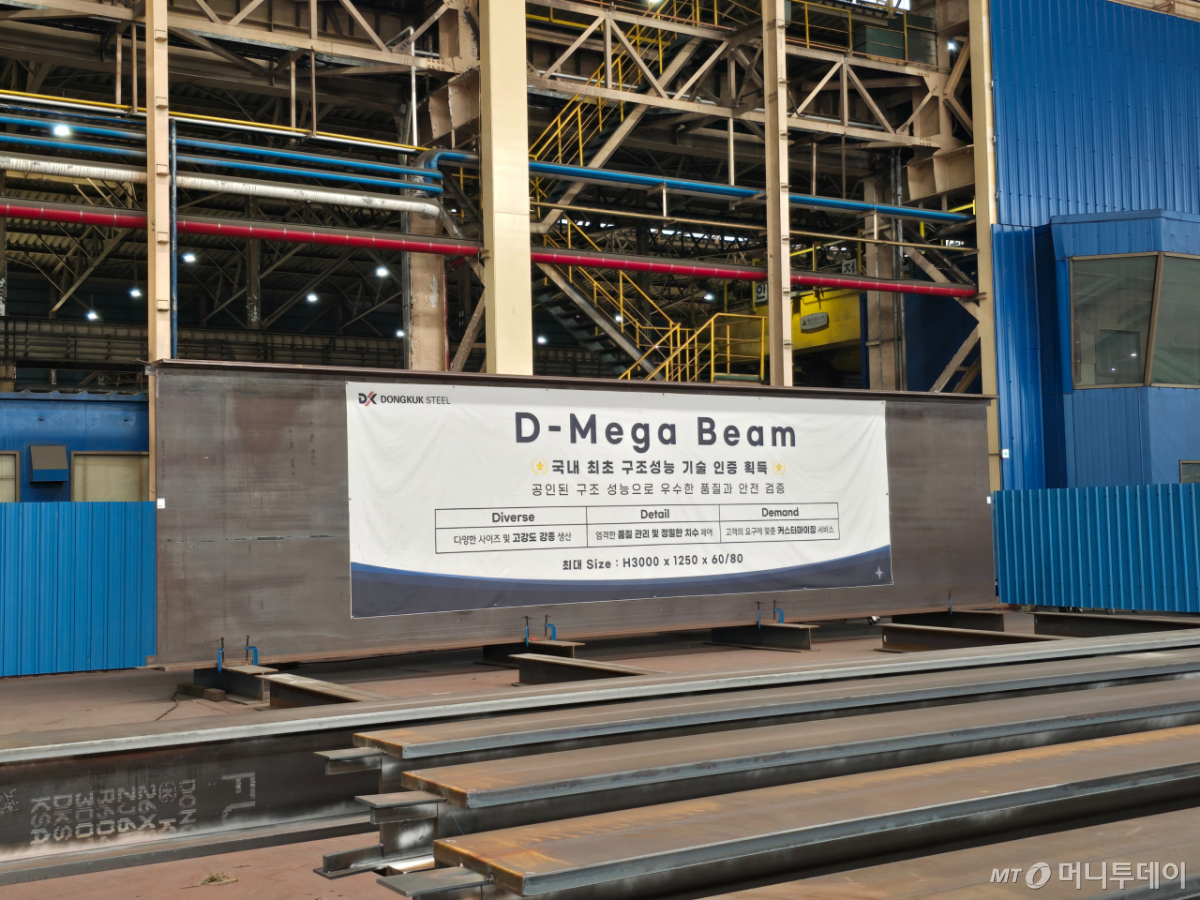
Merely acquiring equipment did not guarantee stable production. Optimizing welding current, voltage, speed, and welding sequence from scratch according to product size and steel plate thickness was a challenge. Park explained, "The research institute and production department repeatedly conducted trial productions for various specifications, accumulating data, while researchers directly worked alongside operators to solve problems." He continued, "Through such repeated verification, we were able to secure optimal welding conditions for each specification."
After securing the technology, the next step was gaining market trust. Since the product is made by welding steel plates, there were significant concerns about structural safety. Park recalled, "The most frequent question we received was whether the welded joints might burst under tensile force. As this is a new process, it required time to earn customer trust."
Dongkuk Steel addressed these concerns by conducting full-scale structural performance evaluations in collaboration with the Korean Society of Steel Structures. Based on results verifying strength, stiffness, deformation performance, and load-bearing capacity, they also obtained technical certification. Park introduced, "Our research findings were published in academic journals, leading to objective recognition of structural performance. Today, this data serves as core material for technical sales targeting design firms and construction companies."
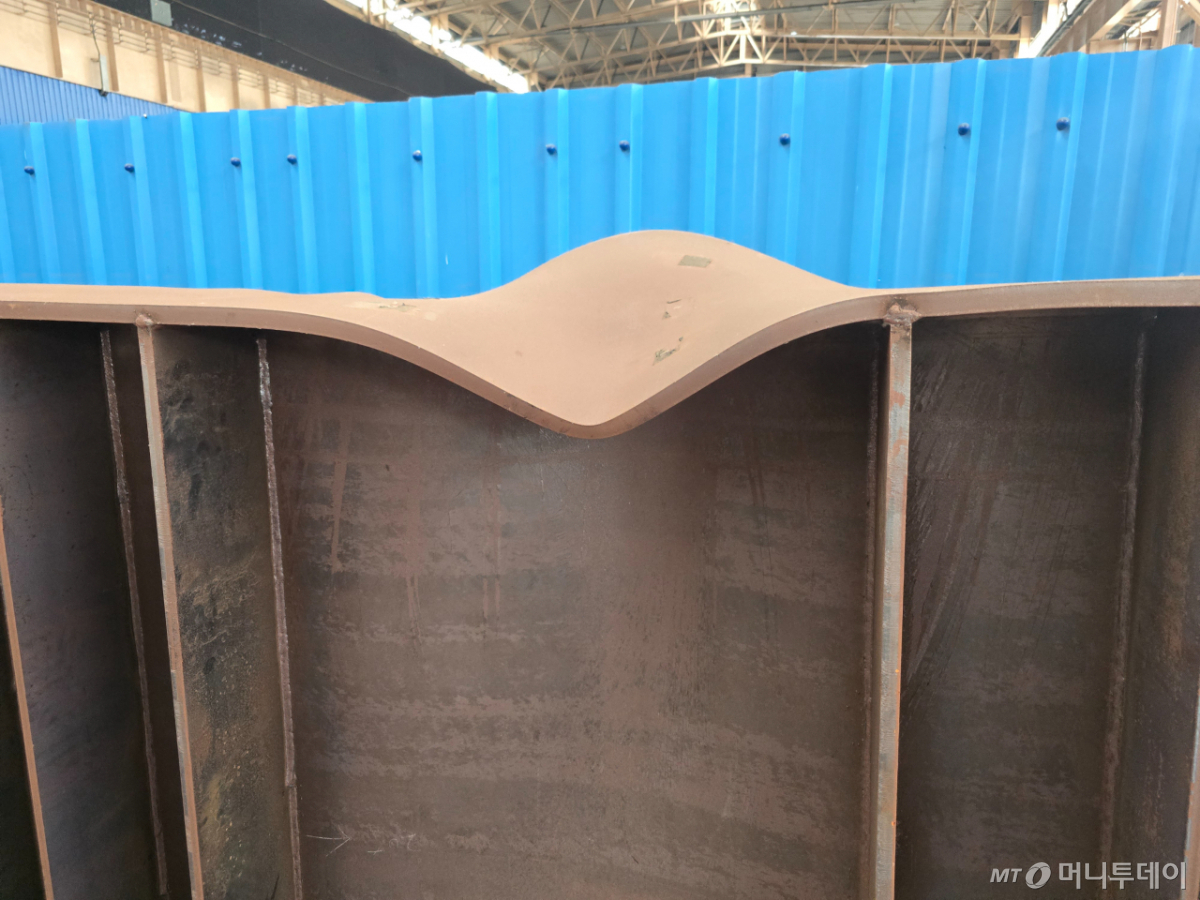
Dongkuk Steel is also accelerating its efforts to penetrate overseas markets. Particularly targeting countries with stricter seismic standards than Korea, it plans research to enhance seismic performance of both connection points and entire frameworks. Park stated his ambition: "In the future, we plan to expand research to include seismic connection performance evaluations that ensure stability even under repeated seismic loads, thereby broadening the application scope."
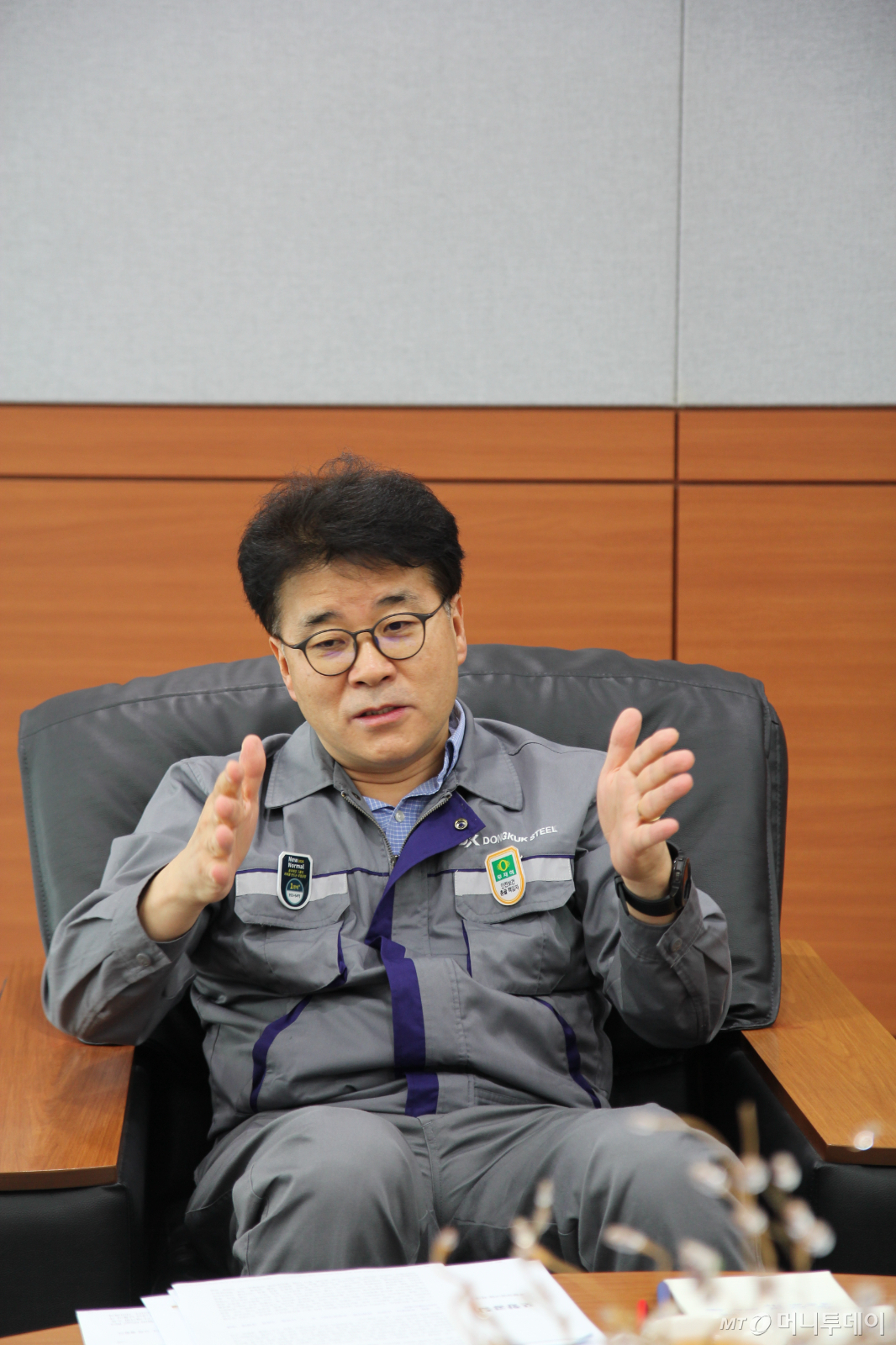
Furthermore, the company expressed its resolve to find a breakthrough for the sluggish steel industry through research and development. To this end, it formulated a strategy to secure market leadership through technological prowess rather than competing on price in the general steel materials market. Park said, "Our goal is to create a first-mover effect through technical barriers and become a market-oriented research institute that leads the industry."

 in INDUSTRY


