

[Exclusive] Government to Expand ESS Market… 3rd Bidding Project Likely to Exceed 1GW
-Government to Announce 3rd Bidding as Early as Next Month
The government-led ESS (Energy Storage System) bidding 'table' is set to double in size. Before the full-scale launch of the ESS project era expanded to GW (gigawatt) scale, there are calls for institutional measures to eradicate overheated low-price bidding wars.
According to the energy industry on the 26th, the Korea Electric Power Exchange under the Ministry of Climate, Energy and Environment is seriously considering announcing a size of over 1GW for the 3rd ESS Central Contract Market Bidding, which will be released as early as next month. The first and second rounds were both approximately 560MW (megawatts).
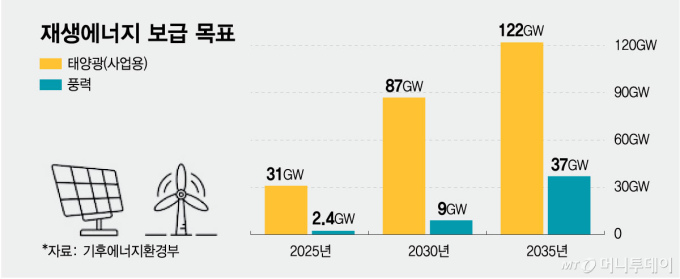
The government appears to reflect the surge in electricity demand due to the arrival of the AI (artificial intelligence) era and the trend of expanding new renewable energy generation. In the case of solar and wind power, there are fluctuations in generation depending on weather and time, making a medium like ESS batteries essential for storing energy. In fact, the share of domestic renewable energy generation was 9.7% last year, and the government plans to raise this to over 30% by 2035. Accordingly, the government has a strategy to deploy ESS with a capacity of 23GW by 2038. The upcoming 12th Basic Electricity Supply and Demand Plan may include more aggressive targets.
For domestic battery companies LG Energy Solution, SamsungSDI, and SK On, this is a bidding market they cannot afford to miss. The government plans to invest a total of 40 trillion won in ESS projects by 2038. The first and second rounds were reported to be around 1 trillion won each, but the third round could reach the 2nd trillion won range. With electric vehicle front-end demand passing through a temporary slowdown period, ESS is playing the most important breakthrough role for the battery industry.
Industry focus is on establishing a virtuous cycle structure leading from 'bidding → winning orders → profit generation → reinvestment.' This is because excessive 'self-harming' price competition occurred among the three battery companies in the first and second rounds. Hence, there are urgent calls for measures such as expanding the weight of non-price evaluation items and introducing a minimum price system starting from the third round.
A climate ministry official stated, "The volume and timing of the 3rd ESS bidding are currently under discussion," adding, "Once specific details are finalized, they will be announced through the Korea Electric Power Exchange."
Does Winning More ESS Bids Lead to Deficits?… K-Batteries Bruised by Bloodletting Competition
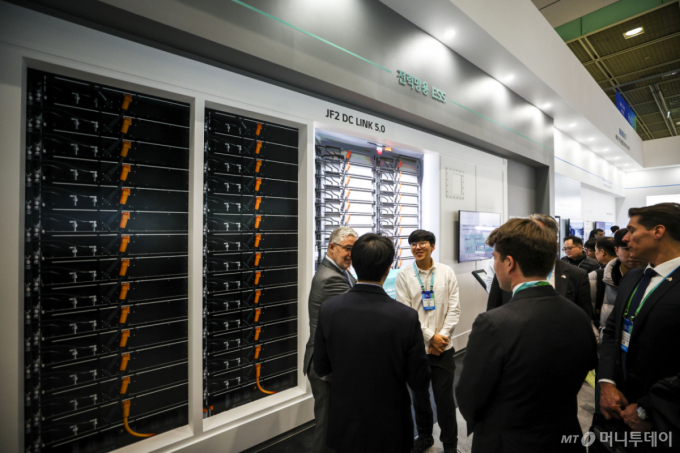
For domestic battery companies ramping up their efforts in the energy storage device (ESS) business, where explosive demand expansion is expected, the government's ESS Central Contract Market is an opportunity they must secure. However, as price competition to secure volume intensifies, companies are forced to jump into bidding wars even at the cost of losses, contrary to the intention of fostering the battery industry ecosystem.
According to relevant industry sources on the 26th, the average bid price in the February 2nd round this year was lower than in the July 1st round last year. While specific prices were not disclosed, the market reports that the bid price per kWh (kilowatt-hour), which was in the 30th won range during the first round, dropped to the 20th won range in the second round. Considering that the estimated bid price during the 2024 Jeju pilot project was in the 50th won range per kWh, the decline is even more palpable. As bidding competition intensifies, bid prices continue to fall. This explains why domestic battery companies' expressions are not particularly bright.
In fact, SamsungSDI won more than half of the volume in the first round, and SK On did so in the second round, earning them the title of 'winners,' but the reality was different. An industry official stated, "Although the price weighting in the second round decreased by 10 percentage points to 50% from the first round's 60%, everyone minimized margins, yet prices actually fell further," adding, "It is a structure where it is difficult to make profits even when winning orders." At this level of pricing, some even suggested that selling batteries overseas would be more profitable than supplying them to the domestic ESS market.
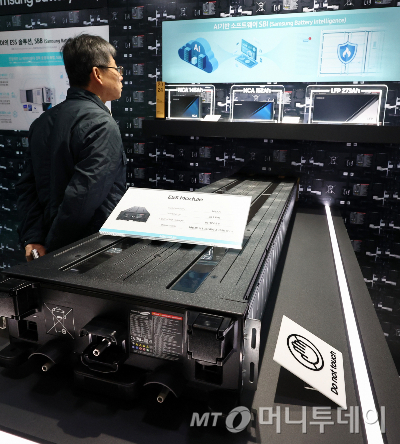
In response, battery companies have proposed to the government that institutional measures be established in the bidding market to secure adequate margins necessary for stable operations. There is also a side aimed at resolving the negative effects of mutual eye-balling over 'prices' continuing until just before the bid deadline. The rationale is that bids should not focus solely on price but must comprehensively evaluate battery performance and safety.
First, a minimum price system is cited as an accessible alternative. If the government sets a price floor, the overheated competition over battery prices could be somewhat alleviated. Conversely, similar to wind power bidding, it is possible to set a price ceiling and award maximum points for price evaluation to all operators who support below 85% of that price. This aims to establish safety measures so that scores do not keep rising simply by lowering bid prices indiscriminately. Another option discussed is evaluating factors other than price to select participating operators in the first round, followed by price competition among them.
There are many voices calling for such institutional support in the 3rd bidding, which the government may announce as early as next month. This is because expectations are growing that the scale of the 3rd bidding will reach nearly double the previous size at 1GW (gigawatt). There are concerns that institutions must be reformed before economies of scale can be fully realized in ESS.
Some segments of the energy industry view establishing 'protective measures' as an admission that domestic battery companies' competitiveness has declined. However, there is also an opinion that competing on price with Chinese companies backed by massive government subsidies is inherently disadvantageous for K-batteries. Another industry official stated, "We hope the government considers this from the perspective of nurturing new industries with high future growth potential," and urged, "ESS is core infrastructure connected to the national power grid, so long-term stable operation is essential."

 in INDUSTRY


