

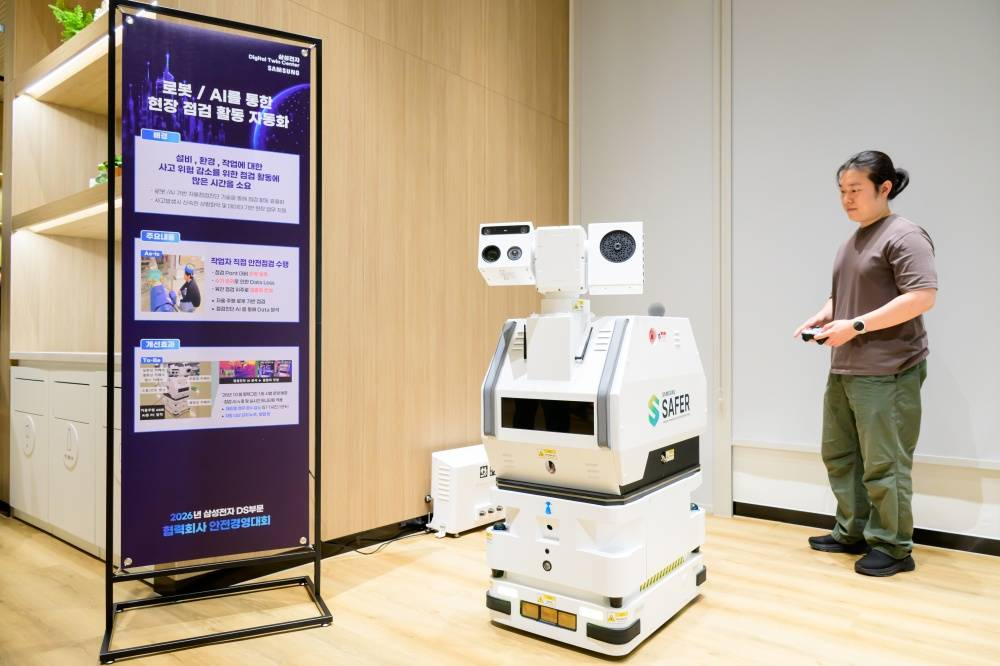
The number of robots operating in Samsung Electronics' semiconductor fabs is expected to exceed 10,000 by 2030, according to industry analysis. Their applications are also expected to expand, ranging from equipment maintenance robots to humanoid robots.
As the industry moves toward an era of fully automated robotic fabs, Samsung Electronics and SK hynix have joined forces to establish international safety standards for robots designed specifically for semiconductor manufacturing environments.
According to a presentation by the Robot Safety Task Force (TF) of SEMI (Semiconductor Equipment and Materials International), released on Nov. 26 in collaboration with the semiconductor industry, the scale of robot operations in Samsung Electronics' semiconductor division is projected to expand from approximately 100 units this year to over 10,000 units by 2030. This represents an increase of roughly 100 times in just four years.
The types of robots will also become more diverse. Currently, the semiconductor manufacturing site utilizes equipment preventive maintenance (PM) robots, inspection and diagnosis robots, ride-on robots, and factory cleaning robots. In the future, drone robots and humanoid robots are expected to be additionally introduced.
The area of automation in semiconductor factories, which was previously centered on wafer and material transport, is expanding to tasks that were directly performed by humans, such as equipment maintenance. This can reduce equipment downtime due to maintenance and improve productivity and yield by enhancing the accuracy of work.
A representative example is 'Dextro,' a preventive maintenance collaborative robot unveiled by US semiconductor equipment maker Lam Research in 2024.
It performs tasks such as replacing consumables, precise bolt tightening, and removing process Busan from inside etching equipment. One robot can handle 50 to 100 chambers that require monthly maintenance.
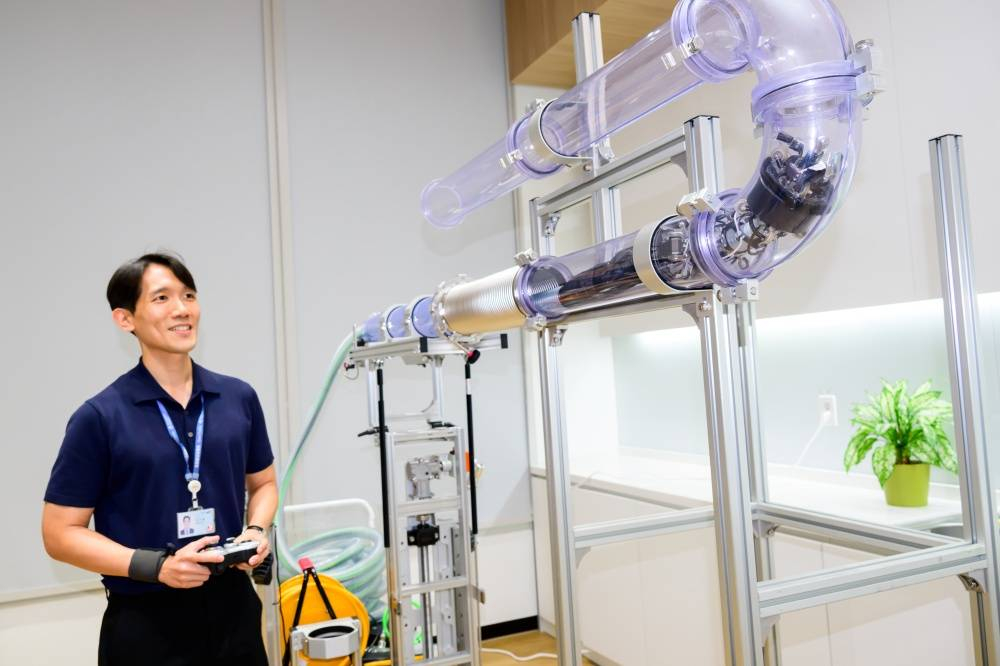
Samsung Electronics has also established a dedicated organization within its DS (Device Solutions) division to oversee the development and introduction of fab automation robots, accelerating 'fab robot' development.
In the first half of this year, it filed a US patent for robot technology that removes Busan accumulated inside the piping of semiconductor production facilities.
It is also developing inspection and diagnosis robots that inspect facilities and equipment in place of engineers and reduce the risk of safety accidents for workers through AI-based real-time monitoring. Recently, it was reported that Samsung Electronics has conducted tests with humanoid robots at its semiconductor fabs.
The issue is that safety standards are not keeping pace with the speed of robot adoption. Semiconductor factories are densely populated with high-value precision equipment and workers, and use various special gases and chemicals.
Robot falls or collisions can lead to major accidents such as fires and hazardous material leaks. Existing international standards for mobile robot safety target general industrial environments and do not sufficiently reflect the unique risks of semiconductor factories.
In response, Samsung Electronics and SK hynix have taken steps to establish international standards. The Korea Environment, Health, and Safety (EHS) Technical Committee of SEMI launched a Robot Safety TF in March last month.
The TF is being operated under the leadership of Samsung Electronics and SK hynix. The TF's activities include: △ establishing a classification system for robot types and risk grades within semiconductor factories; △ defining safety requirements when workers and robots share space; and △ responding to structural and environmental risk factors unique to semiconductor factories.
The TF submitted a proposal for the development of a new standard, 'Safety Guidelines for Autonomous Mobile Robots (AMR) for Semiconductor Manufacturing,' in July last month.
The new standard targets AMRs that recognize their surrounding environment using onboard sensors and determine movement paths.
It includes robots ranging from logistics transport robots to mobile robots equipped with robotic arms. The Robot Safety TF has set a goal to prepare the first draft of the standard by March next year.
An industry official said, "Robot utilization in semiconductor fabs is still in its early stages, so securing necessary data is also important. It appears that robot adoption will be prioritized with a focus on equipment maintenance and ensuring worker safety."

 in INDUSTRY

