

The expansion of global artificial intelligence (AI) investment is opening a new growth frontier for the domestic electronic components industry. The expansion of the AI sector is translating into demand for high-value-added components, ranging from multilayer ceramic capacitors (MLCCs) and semiconductor packaging substrates used in AI servers to sensing components that serve as the "eyes" of autonomous vehicles.
Samsung Electric announced on the 29th that it has signed a supply contract worth approximately 290 billion won for MLCCs and inductors for AI servers with a major global company for the coming year. This is the fifth long-term supply contract signed this year, bringing the cumulative scale of long-term supply contracts for this year, including silicon capacitors, to approximately 3.6 trillion won.
As the performance and power consumption of AI servers increase, the importance of MLCCs and inductors, which stabilize power supply and reduce signal interference, is growing. In particular, demand is rising for high-capacity, high-reliability MLCCs and high-current, high-efficiency inductors.
AI servers are equipped with more than 10 times as many MLCCs as general-purpose servers. According to Goldman Sachs, the global market for MLCCs for AI servers is projected to grow from $1.4 billion last year to $5.8 billion by 2030. Samsung Electric holds a market share of over 40% in this sector.
The benefits of expanding AI infrastructure are also spreading to circuit boards. As the performance of AI accelerators and other devices improves, demand is increasing for flip-chip ball grid array (FC-BGA) substrates that connect semiconductors to mainboards, particularly for large-area, high-layer-count products.
To expand FC-BGA production capacity, Samsung Electric is investing 4.27 trillion won in its Sejong plant and plans to invest 2.51 trillion won in its Vietnamese manufacturing subsidiary. Products produced at the expanded production lines have already been allocated to major customers. LG Innotek is also pushing to expand FC-BGA production.
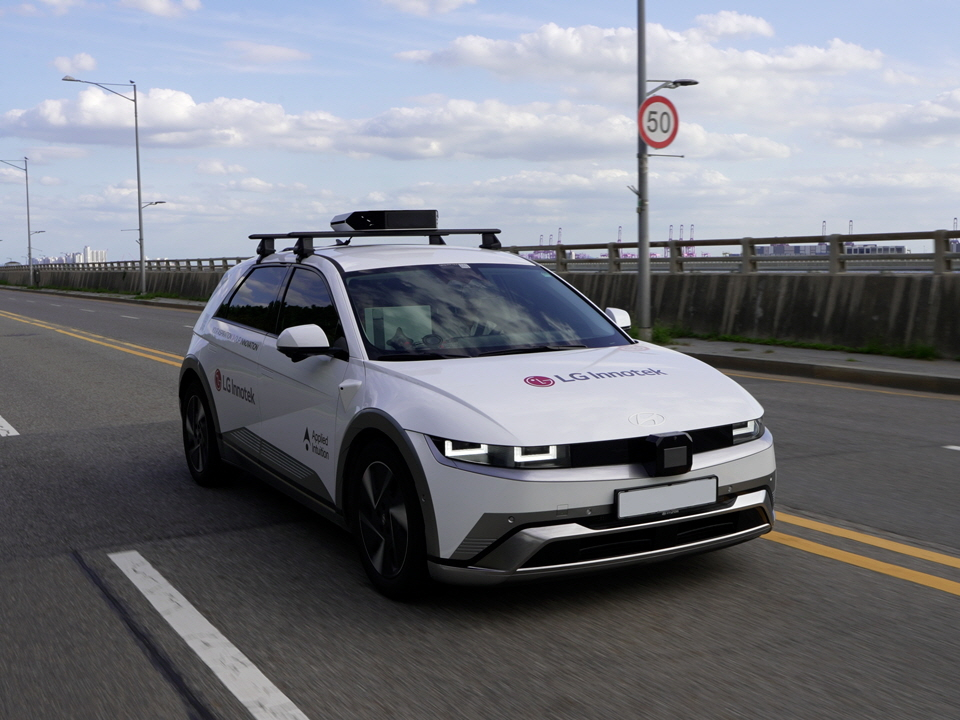
Sensing components for physical AI are also emerging as a new growth area. LG Innotek announced on the same day that it has begun operating "autonomous driving sensing data collection vehicles" in South Korea in partnership with Applied Intuition, a U.S.-based autonomous driving software company. Operations will begin centered on Seoul, Incheon, and Gyeonggi Province, with plans to operate approximately 20 vehicles, including data collection vehicles and autonomous driving software development vehicles, by 2028.
LG Innotek plans to combine data collected from real roads using cameras, radar, and LiDAR with digital twins, a virtual environment, to enhance the performance of individual sensors and advance "sensor fusion" technology that combines and corrects information from different sensors. Additionally, the company aims to secure "edge case" data for the realization of fully autonomous driving.

 in INDUSTRY
