

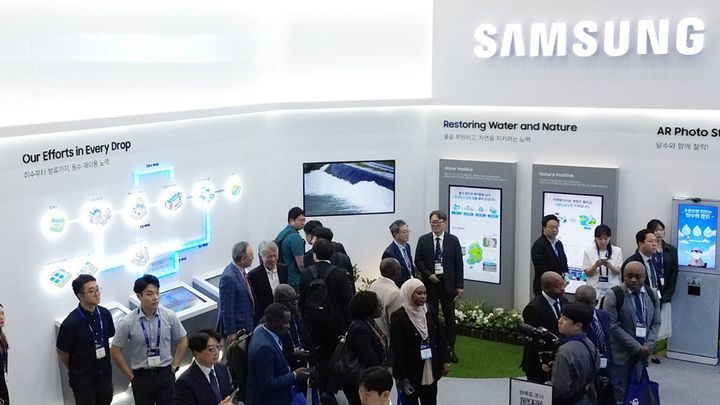
Samsung Electronics will introduce its strategy for innovating semiconductor research and development (R&D) and manufacturing processes through the use of artificial intelligence (AI). The company plans to expand AI applications from semiconductor design to production, aiming to enhance development speed and manufacturing efficiency while presenting the direction for the AI transformation of the next-generation semiconductor industry.
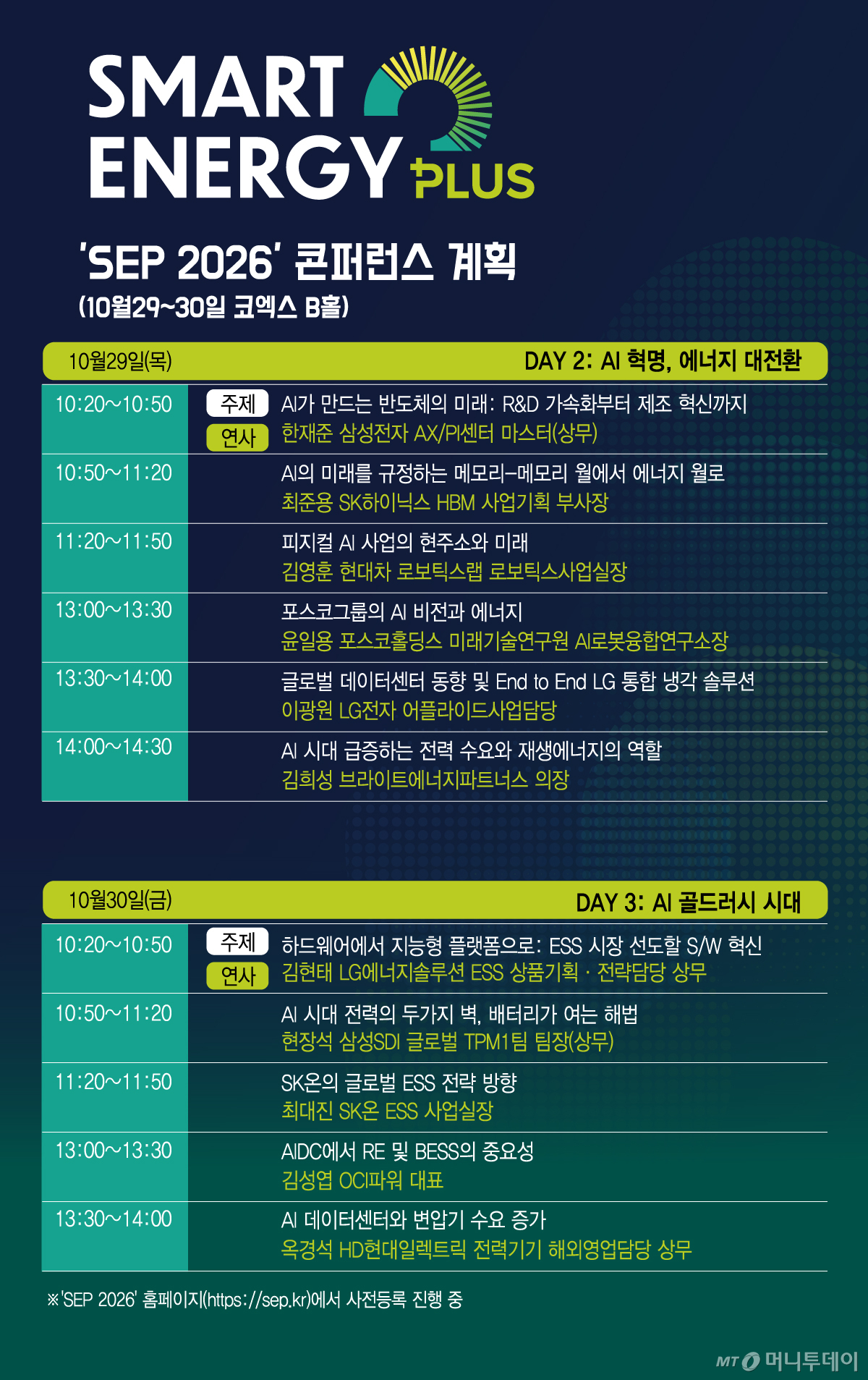
At the second-day conference of "Smart Energy Plus (SMART ENERGY PLUS·SEP) 2026," scheduled to be held on the 29th in Hall B at COEX in Gangnam-gu, Seoul, Han Jae-jun, Master (Senior Executive Vice President) of Samsung Electronics' AX/PI Center, will deliver a presentation titled "The Future of Semiconductors Shaped by AI: From R&D Acceleration to Manufacturing Innovation, Preparing for a New Cycle of Semiconductor AI Transformation."
Han is expected to examine the changes AI will bring to semiconductor R&D and manufacturing sites, and present AI utilization strategies and roadmaps for advancing technological infrastructure.
Samsung Electronics is pursuing the AI transformation of its semiconductor business from multiple angles. At the "Samsung AI Forum 2026" held last month, the company shared innovation cases applying AI to semiconductor design and manufacturing sites, along with directions for business innovation aimed at solving various on-site challenges. It also revealed a strategy at NVIDIA's annual technology conference, "GTC 2026," held in the United States in March, which utilizes AI agents to optimize the entire process from semiconductor design to production. The core concept is to manage design and manufacturing integratively, going beyond efficiency improvements in individual processes.
In the field of semiconductor design, automation and optimization using AI are actively underway. Samsung Electronics has introduced reinforcement learning and genetic algorithms to analog design to automate repetitive tasks such as transistor size adjustment and to predict and prevent potential design rule violations in advance. The company has also disclosed cases where this AI-based design optimization reduced design time by approximately 50%.
AI utilization is also expanding in the manufacturing sector. Samsung Electronics analyzes large-scale manufacturing data in real time to identify causes of process abnormalities, applying AI to equipment operation, defect analysis, and yield management. The company is also advancing technology development to enhance the precision of manufacturing processes, such as utilizing digital twins to replicate actual semiconductor production facilities in a virtual space.
Meanwhile, "SEP 2026" is an event co-hosted by MoneyToday and COEX, and organized by the National Assembly Hydrogen Economy Forum, scheduled to be held from the 28th to the 30th in Hall B at COEX. Companies including LG Group, HD Hyundai Electric, Doosan Enerbility, Hyundai Rotem, Unison, the Army, Seoul City, and the Korea Atomic Energy Research Institute will set up booths to showcase energy security strategies for the AI era. Strategies for electric and hydrogen vehicles from Hyundai Motor, as well as BMW, Mercedes-Benz, Audi, Porsche, and Polestar, can also be reviewed.
At the conference, senior executives from companies including SK Hynix, Hyundai Motor, LG Electronics, POSCO Holdings, Bright Energy Partners, LG Energy Solution, Samsung SDI, SK On, OCI Power, and HD Hyundai Electric are scheduled to present, in addition to Samsung Electronics.

 in INDUSTRY

