

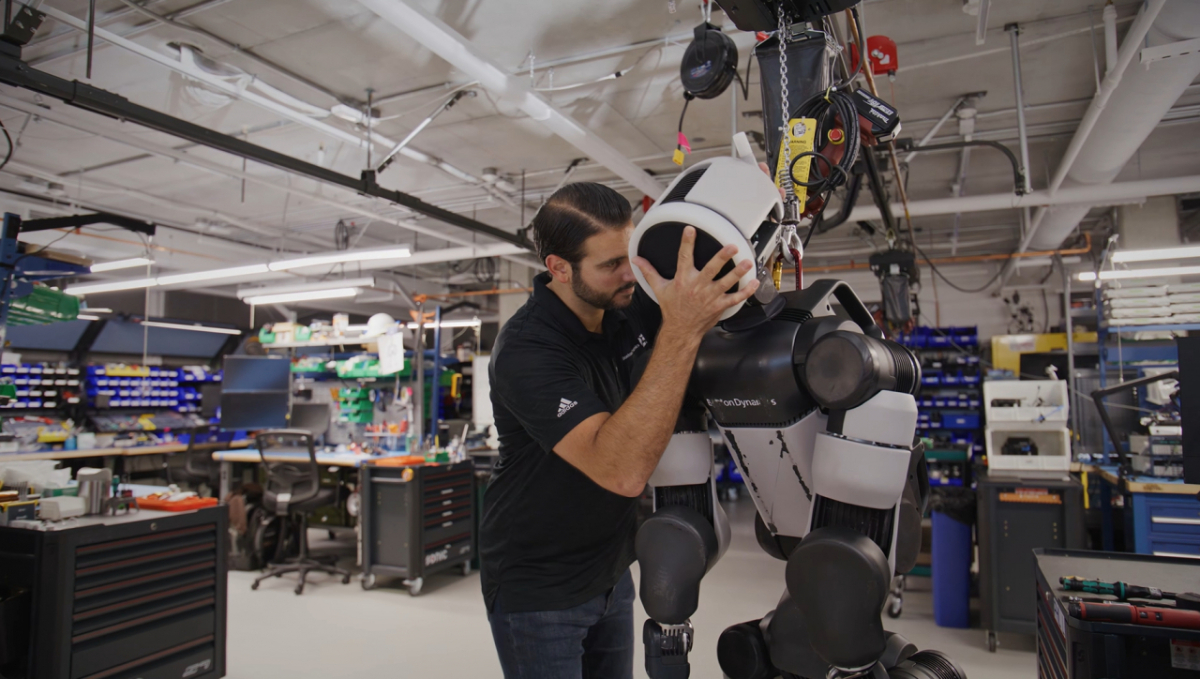
Hyundai Motor Group's robotics subsidiary Boston Dynamics (BD) has begun work to reduce the production time for its humanoid robot Atlas from approximately one day currently to about one hour by next year. The company aims to further shorten this to a matter of minutes thereafter. By establishing processes comparable to a manufacturing line starting from the prototype stage, BD is accelerating preparations for mass Yangsan of Atlas.
According to industry sources on the 15th, BD recently released a video titled "Machine, Assemble, Repair: How We Build Atlas," which included this information. The video showed how BD's prototyping team performs everything from machining Atlas components to assembly, testing, and maintenance and repair in a single space.
A BD official stated, "A year ago, building even one robot was a major undertaking," adding, "Now it takes about a day to build one, next year we aim for about an hour, and after that, we want to reduce it to just a few minutes."
Notably, the company has equipped its prototyping stage with facilities that are essentially close to a completed manufacturing line. While prototyping typically focuses on iteratively designing and modifying a small number of products, BD established a manufacturing system capable of repeatedly producing multiple robots with consistent quality from the initial development phase. In fact, a BD official explained, "When people first come here, we tell them we are making prototypes, but they are surprised to see what is essentially a fully functional manufacturing line," adding, "We apply Yangsan-level rigorous standards to the prototyping process so that we can produce multiple prototypes at scale, not just one or two."
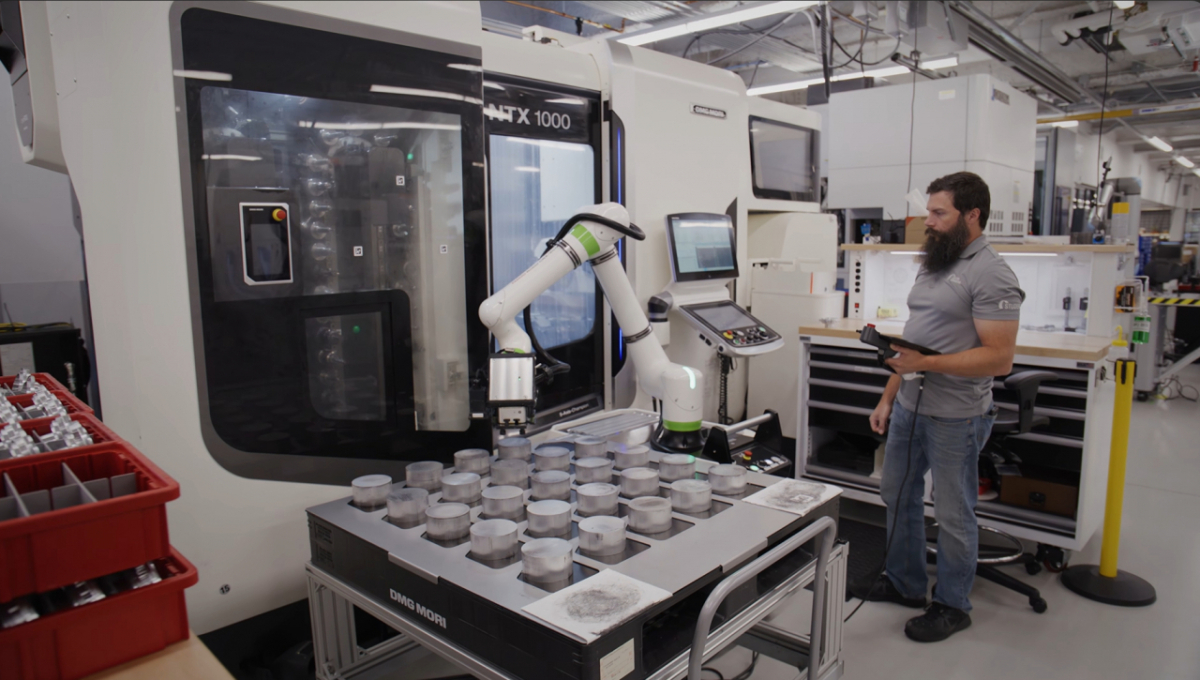
Some component manufacturing, including precision machining and gear cutting, is also being performed in-house. This is because there are cases where external vendors cannot meet high precision and special machining requirements, making it difficult for them to even provide a quote. BD has established a system where design engineers and machining personnel collaborate closely to quickly reflect design changes into actual components.
Robotic arms are also being utilized in the assembly process. This automates repetitive assembly tasks while allowing design changes proposed by engineers to be swiftly implemented in the actual hardware. A BD official noted, "An idea that comes up on Monday can be applied to actual parts and processes within the same week."
This refinement of manufacturing processes aligns with Hyundai Motor Group's strategy for mass Yangsan of Atlas. The group plans to establish a system capable of producing 30,000 robots annually by 2028. The goal is to transition from BD's pilot production capacity of up to 1,000 units per year, secured at its headquarters in Massachusetts, USA, to a full-scale mass production system.
Lee Sang-soo, a research analyst at iM Securities, analyzed, "BD's current development of Atlas is moving beyond technical implementation into the stage of securing Yangsan-ability," adding, "Standardizing manufacturing processes from the prototype development stage and reducing production time and costs will become key competitive advantages for future mass Yangsan."

 in INDUSTRY

