

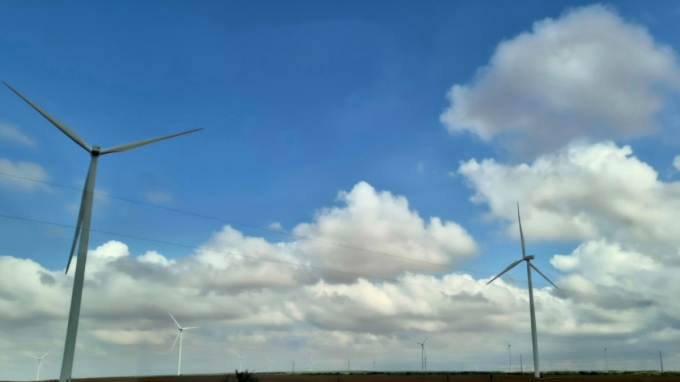
"I couldn't live on my pension alone. The money coming from the wind turbines gave me the means to retire."
Jennie Payne, a resident met at a community center in Haskell, Texas, on the 2nd, said that the wind turbine installed on her farm had changed her old age. "Not everyone has an oil or gas well, right?" she began. "Instead, I was able to have a wind turbine on my farm." She added, "It makes some noise, but it doesn't really interfere," expressing satisfaction with the quiet daily life that returned after construction was completed.
Haskell County in northwestern Texas is an agricultural and livestock region that has cultivated cotton, wheat, and peanuts and raised cattle. Ranchers began moving in during the late 1870s, and the county's administrative organization was established in 1885. The area covers 2,340 square kilometers, about four times the size of Seoul, with a population of approximately 6,000. In this long-standing agricultural and livestock-based region, wind and sunlight are now becoming new sources of income for residents and the local community.
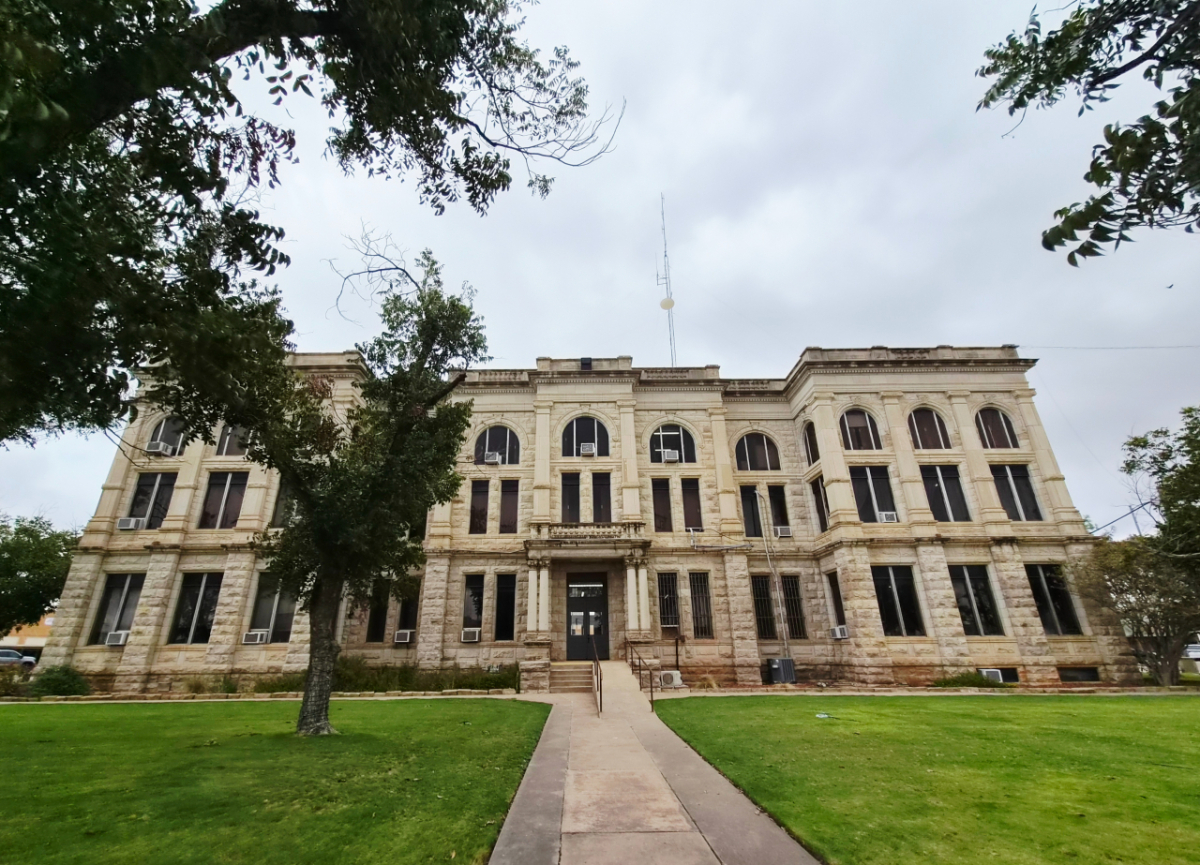
Wind and solar power support not only resident income but also the regional budget. Kenny Thompson, the judge of Haskell County (the head of the local government administration handling county budgets and major administrative affairs), met in his office on the same day, said that they receive "Payment In Lieu of Taxes" (PILOT) from developers in exchange for tax exemptions.
According to a document titled "Haskell County Payment In Lieu of Taxes Details" provided by the county, there are a total of 14 solar and wind power projects and Battery Energy Storage System (BESS) projects in the region where payments have already begun or are scheduled to begin in the future.
Starting with the Alamo 7 solar farm, which began payments in 2016, large-scale renewable energy projects have surged in the 2020s. Five solar power projects, five wind power projects, and two solar-BESS projects are already providing substantial financial benefits to the regional budget.
Simply summing the recorded amounts for these items, which have different payment periods per project, comes to approximately $4.6 million (approximately 6.2 billion won) annually. Judge Thompson said, "These payments have been helpful to the county," adding, "There are also benefits in terms of job creation."
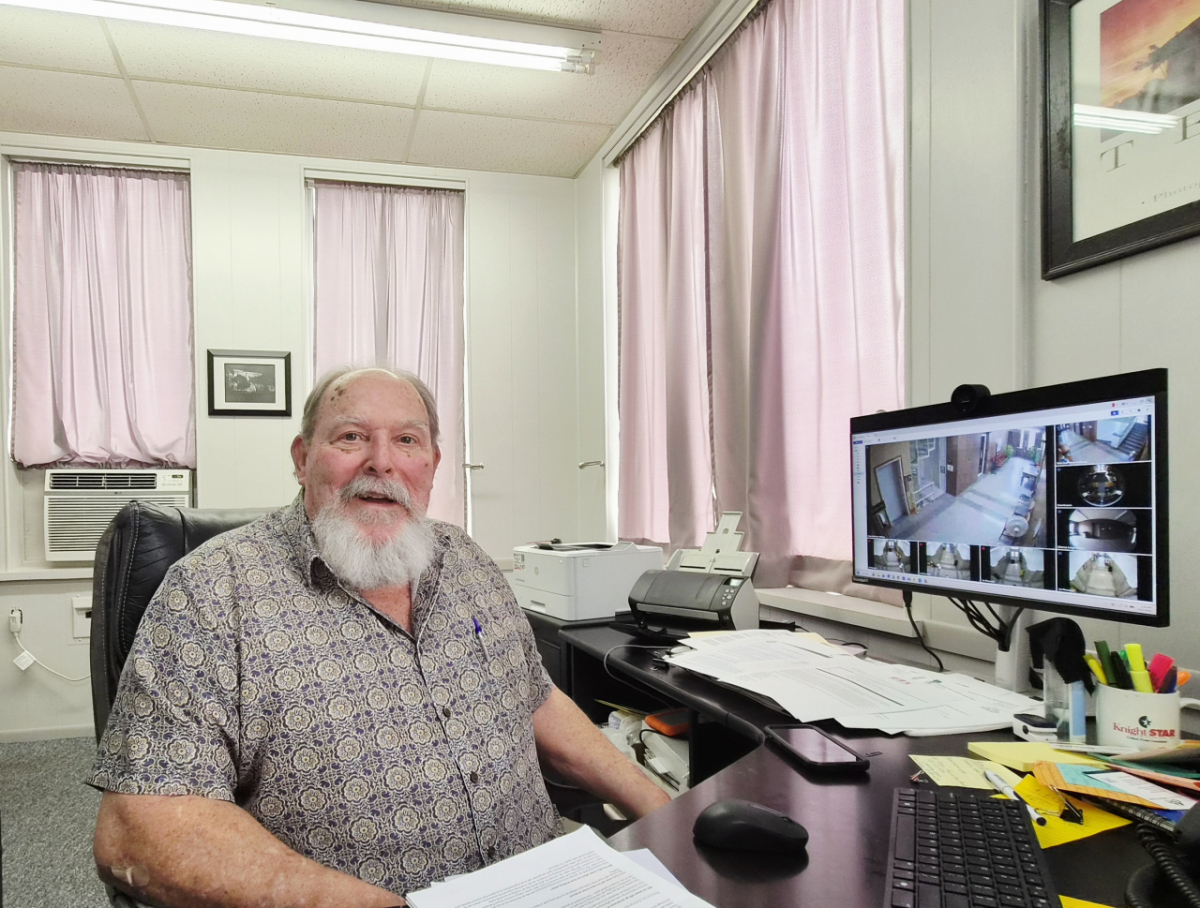
There are also burdens associated with change. Judge Thompson cited the increase in traffic volume during the construction of power facilities as an example. Concerns about changing land use coexist in a village that has lived based on agriculture. He confessed, "We are an agricultural community, so it is a concern that large-scale solar farms occupy a lot of land."
Nevertheless, Judge Thompson, who has participated in county administration since 1997 and watched the region's changes, positively evaluated the economic effects that the influx of wind and solar projects, which began in earnest in the late 2010s, and recently started data center development would bring to the local economy.
Judge Thompson said, "I was working for the county around the time these projects first started coming in during the 2010s," adding, "In the long term, it will be a positive thing for the county and city budgets, as well as public facilities such as regional hospitals and the local community."
※ This special report was supported by the Korean Journalists Association and Climate Media Hub.

 in INDUSTRY


