

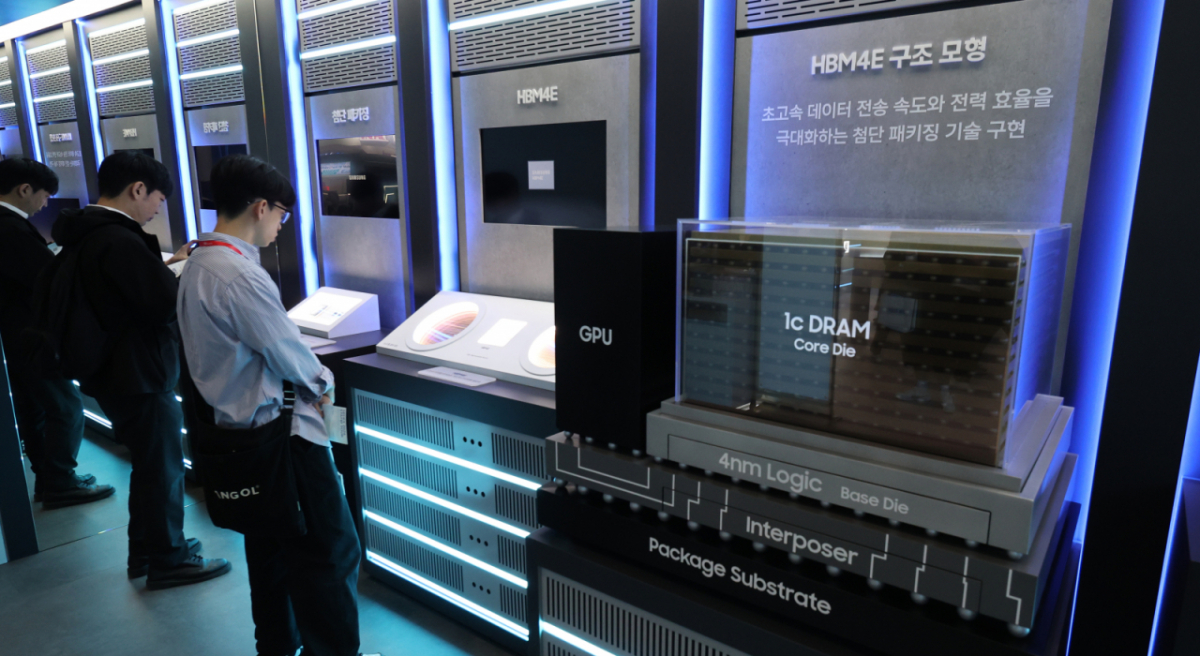
Korea’s “semiconductor top duo,” Samsung Electronics and SK Hynix, will unveil a future blueprint for an industry driven by artificial intelligence (AI). They will address the core issues of the next-generation market, ranging from research and development (R&D) and manufacturing innovation to memory technologies that determine AI performance and power challenges.
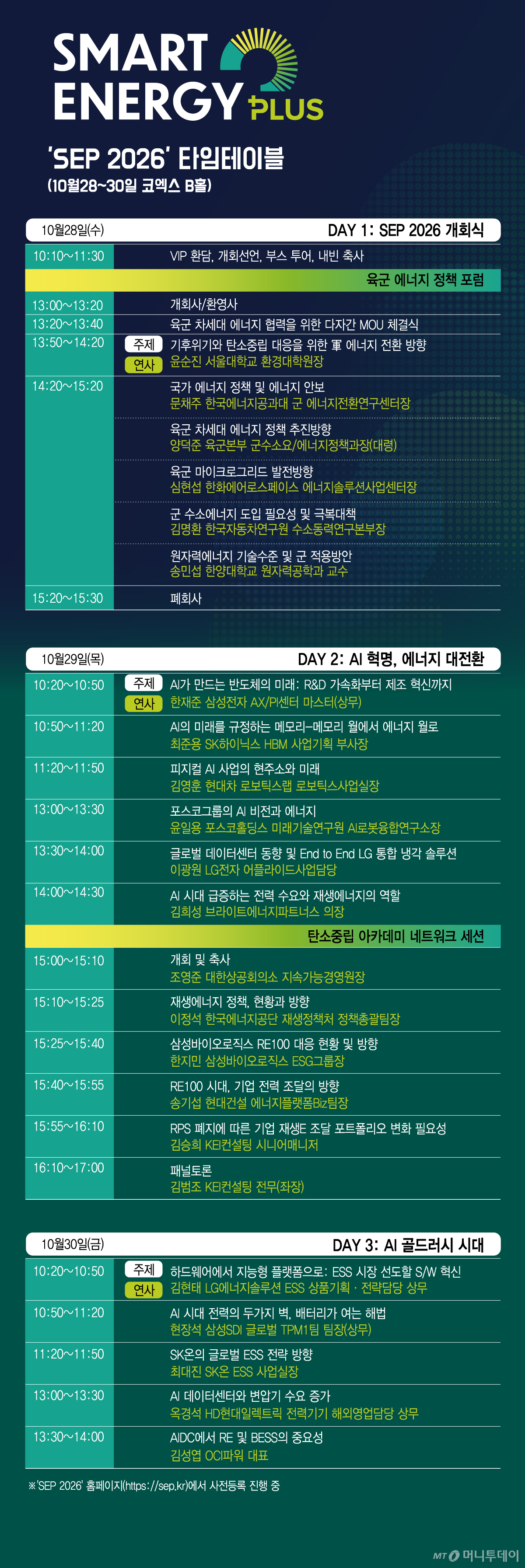
At the second-day conference of ‘Smart Energy Plus (SMART ENERGY PLUS·SEP) 2026,’ scheduled for the 29th at Hall B of COEX in Gangnam-gu, Seoul, Han Jae-jun, master of Samsung Electronics’ AX/PI Center, and Choi Jun-yong, vice president of HBM (High-Bandwidth Memory) Business Planning at SK Hynix, will take the stage as speakers.
Han will introduce strategies for boosting development speed and manufacturing productivity by integrating AI from design to production, under the theme “The Future of Semiconductors Shaped by AI.”
Samsung Electronics is accelerating its AI transformation across all business areas. In the design field, it leverages reinforcement learning and genetic algorithms to automate repetitive tasks such as transistor size adjustment and predict potential design rule violations in advance. The company has also disclosed cases where this approach reduced design time by approximately 50%.
AI application is also active on production floors. Large-scale manufacturing data is analyzed in real time to identify the causes of process abnormalities, and it is utilized for equipment operation, defect analysis, and yield management.
The company is also advancing digital twin technology that replicates actual production facilities in a virtual space. Samsung Electronics’ vision goes beyond improving individual processes; it aims to connect and optimize the entire design and production process through AI agents.
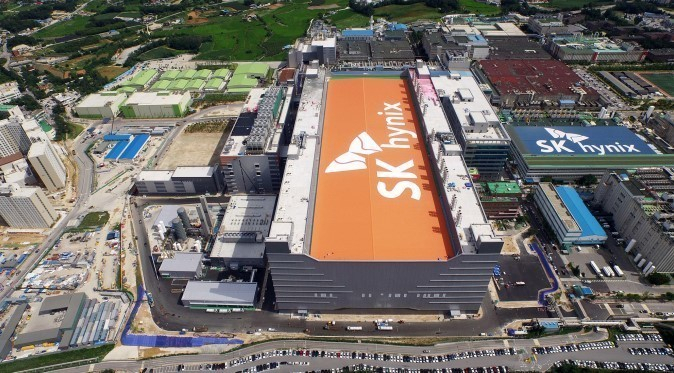
SK Hynix is focusing on memory and energy issues that will underpin the growth of the AI industry. Vice President Choi will examine the trend in which bottlenecks hindering performance improvements are shifting from computation to memory, and then to power, under the theme “Memory Defining the Future of AI.”
Choi diagnoses AI as a new semiconductor growth cycle following PCs, mobile devices, and the cloud. He explains that while device proliferation drove demand in the past, the “increase in Intelligence” is expanding the market in the AI era. Accordingly, HBM is evolving from HBM3E to HBM4 and HBM4E, targeting greater capacity, faster speeds, and tighter integration with computing units.
The next challenge is the “Energy Wall.” As power consumption at data centers surges, securing stable power has emerged as a variable that determines AI expansion, going beyond a simple cost burden. SK Hynix proposes solutions such as increasing the bandwidth per watt of HBM, reducing the distance between computing units and memory through 3D integration, and developing customized HBM architectures optimized for specific workloads.
The presentations by Samsung Electronics and SK Hynix focus on the fact that AI and semiconductors are entering a new cycle where they mutually promote each other’s development. As design and production innovations driven by AI interlock with high-performance, low-power memory technologies, the decisive factors in the next-generation market are expected to expand beyond simple computing capability to include productivity and energy efficiency.
Meanwhile, ‘SEP 2026’ is an event co-hosted by MoneyToday and COEX, and organized by the National Assembly Hydrogen Economy Forum. It will be held at Hall B of COEX from the 28th to the 30th. LG Group, HD Hyundai Electric, Doosan Enerbility, Hyundai Rotem, Unison, the Army, Seoul City, and the Korea Atomic Energy Research Institute, among others, will set up booths to showcase energy security strategies for the AI era. Visitors can also review the electric vehicle and hydrogen vehicle strategies of Hyundai Motor, BMW, Mercedes-Benz, Audi, Porsche, and Polestar.
At the conference, senior executives from Samsung Electronics, SK Hynix, Hyundai Motor, LG Electronics, POSCO Holdings, Bright Energy Partners, LG Energy Solution, Samsung SDI, SK On, OCI Power, HD Hyundai Electric, and others are scheduled to deliver presentations.

 in INDUSTRY


