

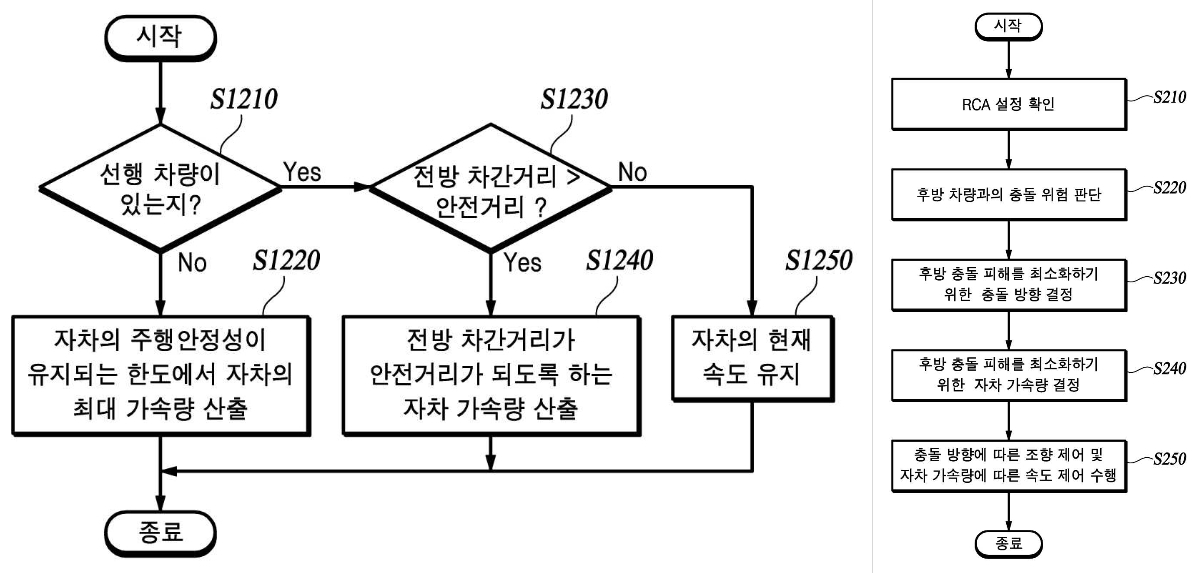
Hyundai Motor and Kia have developed technology that adjusts the vehicle's collision point to avoid the seating positions of passengers, such as children, when a collision is anticipated. A key feature is its design to minimize passenger damage using autonomous driving systems and other technologies even in situations where an accident cannot be avoided. As "safety" emerges as a core competitive advantage for automakers amid price competition from Chinese electric vehicles and the advancement of autonomous driving technology, the company appears to be strengthening occupant protection technology as a differentiating factor.
If an accident cannot be avoided, aim for the "side without people"… Successive patent disclosures in Korea and the U.S.
According to a review of public data from the domestic Patent Information Retrieval Service (KIPRIS) and the United States Korean Intellectual Property Office (USPTO) on the 9th, Hyundai Motor and Kia recently disclosed two patents related to collision control technology for occupant protection in the U.S. These are "Method and Apparatus for Minimizing Rear Collision Damage," disclosed on the 29th of last month, and "Autonomous Driving Vehicle and Control Method Thereof," disclosed on the 5th of this month.
The two technologies were first filed domestically in April of last year, with patents related to rear collisions and side collisions disclosed on the 4th and 9th of this month, respectively. Researcher Kang Dong-hoon is listed as the inventor for both patents.
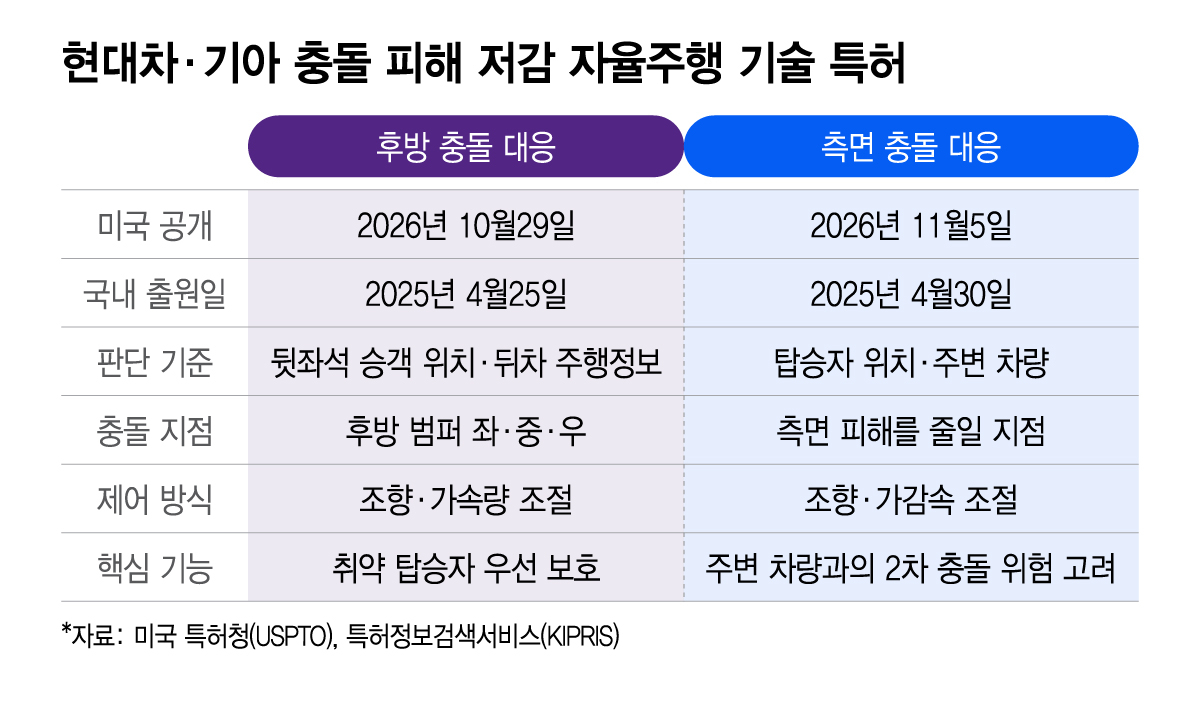
The core of the technology lies in the vehicle analyzing passenger seating positions and the surrounding environment at the moment a collision is anticipated to select the point where damage is expected to be relatively minimal. While existing collision avoidance technologies focused on preventing accidents, these patents specifically present vehicle control methods for reducing damage in unavoidable collision situations.
The rear collision technology analyzes the speed, acceleration, and following distance of vehicles behind using sensors installed in the vehicle. If a collision is predicted to occur within a certain time frame, it checks who is seated where inside the car before determining the direction of impact and the vehicle's acceleration.
For example, if passengers are only in the right seat of the third row, the left side of the rear bumper is selected as the collision point. Conversely, if passengers are only in the left seats, the right side may be selected. A method was also presented where, if passengers are seated on both sides, the center of the bumper is designated as the collision point.
Adjusting collision direction based on rear seat occupancy… Prioritizing protection of children
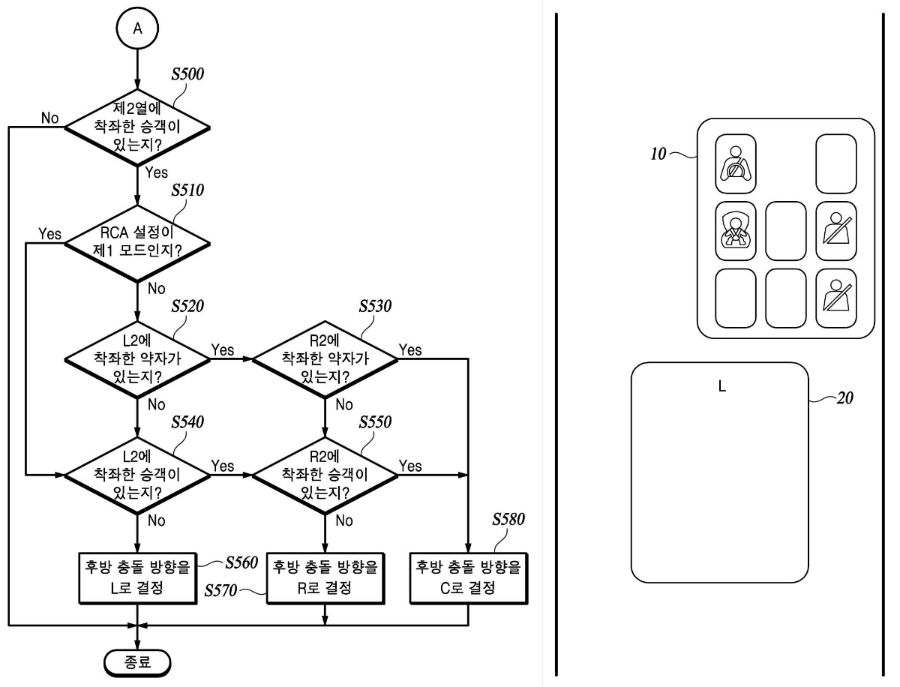
The patents also include a function to prioritize the protection of vulnerable occupants, such as children, the elderly, and people with disabilities. The direction of impact varies depending on which seat the vulnerable occupant is in. It is designed so that the Rear Collision Avoidance Assist (RCA) device or autonomous driving system controls the vehicle's steering and speed by designating the seat where a child is sitting via an in-cabin screen or analyzing physical characteristics of passengers through cameras to distinguish protection targets.
The reason for setting the collision point toward one side of the bumper also draws attention. According to the patents, inducing a diagonal collision with the vehicle behind to rotate the body allows part of the collision energy to be converted into rotational energy, thereby reducing the impact transmitted to occupants.
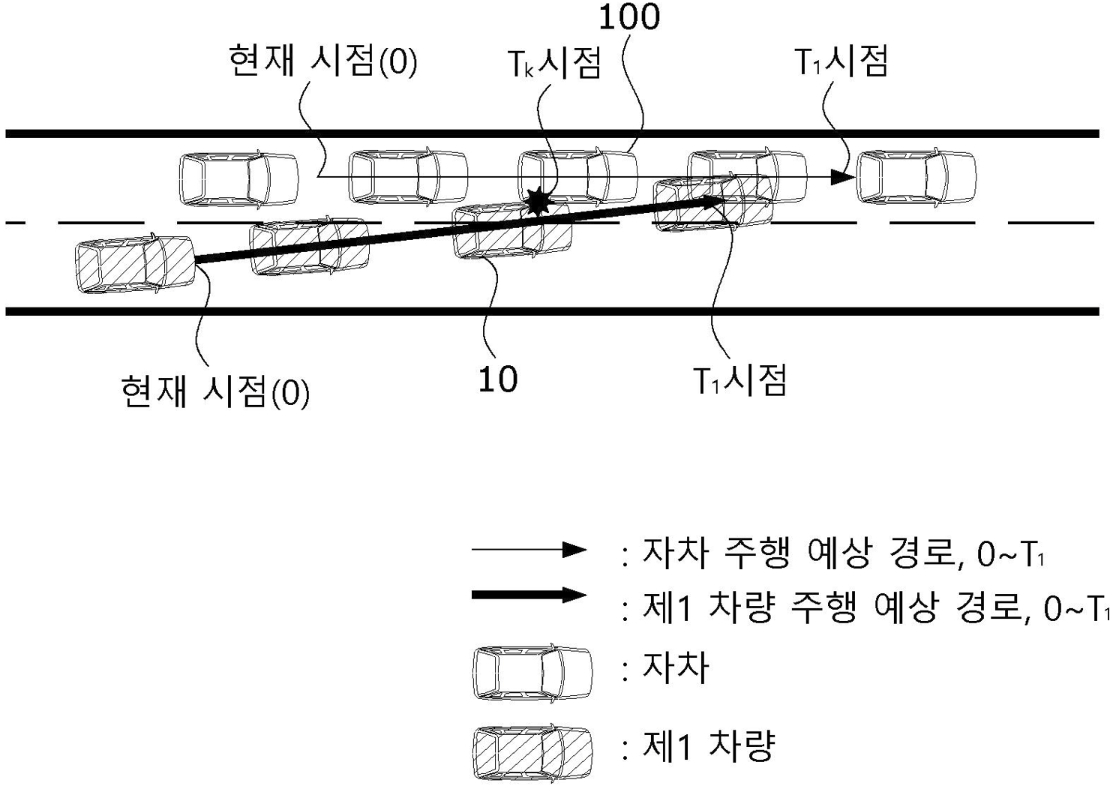
The technology responding to side collisions considers even more complex surrounding conditions. If a collision with an adjacent vehicle is anticipated, it comprehensively analyzes not only passenger seating positions but also vehicles in the opposite lane and the distance to the vehicle ahead. It controls steering and acceleration/deceleration while maintaining safe distances to prevent additional accidents with other vehicles during the process of changing the collision point.
Such technology aligns with the safety-centric autonomous driving development direction that Hyundai Motor Group has emphasized. Chairman Eung-sue Kim of Hyundai Motor Group stated last December that, while mentioning the gap in autonomous driving technology compared to Chinese automakers and Tesla, safety is more important than speed in technological competition.
An industry official said, "As automotive and autonomous driving technologies advance, safety-related issues such as liability determination and insurance premium calculation in the event of an accident will become increasingly important." The official added, "While Chinese automakers are expanding their market share by leveraging price competitiveness, in the long term, safety technology that protects occupants and minimizes accident damage will determine the core competitiveness of automakers."

 in INDUSTRY


