

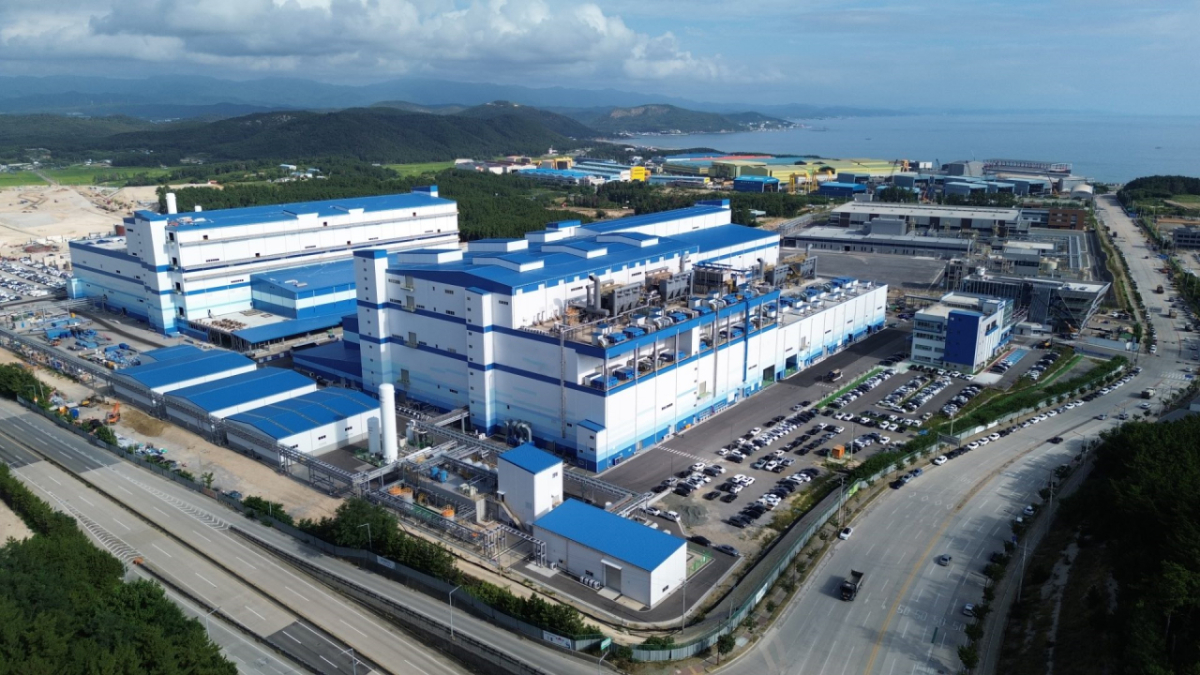
Since the third quarter of this year, domestic cathode material makers have accelerated their expansion into the LFP (lithium iron phosphate) business. As POSCO Future M and L&F have signed supply contracts with all domestic battery cell makers or expanded negotiations, Ecopro BM, which had focused on ternary materials, has also moved to invest.
According to industry sources on the 8th, the volume of LFP cathode material supply contracts signed between domestic battery cell manufacturers and material makers is estimated to have surpassed 210,000 tons. As demand for building a China-free supply chain centered on North America grows, domestic cathode material makers are rushing to expand production capacity.
POSCO Future M is increasing its production capacity by converting existing ternary cathode material production lines to LFP. The company plans to expand the LFP production capacity of its Pohang plant, currently at an annual level of 20,000 tons, to a maximum of 105,000 tons by the end of next year. It also intends to utilize up to 50,000 tons of production capacity from its joint venture (JV) with CP New Materials. Some industry observers speculate that additional expansion may be necessary, as long-term supply volumes secured for three domestic battery makers are estimated to exceed 160,000 tons. Options such as converting the Gwangyang plant or existing nickel-cobalt-aluminum (NCA) cathode material production lines for LFP use are being discussed.
L&F is also accelerating additional capacity expansion. This comes as its current LFP production line utilization rate reaches 90% and new orders continue to come in. Following contracts with Samsung SDI (approximately 1.6 trillion won) in March and SK On (161.7 billion won) in September, the company signed a supply contract worth approximately 1 trillion won with LG Energy Solution this month. Amid the successive orders, L&F recently announced plans to expand its annual LFP cathode material production capacity to 120,000 tons by the second half of 2028. The site required for the expansion has reportedly already been secured.
Ecopro BM is also considering expanding its LFP production capacity. Although it had previously focused on high-nickel ternary cathode materials, it revised its business strategy as demand for LFP grew in the North American energy storage system (ESS) market. The company is currently discussing an annual LFP cathode material supply contract of 4,000 tons and is pushing forward with the expansion of new production lines. It is reviewing plans to secure an annual production capacity of 50,000 tons in the medium to long term.
Domestic cathode material makers had been concerned about their late entry into the LFP market compared to Chinese firms, particularly regarding price competitiveness and first-mover advantage. However, as moves to build a China-free supply chain in North America have translated into actual orders, demand for Korean-made LFP cathode materials is increasing.
In fact, battery makers moving to expand LFP production capacity in North America are accelerating the building of medium- to long-term supply chains. According to industry sources, LG Energy Solution and Samsung SDI are understood to have proactively secured supply volumes for up to six to seven years each. SK On, which has a relatively smaller scale of expansion in North America, is analyzed to have agreed to receive three years' worth of supply.
An industry official said, "Domestic battery makers are actively moving to secure domestic LFP cathode materials proactively for the North American market." The official added, "If LFP supply increases substantially starting next year, it will contribute to improving the performance of domestic material companies."

 in INDUSTRY
