

Hyundai Motor Group's humanoid robot, "Atlas," which is set for "real-world deployment" in 2028, has evolved once again.
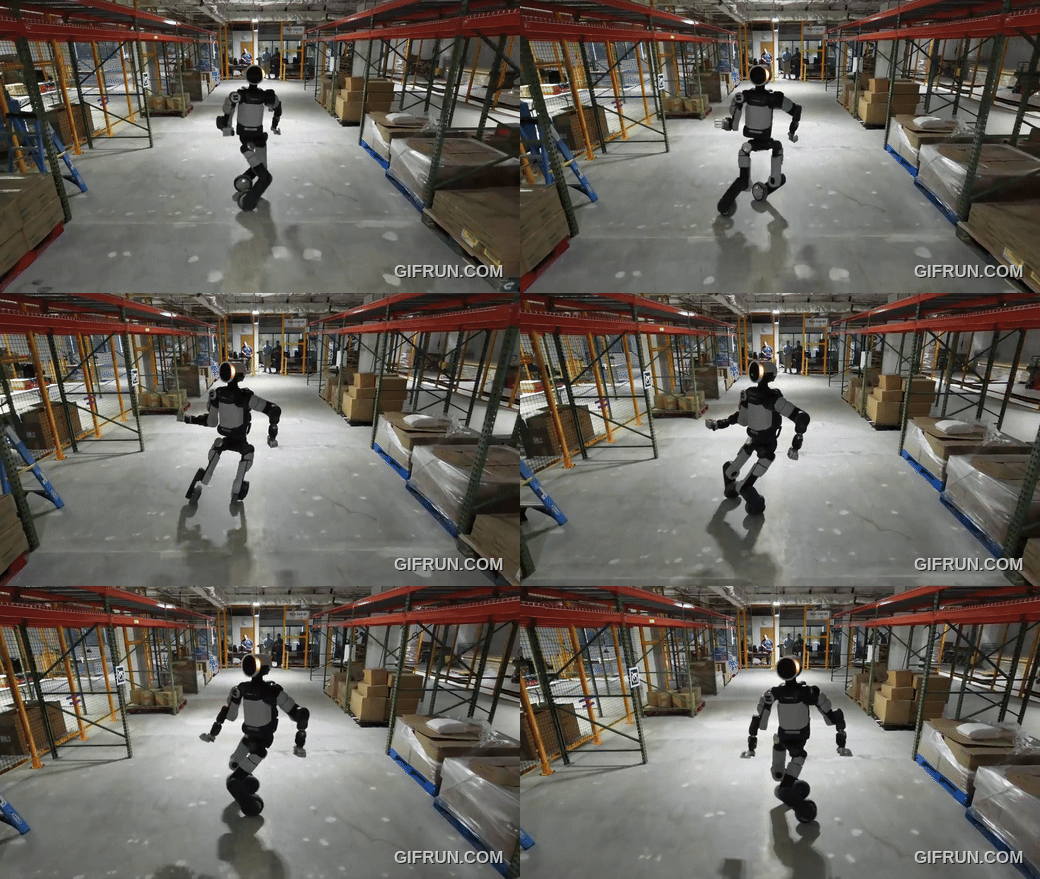
On the 9th (local time), Hyundai Motor Group's robotics subsidiary Boston Dynamics released a video showing Atlas equipped with wheels instead of feet performing various high-difficulty movements. The company stated that this research was conducted to observe the responses of its motors and full-body control technology under various conditions, in order to ensure movement and reliability under extreme conditions in the future.
In the video, Atlas, fitted with wheels instead of feet, demonstrated changing direction and moving quickly sideways. It also performed a 360-degree spinning jump, rotating its body once in mid-air before landing, similar to a figure skater.
It also depicted scenes of supporting its body on one wheel while lifting the other leg, and getting up from the ground by itself before moving forward rapidly. These scenes demonstrate that it can control full-body movements even under conditions where the contact state with the ground changes.
However, Boston Dynamics clarified that the wheeled version of Atlas revealed this time is a research platform for verifying the performance of its drive system and full-body control technology, and that there are no plans for commercialization. The company explained that wheeled robot driving requires motors to continuously deliver high torque and speed while supporting actual loads during starting, turning, and stopping processes, making it suitable conditions for verifying motor performance limits.
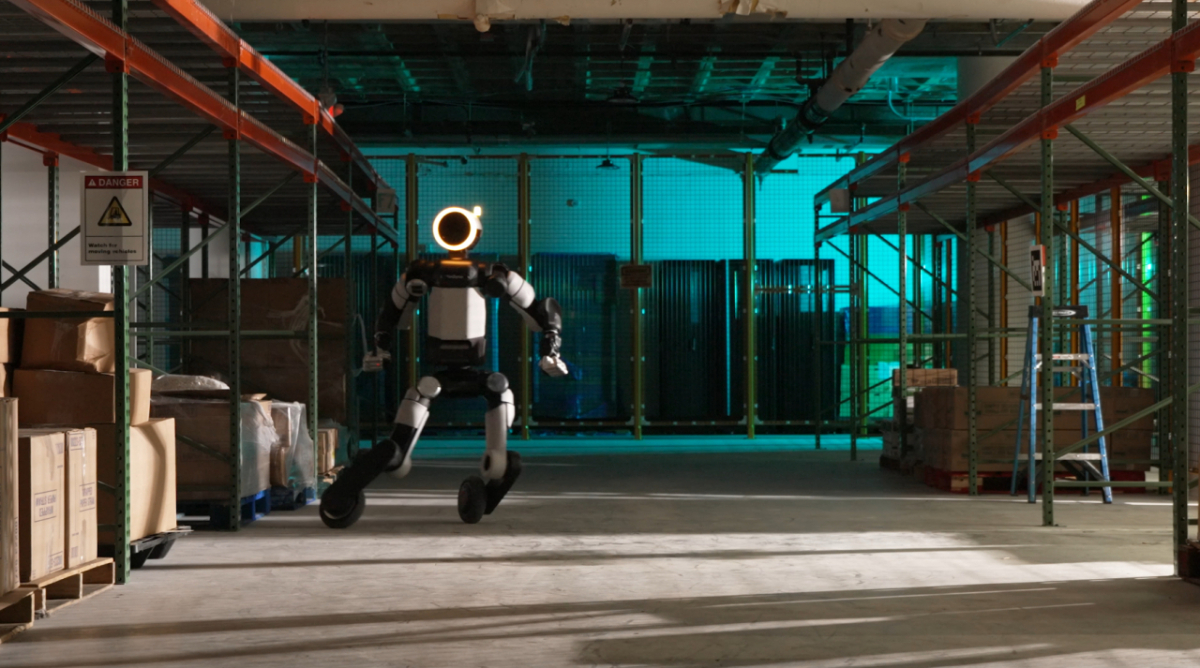
Boston Dynamics also applied reinforcement learning, which involves repeatedly practicing various movements in simulations. The company explained that the core of this research lies in precisely reflecting the characteristics of actual hardware into a virtual environment so that learned movements can be stably implemented on real robots. To achieve this, it focused on reducing the gap between simulation and actual hardware through a sim-to-real process, which involves precisely reflecting motor operating characteristics in a virtual environment and applying movements learned in the virtual environment to the actual robot. Through this process, Boston Dynamics stated that Atlas was able to successfully perform a 360-degree spinning jump mimicking human movement on its first attempt.
Andy Wu, an Atlas control engineer, said, "It was particularly impressive to see the robot perform a side dash while jumping during the learning process." He added, "I was amazed and felt great when the robot found a way to move by rolling its wheels on its own through the learning pipeline."

 in INDUSTRY

