

"We cannot compete with China on volume alone. We must differentiate ourselves through technology."
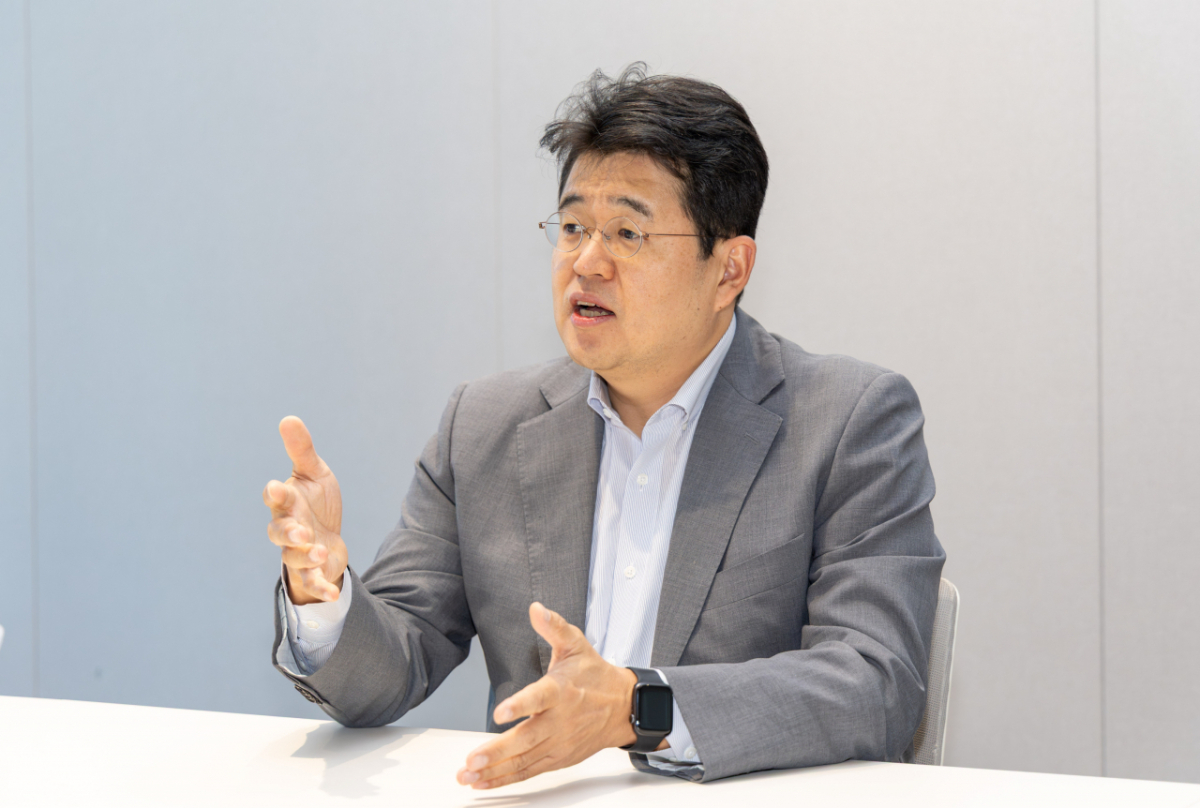
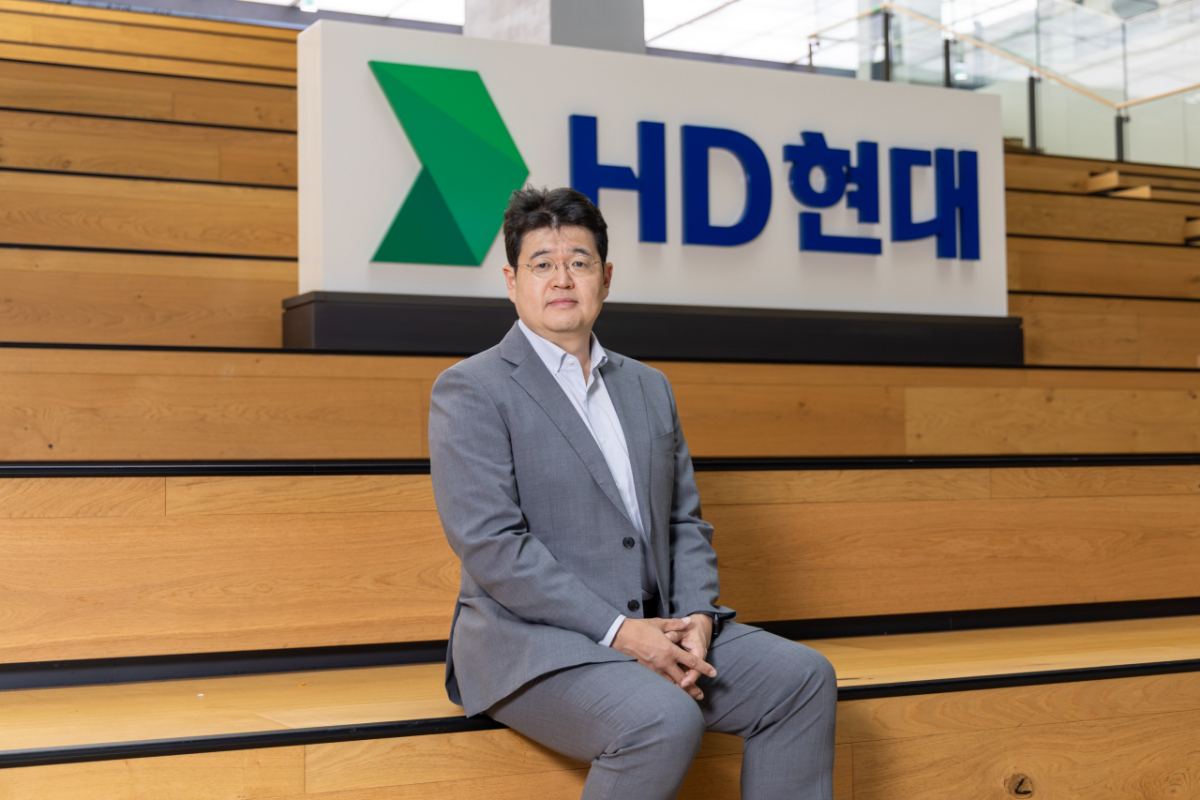
Choi Bong-jun, Head of HD Hyundai SDV (Software-Defined Vessel) Center (Senior Executive Vice President, photo), whom we met at the HD Hyundai Global R&D Center in Pangyo, Seongnam, Gyeonggi Province on the 6th of last month, answered this way when asked how Korean shipbuilding can shake off China’s pursuit. He added, "It is difficult to maintain our advantage by simply increasing the number of docks and building more ships," emphasizing that we must go one step further from merely building good ships to improving performance during operation and providing new value.
The SDV (Software-Defined Vessel) that HD Hyundai is pursuing is a core pillar of this strategy. The focus is on establishing a system that does not stop at constructing and delivering ships, but continuously improves performance by utilizing data accumulated during operation. Just as cars add features or improve performance through software updates, HD Hyundai’s goal is to raise operational efficiency and management levels for ships through software. Center Head Choi explained, "The purpose of SDV is to connect our engineering capabilities with data to create differentiated competitiveness that competitors cannot easily imitate."
SDV is a concept that goes one step further than the smart ship solutions HD Hyundai has been developing since around 2019. Smart ship solutions monitor engine status, fuel consumption, and operating conditions to assess the ship’s condition and assist in efficient operation. SDV takes this further by reflecting analysis results in actual equipment operation and ship control, and then re-analyzing the control results to utilize them for performance improvement. Center Head Choi introduced it as a method of "finding ways to use fuel more efficiently based on operational data, applying this to ship control, and verifying whether fuel consumption has actually decreased." He noted, "While smart ships had a structure of collecting, visualizing, and utilizing data, SDV has a structure that connects data with control and reutilizes the feedback obtained in that process."
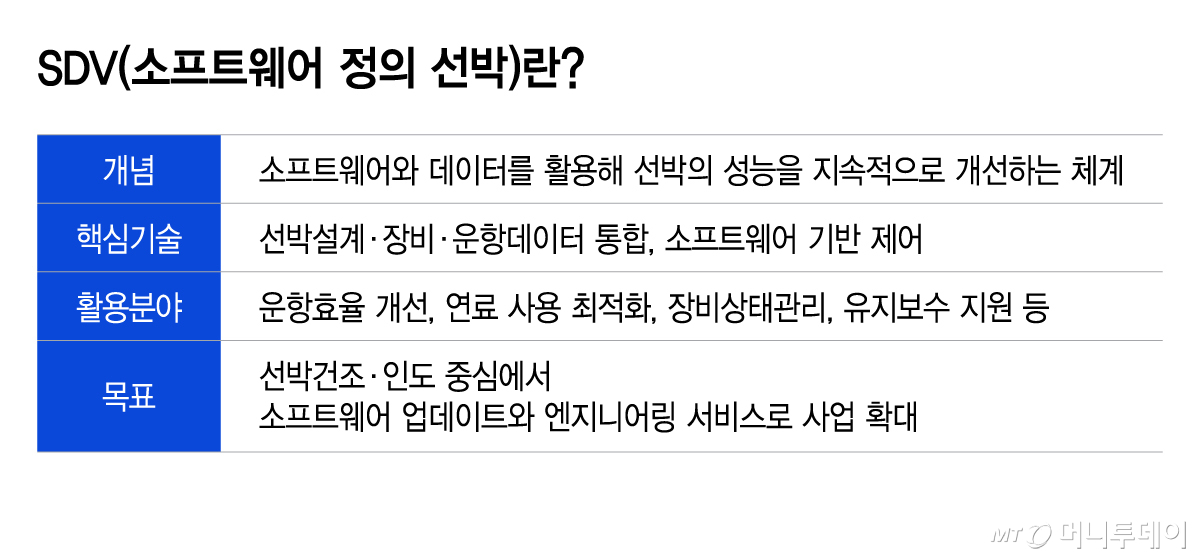
Connecting ship information and control systems also serves as the foundation for leveraging artificial intelligence (AI). Center Head Choi stated, "No matter how much AI technology is applied, its utility is limited if there is no data." He added, "The role of SDV is to integrate information about ships into a single system and enable AI to provide answers based on that information."
What HD Hyundai ultimately aims to change through SDV is the business structure of the shipbuilding industry. Until now, the weight of shipbuilders’ businesses has been placed on constructing and delivering ships. However, once SDV becomes established, it will be possible to provide software updates, data analysis, and engineering services even after ship delivery. This means that new revenue can be generated by supporting ship performance improvement and maintenance.
Center Head Choi raised his voice, stating, "It is difficult to achieve sustainable growth in the future with a structure where the business ends once hardware is delivered." He emphasized, "We must integrate and update software to meet demands that continue after delivery, such as responding to environmental regulations or transitioning to new fuels, in order to provide new value to shipowners."
The key is proving substantial effects sufficient for shipowners to pay for the service. The fact that environmental regulations are tightening and the need to prove ship operational performance and environmental impact with data is growing presents an opportunity. As it becomes increasingly important to verify and manage fuel efficiency and compliance with environmental standards using data, the value of software supporting this also increases. Center Head Choi added, "A new market will be created only when shipowners actually feel cost-saving effects and can verify those effects with data."

 in INDUSTRY


