

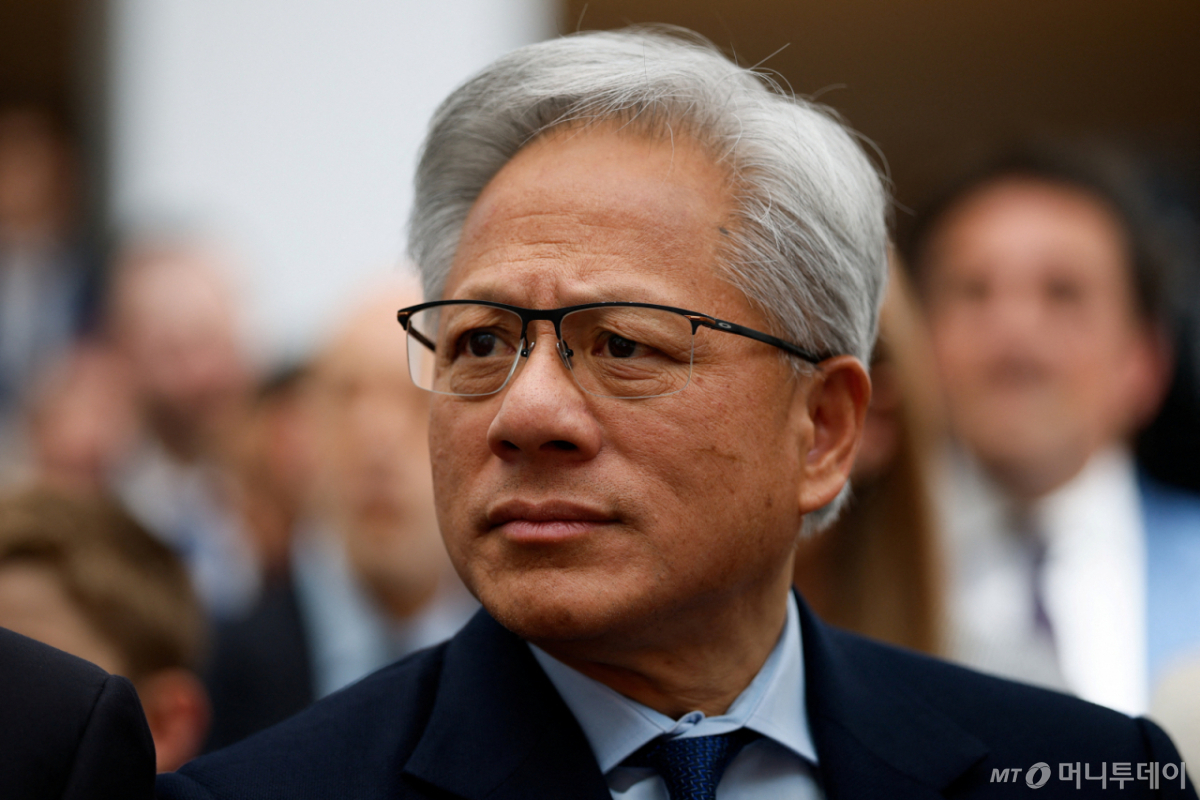
Uncertainty is growing in the AI semiconductor market following the resignation of Nvidia CEO Jensen Huang. While the immediate impact on existing high-bandwidth memory (HBM) supplies is expected to be limited, Samsung Electronics and SK hynix may face more complex strategic decisions over the medium to long term, depending on changes in investment priorities under new leadership and the diversification of demand for AI memory chips.
According to industry sources on Friday, Nvidia announced Huang's resignation on Nov. 12 (local time) and appointed Chief Financial Officer Colette Kress as interim CEO. Huang's 33-year tenure as head of the company, which he founded in 1993, has come to an end.
However, Nvidia's board said it expects the company's commitments to existing customers and product roadmaps to proceed without disruption.
The immediate impact on HBM supplies from Samsung Electronics and SK hynix is expected to be limited. Nvidia's AI accelerators are supplied according to development and production schedules set in advance, while HBM volumes are determined based on plans agreed upon with customers.
A change in leadership alone is unlikely to trigger an immediate reduction in existing orders. HBM's role as an essential component for improving AI accelerator performance also remains unchanged.
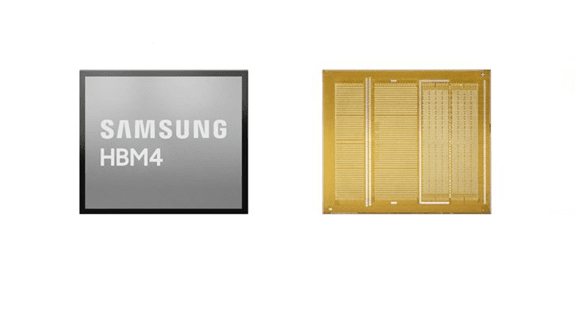
However, industry experts point to Nvidia’s investment stance as a key variable from a medium- to long-term perspective. Nvidia plans to launch its next-generation Graphics Processing Unit (GPU), “Feynman,” in 2028.
Huang has expanded the market demand base not only through GPU development but also by increasing investments in AI companies and data center ecosystems.
Whether this investment stance will be maintained under the successor regime is a key point of observation. In particular, investment decisions regarding new GPU development and production expansion could influence additional HBM orders.
Assessments indicate that Samsung Electronics has relatively diverse business options to respond to Nvidia’s medium- to long-term investment uncertainty. Recently, as AMD expands its AI GPU business and Google develops its own AI accelerator, the Tensor Processing Unit (TPU), opportunities to secure customers other than Nvidia are increasing.
In March, Samsung Electronics signed a Memorandum of Understanding (MOU) with AMD for next-generation AI memory cooperation and was designated as the priority supplier of HBM4 (6th generation) for the AI accelerator “MI455X.”
The two companies also agreed to discuss foundry cooperation for new products. If investments by NVIDIA’s competitors increase, a structure emerges where both expanded memory supply and foundry orders can be targeted simultaneously.
In contrast, SK hynix, which has a high dependence on Nvidia, is relatively sensitive to medium- to long-term investment changes. SK hynix is a core HBM supplier for Nvidia and is estimated to account for approximately 60% to 70% of the HBM4 supply volume for this year’s next-generation AI platform, “Vera Rubin.”
The two companies have also strengthened their long-term cooperation for joint development of new memory. While the possibility of short-term volume fluctuations is small, if Nvidia’s production of new GPUs or additional orders are reduced in the future, SK hynix, with its high supply share, could be relatively more affected.
However, both Samsung Electronics and SK hynix would find it difficult to offset variables stemming from Nvidia solely through customer diversification if overall AI infrastructure investment contracts.
Even if Nvidia’s growth rate slows in the future, competitors will need to expand their investments for substantial additional supply opportunities to open up for domestic memory manufacturers.
A semiconductor industry official said, “The short-term impact on existing HBM supply will be limited. We are closely monitoring the situation as the business fortunes of domestic companies may diverge depending on Nvidia’s medium- to long-term investment stance and changes in AI semiconductor demand sources.”

 in INDUSTRY

