

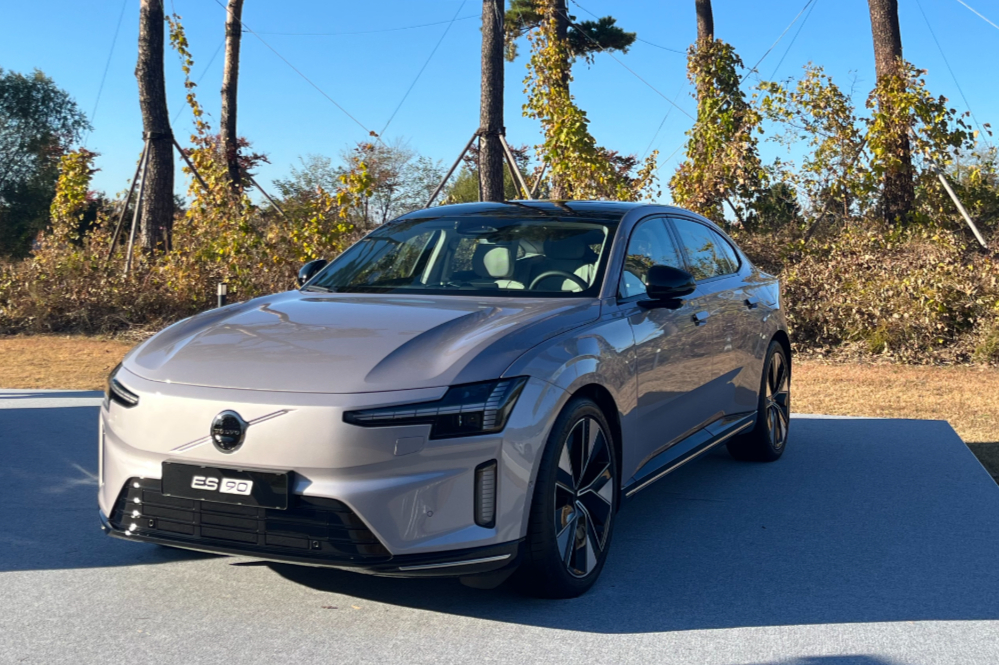
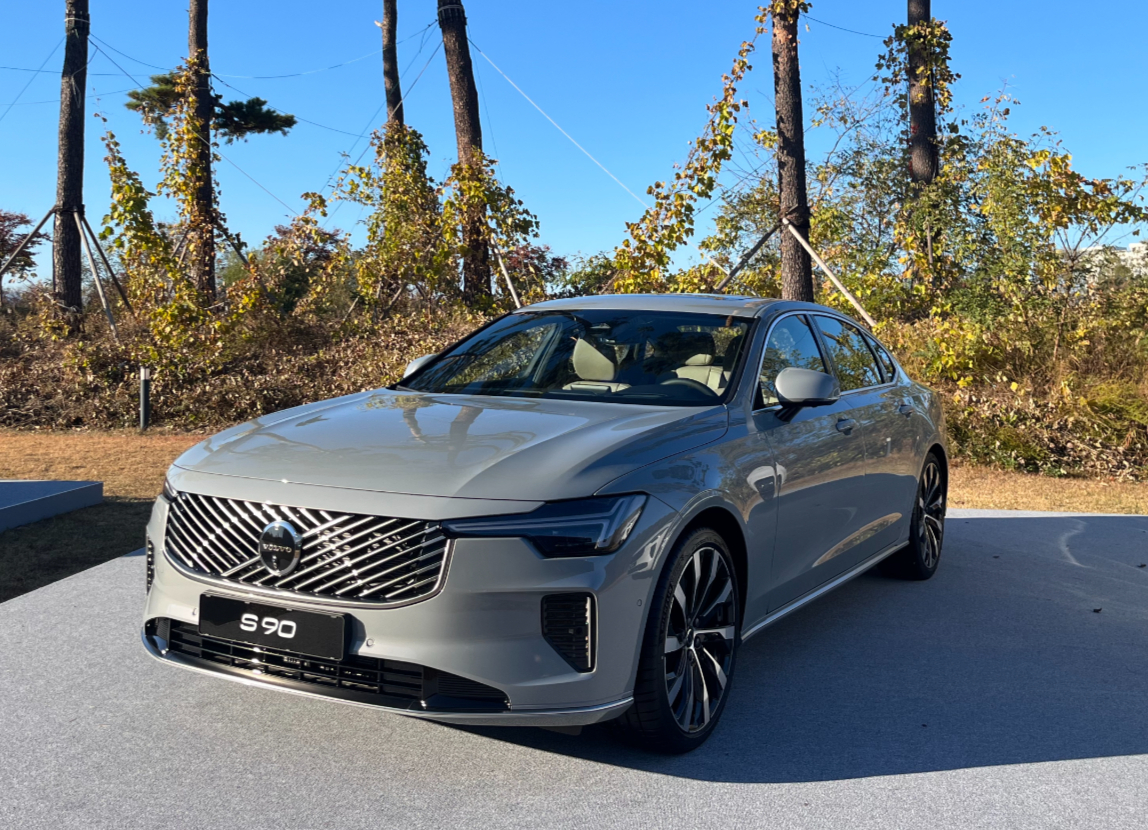
As I pressed the accelerator, the car surged forward without hesitation. The numbers on the dashboard climbed rapidly, yet there was no engine noise or rough vibration in the driver's seat. This was the acceleration felt in Volvo's all-electric sedan, the ES90. Switching to the gasoline S90 on the same road brought a completely different sensation. Accompanied by the sound of the engine exerting power, the vehicle moved forward with a sense of weight. Both cars performed well, but their driving dynamics differed.
On the 10th, I participated in Volvo Cars Korea's "90/90 Experience" in the Sokcho and Gangneung areas of Gangwon Province, conducting a comparative test drive of the ES90 Single Motor Extended Range (ER) Ultra and the S90 B5 Ultra. Although both are Volvo flagship sedans, the ES90 is a pure electric vehicle, while the S90 features a gasoline engine combined with a 48V mild hybrid system.
The appeal of the ES90 became apparent the moment the accelerator was pressed. The electric motor responded instantly, pushing the car forward quietly. Even when increasing speed to over 100 km/h, the body did not shake violently. The process of decelerating was also relatively calm. For novice drivers with limited experience, the stable movement of the vehicle was more impressive than the high speed itself. As much force applied to the accelerator translated into speed, handling the car was not difficult.
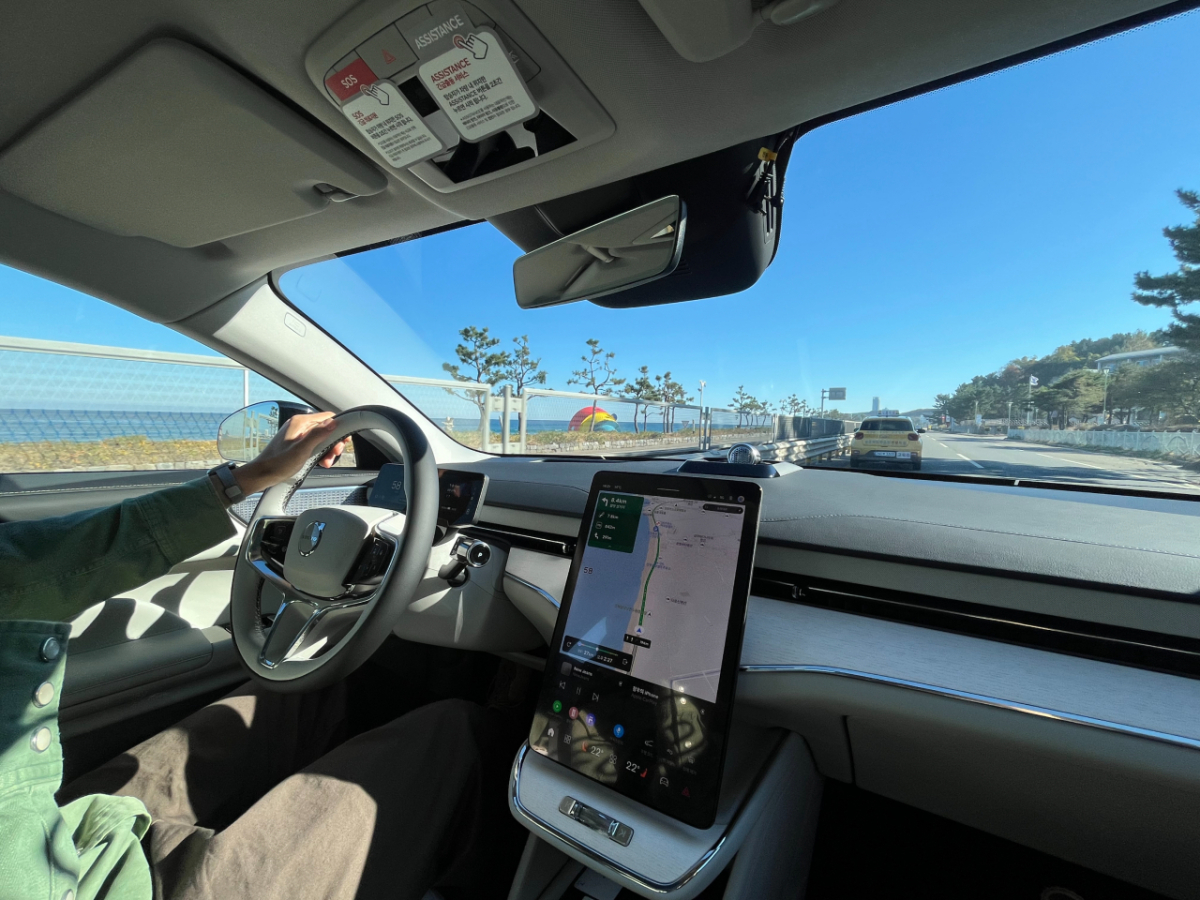
The ES90 Single Motor ER delivers a maximum output of 333 horsepower. It takes 6.6 seconds to accelerate from a standstill to 100 km/h. In addition to acceleration performance, the vehicle body that stably supports it stood out. The drag coefficient (Cd) is 0.25, the lowest level in Volvo's history. The optional dual-chamber air suspension adjusts electronically controlled dampers up to 500 times per second to respond to road surface changes.
A difference from conventional sedans was also felt in terms of space. The ES90 combines the elegant body of a sedan with the high ground clearance of an SUV and the practicality of a fastback. From the driver's seat, the forward visibility was open, and ample legroom was felt in the rear seats as well. The liftback structure, where the rear window opens along with the tailgate, made loading and unloading luggage convenient.
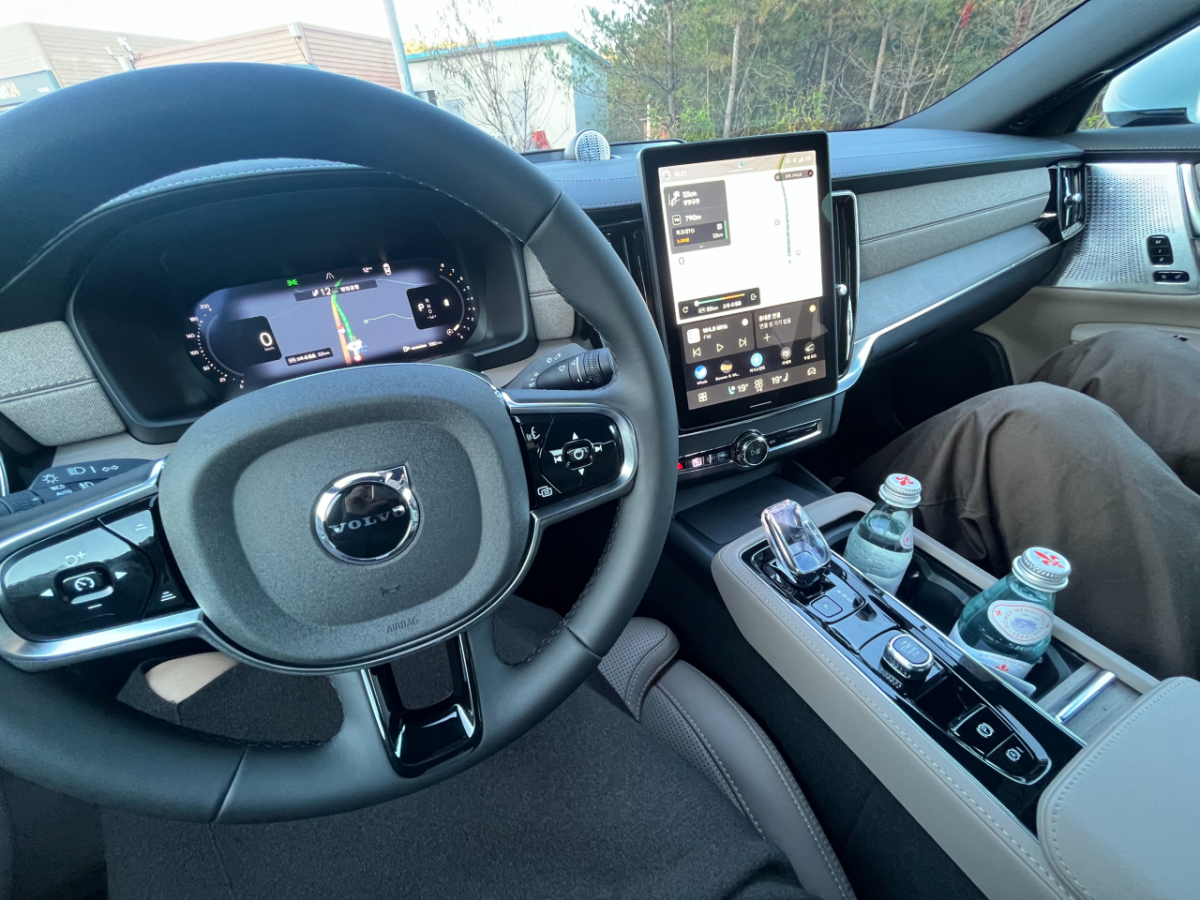
In contrast, the S90 was closer to a "mature sedan." The low, elongated body and calmly organized interior gave it a dignified impression. While it may have felt somewhat reserved to drivers in their 20s, it would likely be a familiar and comfortable choice for middle-aged and older drivers who have long driven gasoline sedans.
The driving feel was similar. The S90 B5 is based on a 2.0-liter gasoline turbo engine and produces a maximum output of 250 horsepower. If the ES90 boosts speed in one breath, the S90 increases speed powerfully through engine rotation and shifting. The fact that the acceleration process is conveyed through sound and movement is also a unique charm of the gasoline engine. Although its response was not as immediate as an electric vehicle's, there was no feeling of insufficient power even at high speeds.
The strength of the S90 is also evident in the rear seats. With an overall length exceeding 5 meters and a wheelbase of 3,060 mm, it offers ample legroom along with premium materials such as Nappa leather, real wood, and a crystal gear knob. Rear-wheel air suspension is standardly applied to consider the comfort of rear-seat passengers. It is a sedan that is faithful not only to the joy of driving but also to comfortably carrying family or guests.
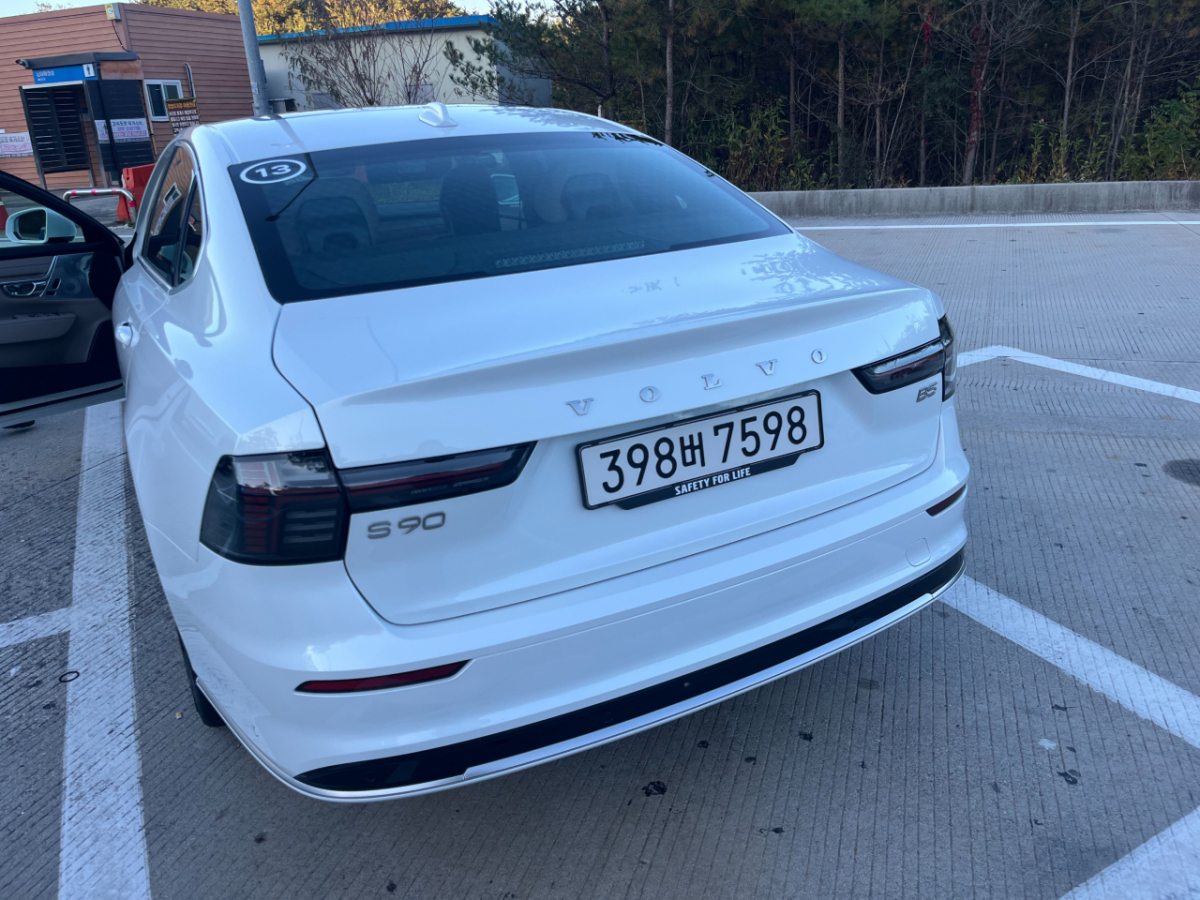
According to Volvo, approximately 60% of domestic brand customers are in their 40s and 50s. The S90 has been chosen by domestic consumers to the extent that South Korea is the second-largest market for its sales worldwide. Its dignified design, spacious rear seats, and the familiar driving feel unique to gasoline engines emerged as reasons to choose the S90.
In terms of the audio system, the evolution of the ES90 stood out. The Ultra trim is equipped with a Bowers & Wilkins audio system featuring 25 speakers and 1,610W output. It also supports Dolby Atmos spatial audio, allowing for the enjoyment of three-dimensional music in the quiet interior. The S90 also provides rich sound with 19 speakers and 1,410W output.
However, it was disappointing that the only streaming service capable of utilizing Dolby Atmos on the ES90 is Apple Music. Drivers who usually use other services such as Melon or YouTube Music would have to change their existing music listening habits to enjoy spatial audio. Despite having a high-end audio system, there are limitations in service selection.
The price of the ES90 Single Motor ER Ultra is 80.55 million won, and the S90 B5 Ultra is 73.9 million won. The price difference between the two cars is 6.65 million won.
After driving both cars alternately, the one that left a more intense impression was the ES90. From the moment the accelerator was pressed, I could fully experience the new appeal of electric vehicles. However, I also nodded in agreement with the S90's dignity and the unique driving sensation of gasoline engines. If the ES90 is a sedan for drivers seeking a new experience, the S90 is a sedan for drivers who understand the value of familiar comfort. The same Volvo persuaded drivers in completely different ways.

 in INDUSTRY


