

This year's business leadership appointments placed greater emphasis on management stability rather than a large-scale generational shift. By retaining the CEOs of major affiliated companies, the conglomerates maintained continuity in their operations while appointing high-performing talent and R&D (research and development) experts to key executive positions. This strategy is interpreted as an effort to accelerate the securing of future growth drivers based on proven leadership amid the rapid growth of the AI (artificial intelligence) industry and increasing uncertainty in the global business environment.
According to industry sources on the 21st, Samsung Electronics, which announced its executive appointments the previous day, maintained its 'dual CEO system' led by Vice Chairman Cheon Young-hyun, head of the DS (Device Solutions) Division, and President Noh Tae-moon, head of the DX (Device Experience) Division. The presidents of major electronics affiliates were also retained: Jang Deok-hyun of Samsung Electro-Mechanics, Choi Ju-sun of Samsung SDI, and Lee Cheong of Samsung Display.
This move is interpreted as a step to minimize uncertainty associated with large-scale management turnover and to enhance the execution capability of existing business strategies. With their concurrent roles as division heads lifted, the two division heads will now be able to focus on future businesses such as foundry and robotics. President Hwang Sang-jun and President Choi Won-jun were newly appointed as head of the Memory Business Division and MX (Mobile Experience) Business Division, respectively, strengthening accountability management for each business unit.
The company also clearly articulated its performance-based management philosophy. All three executives promoted to president came from the semiconductor division, which achieved record-high results. Along with President Hwang, Jo Sang-yeon, head of the System LSI Business Division, and Lee Jong-myung, CTO (Chief Technology Officer) of the DS Division and head of the Semiconductor Research Institute, were promoted to president. All are figures who contributed to semiconductor technology development and strengthening business competitiveness.
LG Group, which conducted its executive appointments on the 19th, also retained most of the CEOs of its major affiliates. President Ryu Jae-cheol of LG Electronics, President Kim Dong-chun of LG Chem, President Kim Dong-myung of LG Energy Solution, President Jung Cheol-dong of LG Display, and President Moon Hyuk-soo of LG Innotek all kept their positions. Having replaced the heads of major affiliates last year, this year's appointments are interpreted as an effort to maintain the business strategies of the new management team and focus on creating results.
Talent was actively appointed in future businesses and core technology fields. Baek Seung-tae, head of LG Electronics' HS Business Division, who promoted the commercialization of robot actuators, was promoted to president. Lee Sang-woo, head of the Management Strategy Division at LG Corp., was also promoted to president and took on the role of head of LG Electronics' MS Business Division.
The appointment of R&D talent was also notable. Approximately 30% of those promoted to senior executive at LG Group are from the R&D field. This reflects a view that technological competitiveness is central to future growth, placing professionals with expertise in research and development at the forefront. LG Electronics also strengthened new business organizations, including robotics and AI data center cooling solutions.
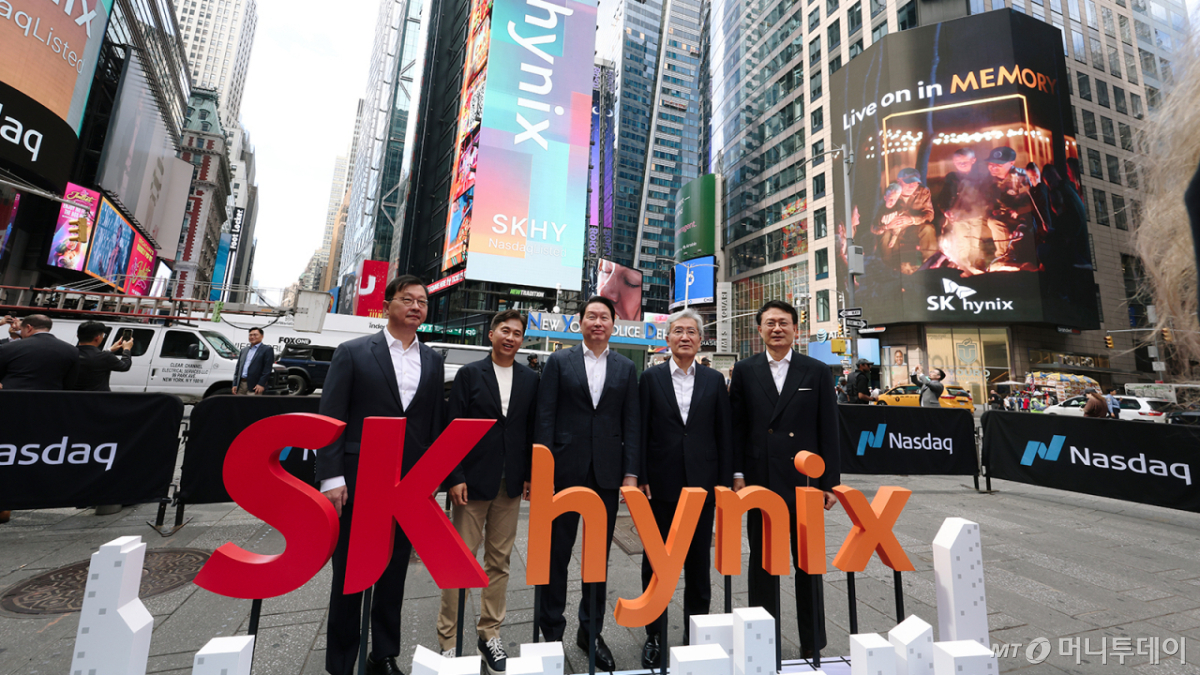
SK Group also pursued a balance of stability and renewal in its executive appointments on the 30th of last month. It retained President Kwak No-jung of SK hynix, which achieved record-high results, and President Jang Yong-ho of holding company SK Inc. Vice Chairman Choi Chang-won will continue to serve as chair of the S.P.E.X. (Seeking Perfection Excellence) Council, which oversees the group's management strategy.
New management was placed in the energy and chemical sectors, where business structure restructuring is needed. Chung Seung-il, an expert in power and energy, was appointed as the new CEO of SK Innovation. Analysts note that the focus is shifting toward future energy businesses to support the group's AI strategy. SK hynix assigned President Ahn Hyun, who led the development of AI memory such as HBM (High Bandwidth Memory), to the newly established Americas headquarters to strengthen responses to global customers.
Hyundai Motor Group, which is about to announce its appointments, also appears to be emphasizing stability over change. It is expected that President Jose Munoz, head of Hyundai Motor Company, will be retained, given his significant achievements in North America and other regions despite difficult business conditions. Song Ho-sung is also expected to continue leading Kia, which received the evaluation of being "as good as its older brother" this year. Park Min-woo, who was appointed in early this year as head of Hyundai Motor and Kia's AVP (Advanced Vehicle Platform) Division and CEO of 42dot, appears set to further accelerate autonomous driving and SDV (Software-Defined Vehicle) businesses next year.
This trend in business appointments is intertwined with expanding uncertainties, such as the rapid growth of the AI industry and changes in the global trade environment. Analysts say that as companies must maintain the competitiveness of their core businesses while securing new growth opportunities, the execution capability of proven leadership has become more important than the confusion caused by management turnover.
In particular, there is a clear trend of entrusting existing management with long-term strategies while placing talent who have demonstrated technological competitiveness and business results in key positions. This approach maintains continuity in management while introducing changes to future businesses. The key question will be whether this year's stability-focused appointments lead to tangible results in new businesses such as AI and robotics next year.
A business official said, "Given that the expansion of AI is causing significant changes both externally and internally for companies, it appears that more focus has been placed on maintaining leadership," adding, "There is also no need to replace executives who are delivering results."

 in INDUSTRY


