

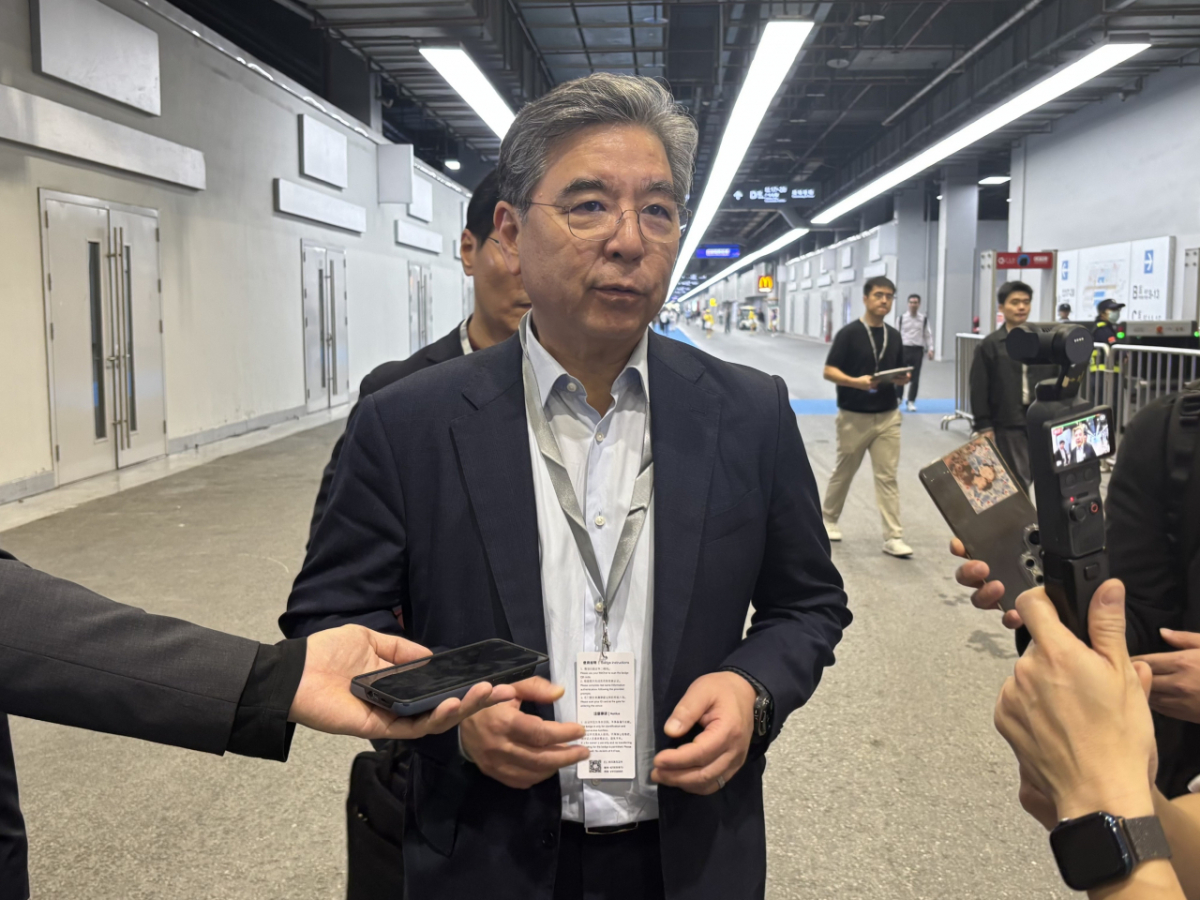
"I believe we must do our utmost to narrow the (gap with China) within the next three years."
At the 27th Guangzhou International Auto Show in China, Vice Chairman Jang Jae-hoon of Hyundai Motor Group stated that "the cost difference with Chinese automakers is approximately 30%" when meeting with reporters immediately after the unveiling of a new Hyundai model.
He outlined a strategy to secure price competitiveness by re-examining existing methods from vehicle specifications to development standards, while differentiating itself from Chinese manufacturers by leveraging brand value and sales and service competitiveness.
Jang said, "We have set specific cost reduction targets," expressing confidence that "we will reduce what can be reduced." Specific cost reduction targets are scheduled to be disclosed later.
On the day, Vice Chairman Jang successively visited the exhibition booths of global automakers and local Chinese companies. After first visiting the booths of Mercedes-Benz, BAIC Group, and Huawei, he toured the booths of eight other brands in sequence: Lincoln, MG, ROEWE, Toyota, Volkswagen, BYD, ZEEKR, and Xiaomi.
In doing so, he meticulously examined not only the interior and exterior design of the displayed vehicles but also their selling prices, autonomous driving features, and vehicle performance. By looking over everything from traditional global automakers to Chinese information technology (IT) companies that have entered the electric vehicle market, he directly assessed the level of competition in the local market.
The background behind Hyundai Motor's all-in effort to secure cost competitiveness lies in its position in the Chinese market, which has been slow to recover. Hyundai Motor, which sold 1.14 million units annually in China in 2016, saw its local retail sales shrink to approximately 4,000 units in September of this year. In the same month, the combined market share of Hyundai Motor and Kia in China was just 0.6%.
In contrast, the market share of local Chinese brands has risen to 69.8%. New energy vehicles also accounted for 67% of total passenger car sales. As Chinese companies rapidly commercialize advanced technologies such as autonomous driving and artificial intelligence (AI) in addition to price competitiveness, the position of global automakers is becoming increasingly narrow.
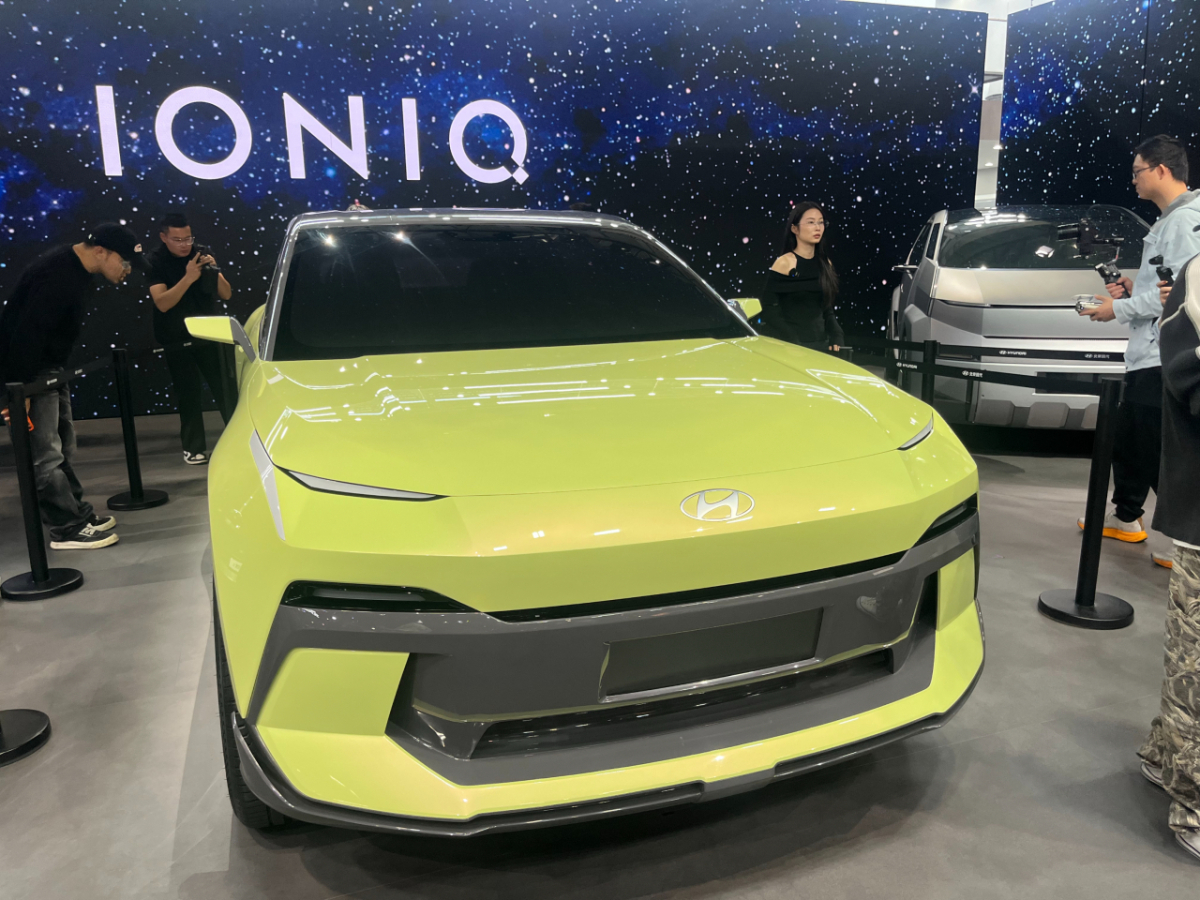
Hyundai Motor is also moving away from its previous approach of responding to the Chinese market centered on existing global models, expanding instead into locally specialized models. This involves utilizing local technology and supply chains from the stage of developing vehicles tailored to the needs of Chinese customers.
Hyundai Motor plans to deploy a total of 24 vehicle models in the Chinese market by 2030, including the mass-production version of the 'Mercury Concept' unveiled on the day, called the 'IONIQ M.'
Jang said, "We have approached development with the resolve that we cannot win unless we change everything from specifications to standards," mentioning the need for changes across the entire development process.
However, he expressed a stance of not becoming solely absorbed in price competition with Chinese companies. This means that while lowering costs, Hyundai Motor will utilize the brand value and sales and service networks it has accumulated in the global market as competitive advantages.
Jang said, "We intend to maintain our strengths—brand value, channel competitiveness, and sales and service competitiveness—as a premium," announcing that specific strategies would be disclosed soon. When asked if he was confident about the Chinese market, he replied, "We must be confident."
Regarding the hydrogen industry, where China is rapidly catching up following electric vehicles, Jang emphasized policy consistency. Hyundai Motor operates 'HTWO Guangzhou' in Guangzhou, China, its first overseas hydrogen fuel cell production base, to target the local hydrogen commercial vehicle market. The Chinese government is also accelerating the cultivation of the hydrogen industry by expanding the adoption of hydrogen fuel cell vehicles centered on commercial vehicles.
Jang said, "I believe that South Korea has not lagged behind any other country in terms of government support or policy backing so far," adding, "South Korea was the first in the world to enact a Hydrogen Economy Act and has consistently worked to build the related ecosystem."
He continued, "Ultimately, I believe the core issue depends on how consistently these policies and investments are carried through." He added, "Since it is a task requiring the entire hydrogen ecosystem, not just hydrogen mobility, to move together, we will continue to communicate with the government and work together to build the ecosystem going forward."

 in INDUSTRY

