

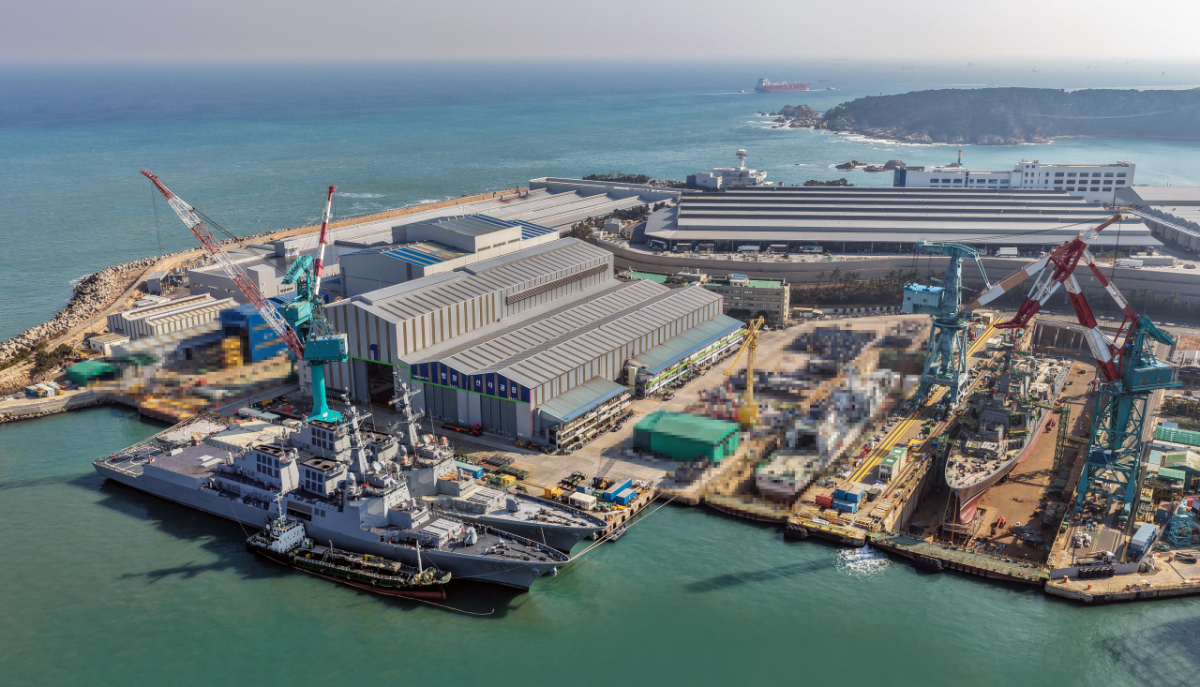
In February, three massive Aegis destroyers gathered at HD Hyundai Heavy Industries' Ulsan shipyard, creating a spectacular sight. They are the Republic of Korea Navy's next-generation Aegis destroyers, "King Jeongjo," "Dasan Jeong Yak-yong," and "Daeho Kim Jong-seo." These vessels, which are the largest in size and possess the highest level of combat capability domestically, were all born from the hands of HD Hyundai Heavy Industries. The three Aegis ships that will be responsible for the future power of the Republic of Korea Navy have gathered at the shipyard that created them.
HD Hyundai's vessel business, which began in 1976 with the research and development of the "Ulsan," South Korea's first domestically produced combat vessel, is now heading toward the world. This is because the global marine defense market is expanding as demands for naval modernization and replacement of aging vessels from various countries coincide. Based on the vessel design and construction technology accumulated over the past 50 years, HD Hyundai is expanding its business territory beyond the Philippines and Peru to Saudi Arabia, the United States, and others.
8,200-ton "Shield at Sea"… Technology Accumulated Over 50 Years
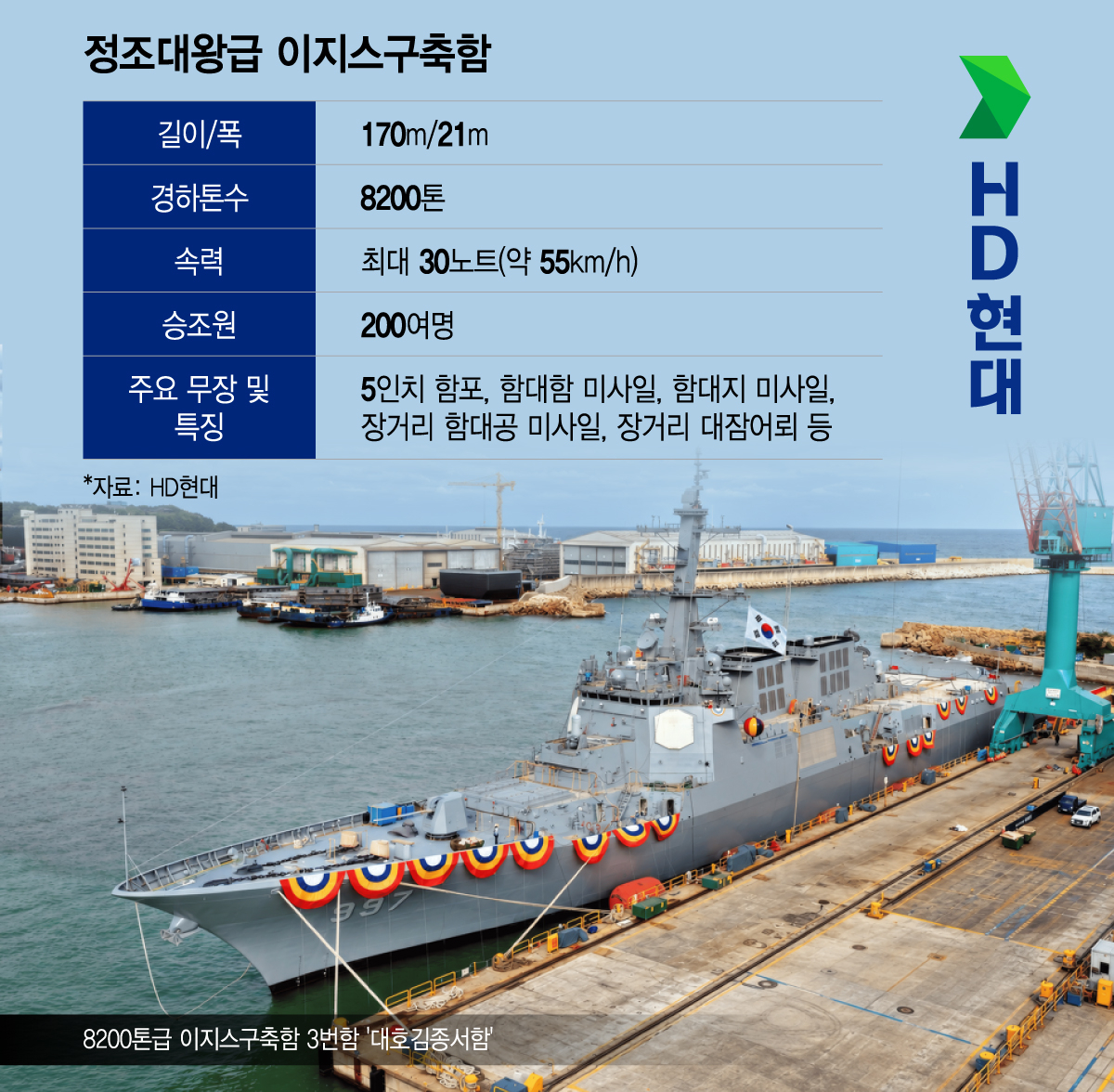
The weapon system that embodies HD Hyundai Heavy Industries' vessel technology is the King Jeongjo-class Aegis destroyer. Although it is a massive combat vessel with a length of 170 meters, a width of 21 meters, and a light displacement of 8,200 tons, it can achieve a maximum speed of 30 knots (approximately 55 km/h). It is not just larger in size. Compared to the existing Sejong the Great-class, its target detection and tracking capabilities have improved by more than double, and it also possesses ballistic missile interception functions. It is a core power of the "sea-based mobile Kill Chain" system responding to North Korea's nuclear and missile threats.
Such technological capability was not created overnight. Starting with the research and development of the "Ulsan," HD Hyundai Heavy Industries constructed a 4,400-ton-class destroyer applying stealth technology, and in 2007, it succeeded in independently designing and constructing a 7,000-ton-class Aegis destroyer, becoming the third in the world to do so. It is also the only domestic shipyard that led the basic design of both the Sejong the Great-class and King Jeongjo-class Aegis destroyers.
The technology, quality, price competitiveness, and ability to meet delivery schedules accumulated over half a century have become important weapons in competing with overseas defense powers. Since starting with the New Zealand military support vessel "Endeavor" in 1987, HD Hyundai Heavy Industries has secured orders for a total of 20 vessels overseas to date. Of these, 10 have been delivered, and the remaining 10 are under construction.
From an Initial Order of 2 Vessels to 12… Beyond the Philippines to Peru
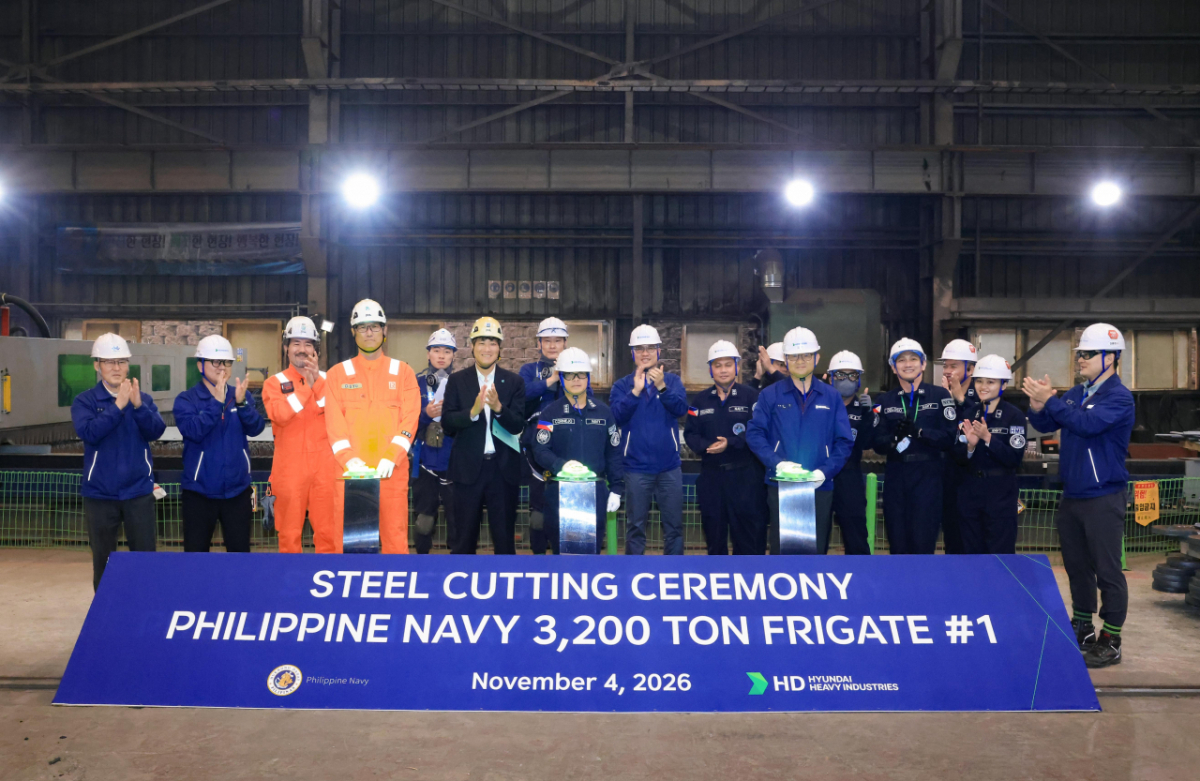
Warships are not products that end after being sold once. Since they are operated for decades, the performance and quality of the vessels also influence subsequent orders. The Philippine vessel project is a representative case. Starting with an order for two frigates from the Philippine Navy in 2016, HD Hyundai Heavy Industries has secured orders for a total of 12 vessels, including patrol ships and offshore patrol vessels (OPVs).
In February this year, it delivered the offshore patrol vessel "Rajah Sulayman" nearly five months ahead of the original delivery schedule. For ordering countries where strengthening naval power is urgent, how quickly a vessel can be deployed into actual combat is as important as securing a high-performance vessel.
Across the Pacific in Peru, HD Hyundai Heavy Industries is also building warships together with local shipyards. It is jointly constructing a total of four vessels, including frigates, offshore patrol vessels, and landing ships, with Peru's state-owned SIMA shipyard, and signed a Letter of Intent (LOI) for joint development and construction of submarines in 2024. A company official stated, "Peru is a market with high expectations in terms of the scalability of existing vessel export projects," adding, "We are continuing cooperation so that the next-generation submarine joint development project can lead to an actual construction project."
Beyond Warships to Shipbuilding Technology Exports… Also Eyeing U.S. Projects
In recent vessel order competitions, where and how warships are built has become as important as how well they are made. This is because ordering countries are demanding local construction and technology transfer to foster their domestic shipbuilding industries.
HD Hyundai Heavy Industries unveiled the 6,000-ton-class export frigate "HDF-6000" at the Saudi Arabia International Defense Exhibition "WDS 2026" in February this year. Upon securing an order, it is considering a plan to expand the local construction ratio centered on IMI Shipyard, which was jointly invested by HD Hyundai Heavy Industries and Saudi state-owned enterprise Aramco, among others.
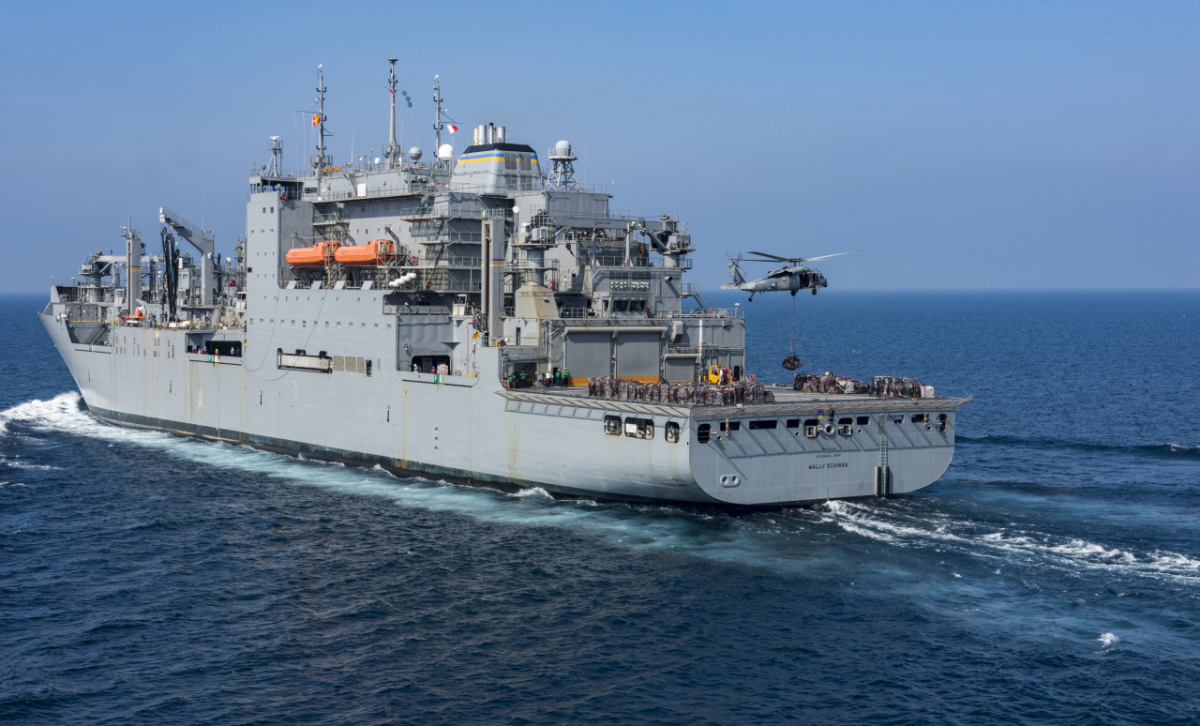
As the United States moves to rebuild its domestic shipbuilding industry and expand vessel construction capabilities, new business opportunities are opening for the Korean shipbuilding industry as well. HD Hyundai Heavy Industries took its first step into the U.S. market through vessel Maintenance, Repair, and Overhaul (MRO). After becoming the first domestic shipyard to obtain the U.S. Navy Ship Repair Agreement (MSRA) qualification in July 2024, it consecutively secured MRO projects for U.S. Navy vessels such as the "Alan Shepard" and "Cesar Chavez."
Ultimately, what it is aiming for is the vessel construction market. It signed a Memorandum of Agreement (MOA) with Huntington Ingalls Industries (HII), the largest defense shipbuilder in the United States, for cooperation in commercial and military vessel construction. The plan is to cooperate on the design and construction of next-generation U.S. Navy military support vessels and share know-how to reduce construction costs and delivery times.
Even Unmanned Warships… Challenging 10 Trillion Won in Defense Sales by 2035
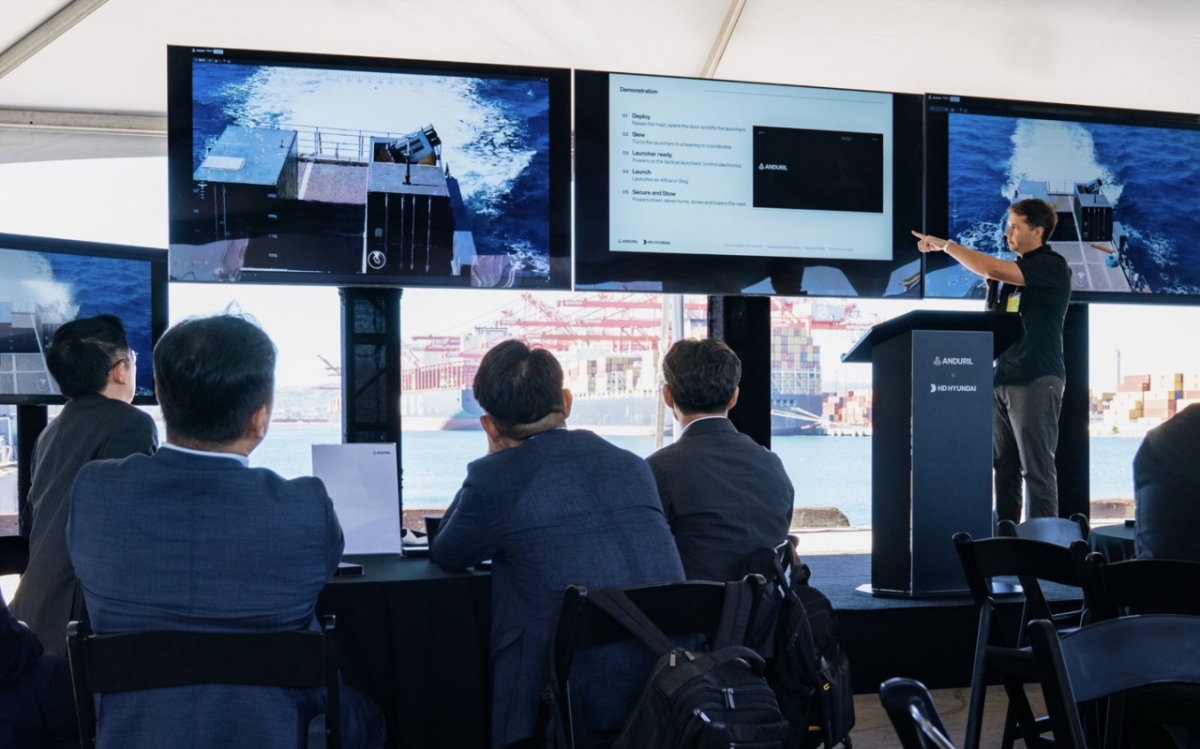
In October last year, a joint demonstration of autonomous operation for unmanned surface vessels between HD Hyundai and U.S. AI defense company Anduril was held in the waters off Long Beach Port, California, U.S. By loading "VAone," a vessel autonomy integrated solution independently developed by HD Hyundai Heavy Industries, it demonstrated its capability to perform complex unmanned missions. It showcased the appearance of future maritime power that can execute missions without direct human operation.
Following a contract for the design and construction of Autonomous Surface Vessels (ASVs) with Anduril in November last year, HD Hyundai Heavy Industries signed a Memorandum of Understanding (MOU) in April this year for the joint development of advanced Unmanned Underwater Vehicles (UUVs). It is expanding the scope of unmanned power development from surface to underwater.
HD Hyundai set a goal of 10 trillion won in annual defense sales by 2035, marking the integration of HD Hyundai Heavy Industries and HD Hyundai Mipo Dockyard in December last year. The concept is to maximize production efficiency by combining vessel construction technology with medium-sized docks, facilities, and personnel. An official from HD Hyundai Heavy Industries stated, "The direction is to achieve the goal through diversification of businesses, including not only domestic vessel construction projects but also expanding overseas vessel exports, local construction, MRO, and unmanned power."

 in INDUSTRY


