

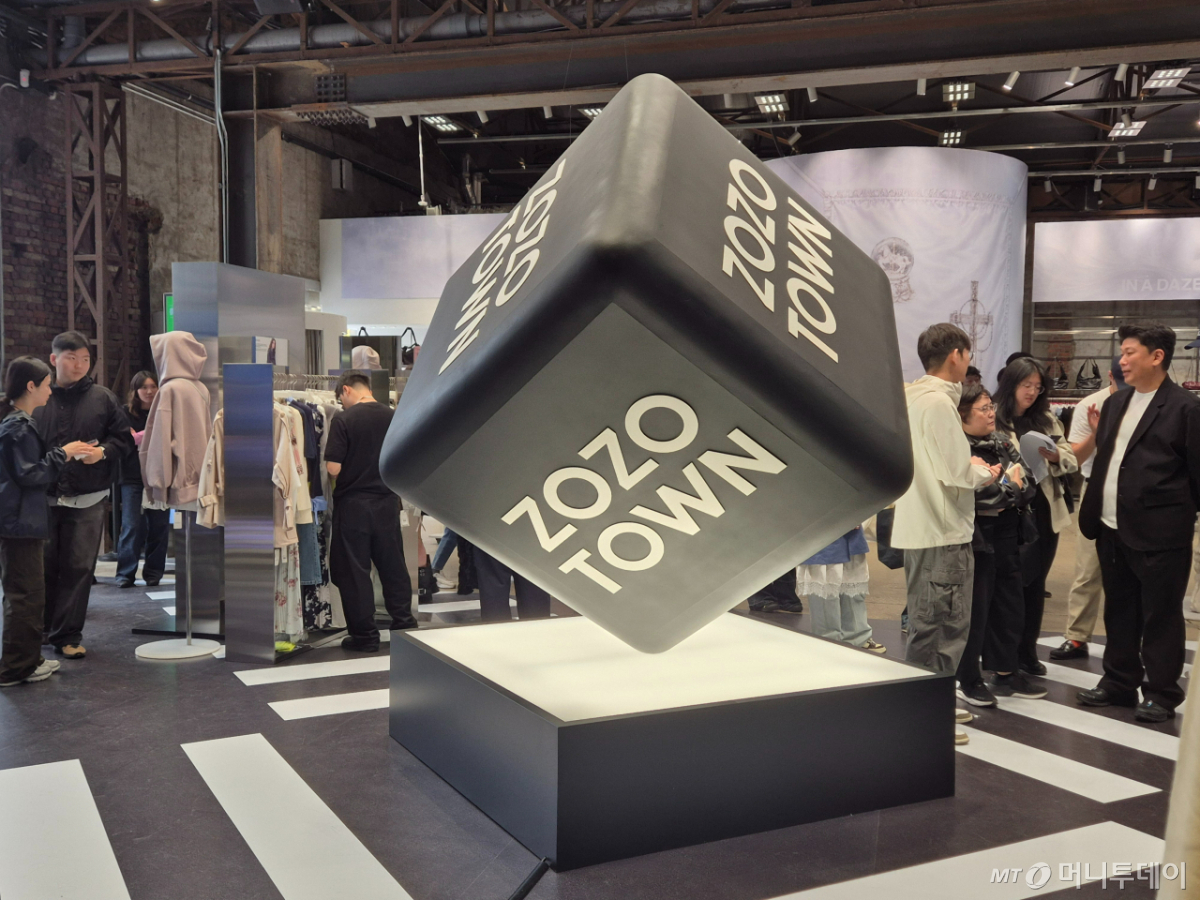
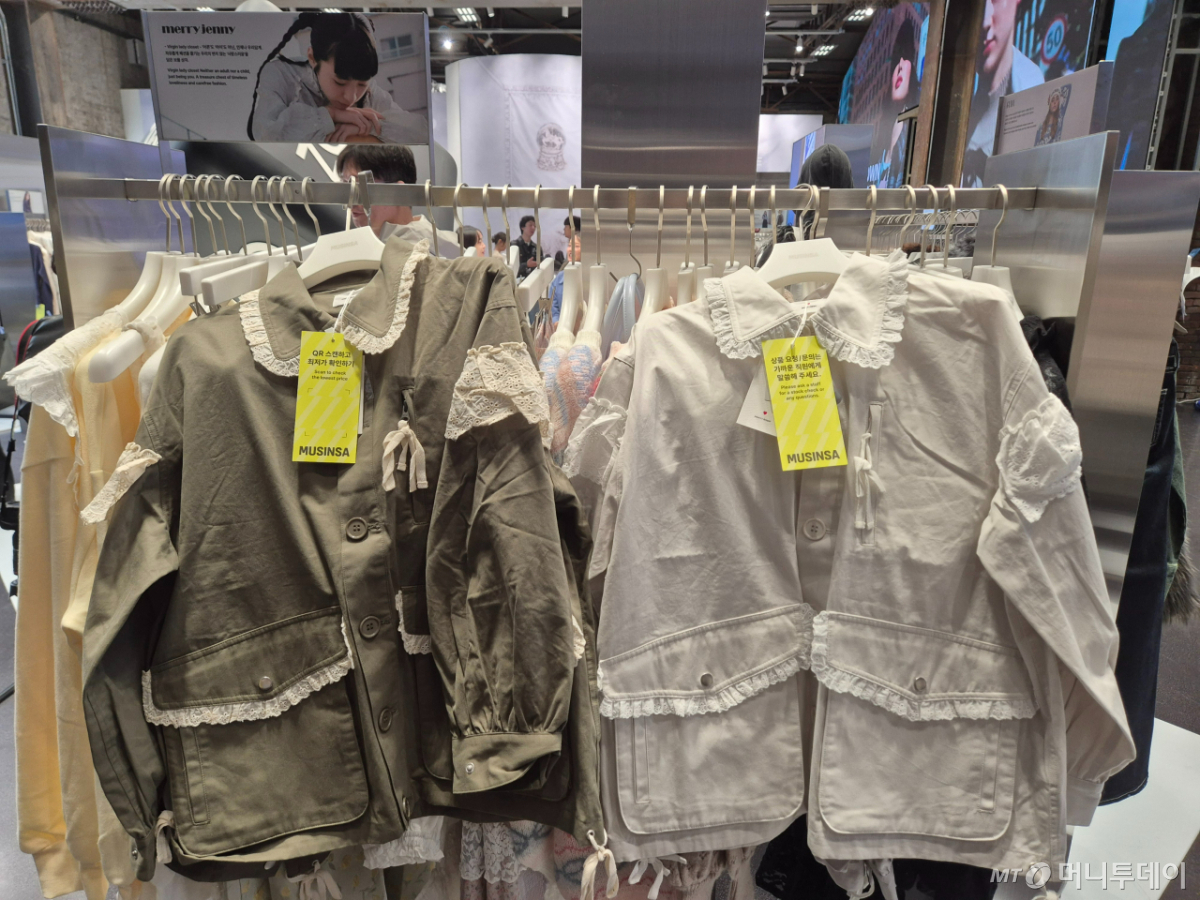
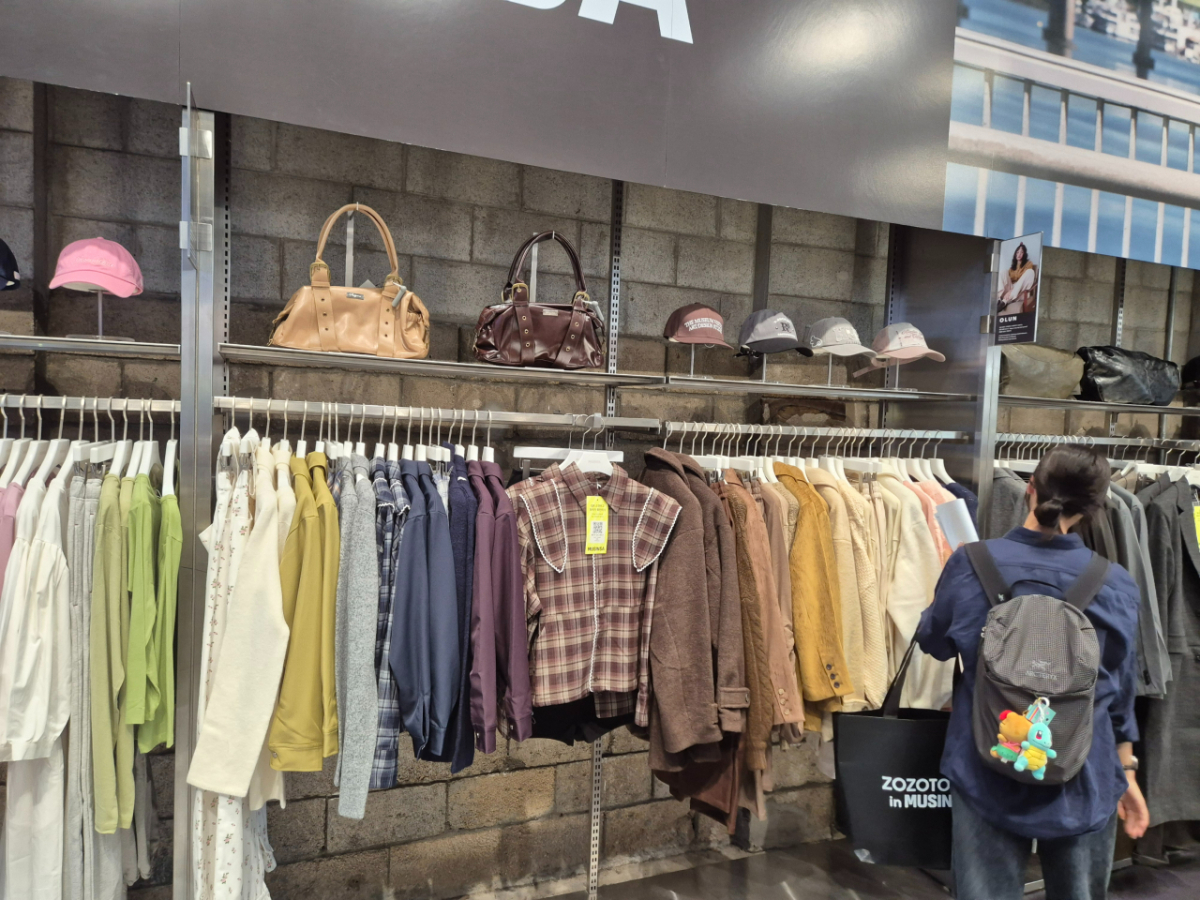
On the morning of the 16th at the Musinsa store in Seongsu-dong, Seoul. Upon entering the store, ruffled blouses, voluminous fur jackets, and lace garments immediately caught the eye. Among the clothes that fully express individuality, knits, shirts, and hats suitable for everyday casual wear were also neatly arranged. Various clothing items from 15 fashion brands gaining attention in Japan were gathered in one place, awaiting their encounter with Korean consumers.
The popup store 'ZOZOTOWN in Musinsa,' the first appearance of Japan's largest fashion platform ZOZOTOWN in Korea, was set up to allow customers to meet brands that are popular in Japan but difficult to access domestically. Takao Yamasaki, head of business at ZOZOTOWN, said, "In Seongsu, known as the birthplace of Korean trends, we aim to introduce Japanese fashion not only to Koreans but also to people from around the world who visit Seoul."
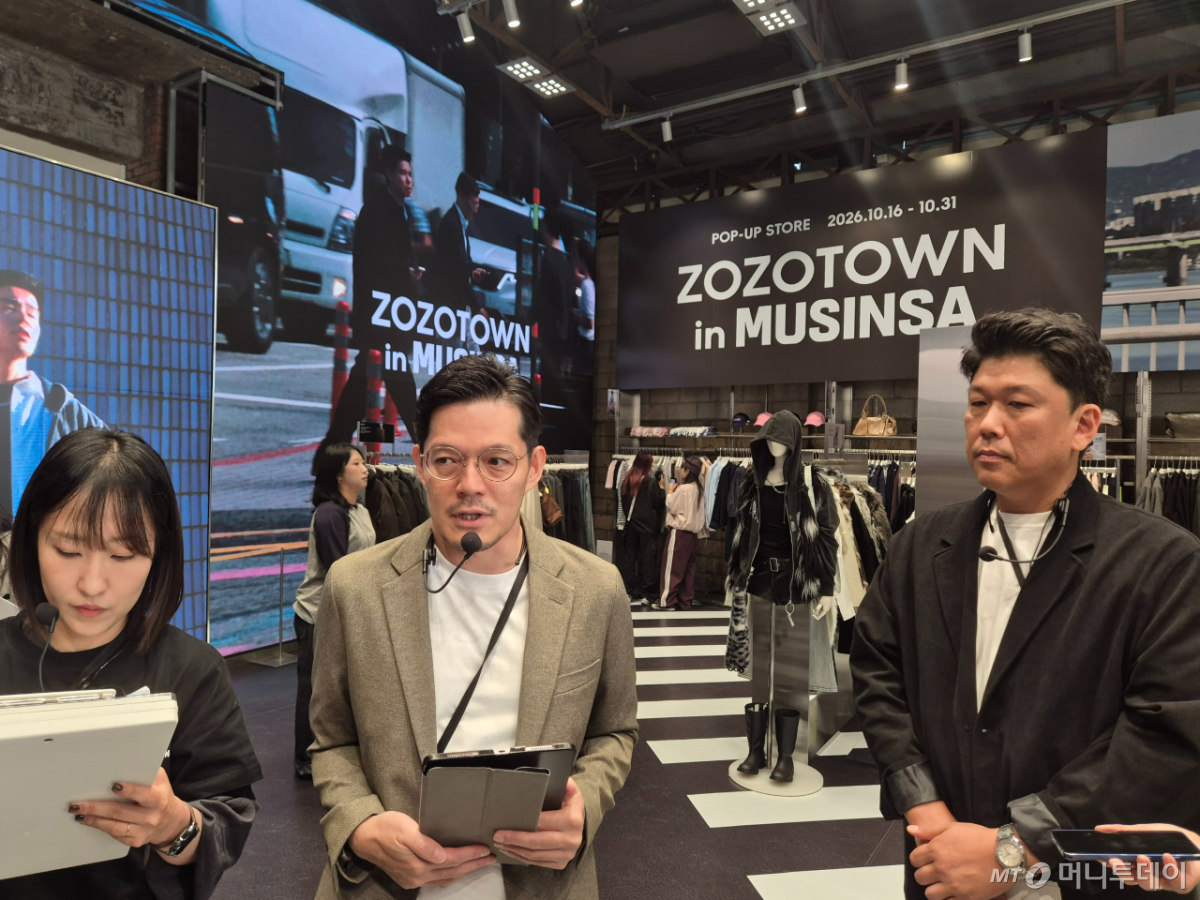
This popup is significant in that the collaboration between the two companies, which have introduced K-fashion to the Japanese market, has expanded to presenting J-fashion to the Korean market. Park Jun-young, head of global business at Musinsa, explained, "Since establishing our Japan subsidiary in 2021 and expanding our business, I have felt that the Korean and Japanese fashion markets are rapidly drawing closer." He added, "If interest in K-fashion in Japan originated from Korean culture, now there is an increasing number of customers who choose it because they like the design and style of Korean brands."
In fact, last year's transaction volume for Musinsa Global Store in Japan increased by more than five times compared to 2023. In the first half of this year, new member registrations and transaction volume also increased by more than two times each compared to the same period last year.
A similar trend is emerging in Korea as well. According to import and export trade statistics from the Korea Customs Service, last year's import value of Japanese clothing was $131.68 million, a 9.7% increase from the previous year. It surpassed $100 million for the third consecutive year. This is interpreted as being influenced by the rise in interest in Y2K trends and Japanese street fashion, as well as an increase in consumers purchasing clothing locally or using online direct purchases due to the growing number of trips to Japan against the backdrop of a weak yen. Recently, Japanese culture has also attracted attention, such as the 'gyaru' concept showcased by Minami, a Japanese member of the girl group Lizenn.
The store design also incorporated the theme of connection between the two countries. The space was decorated in monochrome using a crosswalk and typography inspired by Korean streets. The floor, reminiscent of a crosswalk, expressed the intersection where Korean and Japanese fashion meet.
Musinsa plans to utilize both its stores and online channels to connect interest formed offline with product exploration and purchase. The online special exhibition introduces products under various themes, including ZOZOTOWN ranking brands, styling by Japanese influencers, and Tokyo shopping lists. Head of Business Park explained, "It takes considerable time and cost for overseas brands to enter a new market." He added, "We aim to help overseas brands verify the potential of the Korean market by utilizing the online and offline infrastructure that Musinsa has built domestically."
Musinsa and ZOZOTOWN share a common point of having discovered brands that had not been highlighted by existing distribution channels and connecting them with consumers. This collaboration also focuses on expanding opportunities for consumers in each country to discover brands from the other market, rather than merely selling products.
Head of Business Park said, "While we have focused on introducing Korean brands to Japan through ZOZOTOWN, this time we aim to take our partnership to the next level by having Musinsa introduce Japanese brands to Korea." He added, "Our goal is for brands from both countries to find new growth opportunities in each other's markets and to broaden the base of the fashion ecosystem."

 in LIVING


