

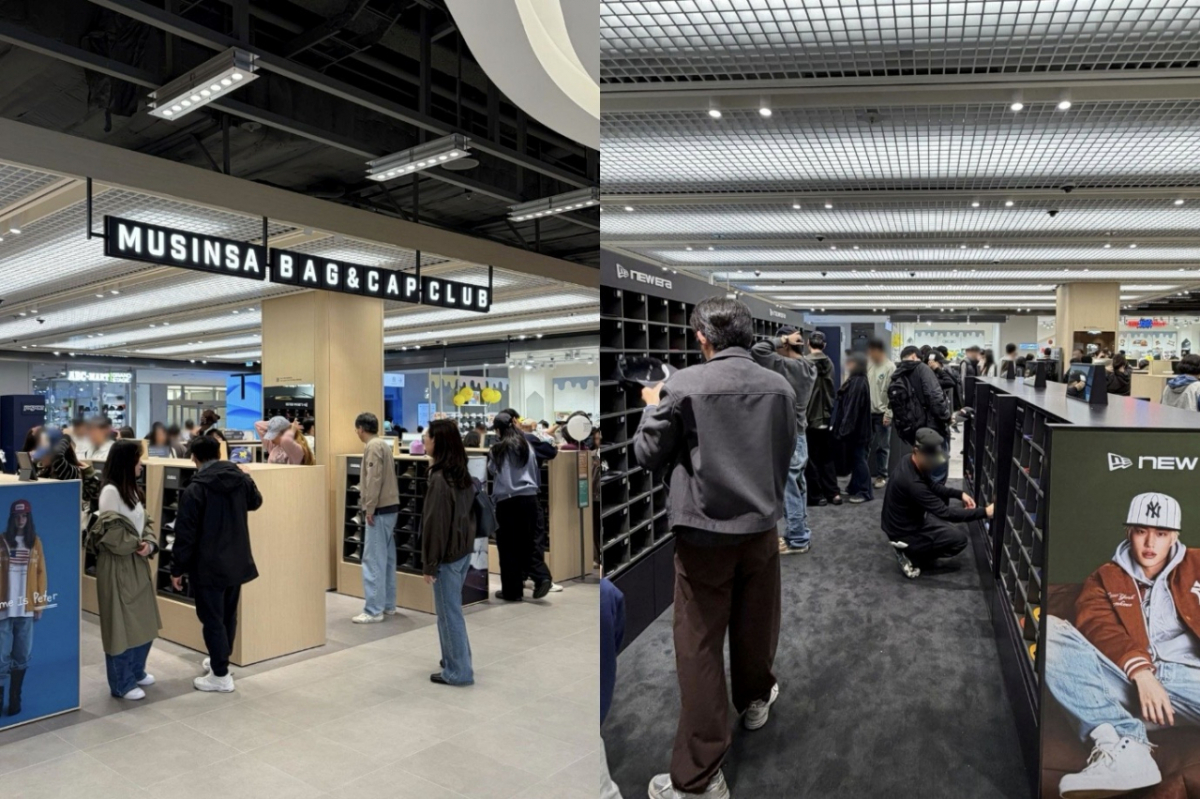
From concept stores dedicated solely to bags and hats to specialty outlets for running gear and sneakers, the retail industry is segmenting product assortments in its offline stores. Rather than carrying a wide range of merchandise, companies are focusing on specific categories and tailoring store formats to local commercial districts and key customer segments.
According to industry sources on Thursday, about 12,000 people visited the "Musinsa Bag & Cap Club Cheongnyangni branch," which Musinsa opened on Oct. 23 on the second floor of the new wing of Lotte Mall Valley Town in Dongdaemun-gu, Seoul. During the same period, sales exceeded the target by more than double.
The customer base differs from that of Musinsa Kicks Hongdae and Seongsu branches, where overseas tourists account for 70% of sales. Eighty-five percent of purchasing customers at the Cheongnyangni branch are Musinsa members, and the share of buyers in their 30s and 40s stands at 45%, which is 11 percentage points higher than the average across all Musinsa stores (34%).
The location and product mix were also designed with this customer profile in mind. Musinsa has brought 94 brands into the Cheongnyangni branch and newly introduced the kids' brand "Brown Breeze Kids" to target family customers. In December, Musinsa Standard will also open in the same mall.
Even within the Bag & Cap Club format, operational strategies vary by commercial district. The Seoul Forest branch, which opened last April, is a flagship store featuring emerging brands and a DIY hat zone where customers can customize their own headwear. This differs in nature from the Cheongnyangni branch located inside a shopping mall.
This segmentation is expanding into other areas as well. Musinsa has divided its offline formats into categories such as Musinsa Store, which focuses on designer brands, along with Musinsa Beauty, Musinsa Girls, Musinsa Kicks, Musinsa Run, and Bag & Cap Club, tailoring product assortments and operational methods to each category. The company is also running both specialty stores and multi-format outlets. In Yongsan and Seongsu, it operates "Musinsa Mega Store," a large-scale outlet combining fashion concept stores with Musinsa Standard and other formats.
The offline business is also showing growth in performance. In the second quarter of this year, offline store visitors increased by more than 66% year-on-year, surpassing 10 million for the first time on a quarterly basis. Musinsa plans to open a standalone Musinsa Beauty store in Seongsu in November and a Musinsa Kicks outlet at Parndam Mall in Samsung-dong in December. It is also preparing a multi-format store in Jeju that combines Musinsa Kicks, Musinsa Beauty, and Musinsa Standard.
Analysts in the retail industry suggest that the role of offline stores has changed as online shopping has become widespread. They explain that simply displaying a wide variety of products is no longer enough to differentiate from online channels, making specialty stores where customers can experience and compare items directly a key competitive advantage.
An official in the retail industry said, "While it is easy to compare and purchase products online, offline stores still play a significant role for items like bags and hats that need to be tried on." The official added, "Segmenting product lines and configuring stores according to customer characteristics in each commercial district has become a new store expansion strategy for the retail industry."
In nearby areas, including the Cheongnyangni redevelopment zone, the Imun-Hwikyung district, and the Jeonnong-Dapseokri New Town, approximately 30,000 households are scheduled to move in by 2030.

 in LIVING
