

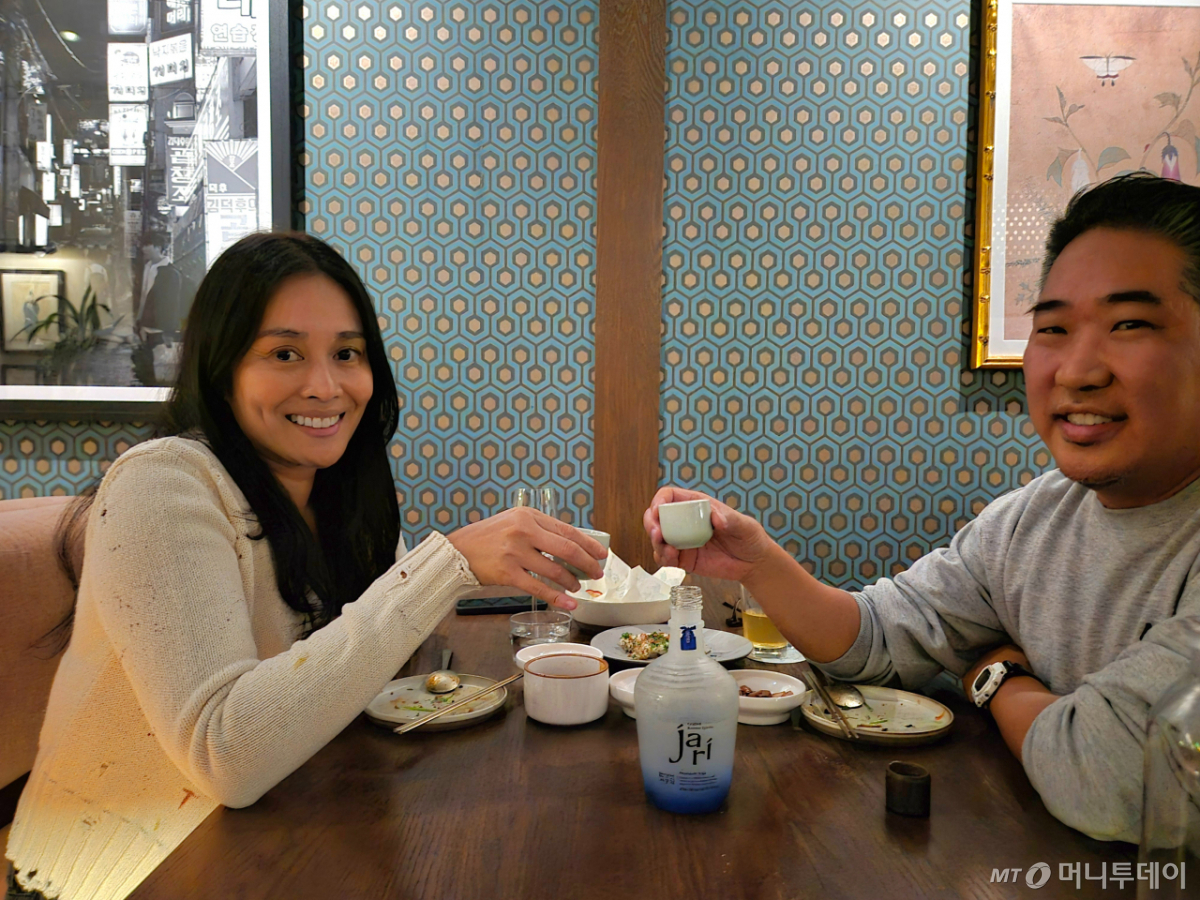
"'Jari' has a floral aroma, but its finish is dry and powerful."
On Oct. 21 (local time), at the restaurant "Hojooban LA" in Los Angeles, U.S., Ms. Jane Caroline (26) was having dinner when she evaluated Korean distilled liquor "Jari," saying, "It is smooth and refreshing, making it easy to drink. I think I will seek it out again."
After holding a sip in her mouth, she put down the glass, explained the taste and aroma to her companions, and even offered them drinks. The conversation naturally shifted to "Somaek," a mix of soju and beer. It appeared that "Jari" had become a medium for introducing Korean food culture and drinking culture.
"Jari" is a brand launched this year by CJ CheilJedang to introduce Korean distilled liquor to the world. The name is derived from the Korean word "jari," meaning a gathering where people come together to share alcohol and food. After taking its first step in the U.S. last September, it is currently stocked in 16 local restaurants and liquor specialty stores in San Francisco, Los Angeles, New York, and other cities.
Behind this challenge lies the vision of "Global K-Lifestyle Leader" that Lee Jae-hyung, Chairman of CJ Group, has emphasized. It is an ambition for CJ to lead daily life filled with content, food, and beauty. Jari signifies expanding the experience of Korean cuisine, such as Bibigo dumplings or kimchi, into traditional liquor.
A CJ CheilJedang official said, "Jari aims to be a platform that introduces the value of Korean distilled liquor to the world," adding, "We will help domestic breweries and distilled liquors expand overseas and allow people to experience Korean food culture in diverse ways."
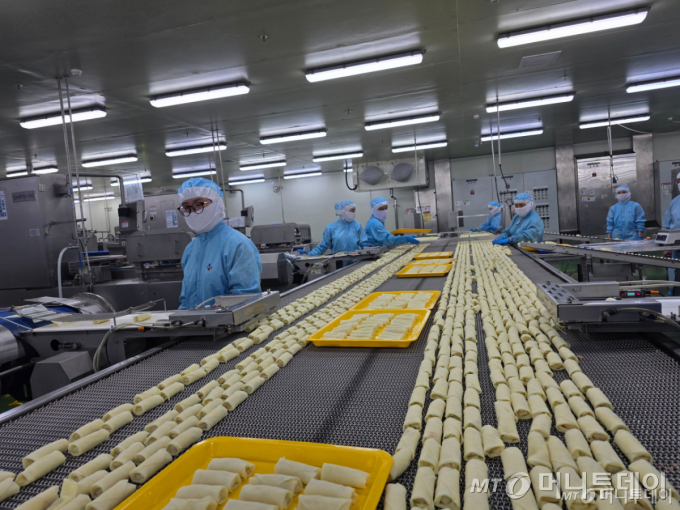
CJ CheilJedang is also putting effort into expanding its business in Vietnam. At the center of this is the Kizuna factory, completed in 2022 and located in Long An Province in southern Vietnam.
Upon entering the Kizuna factory on the 17th of last month (local time), one sees a continuous process where production equipment places fillings on thinly spread dough and rolls them into spring rolls of uniform shape. In the packaging area, workers finally come into view. They are engaged in packing finished spring rolls one by one into containers and organizing them. Because there is a risk of the rolls breaking and specifications vary by export country, most of this work is done manually here.
On the dumpling production line and the seaweed (gim) production line as well, products were being completed non-stop following automated equipment. In all cases, workers’ eyes and hands moved busily in the final, crucial inspection process. This is CJ CheilJedang’s first overseas factory applying a Country-to-Country (C2C) model for production and export. It serves to supply products not only to the Vietnamese domestic market but also to Southeast Asia and Oceania.
The Vietnam subsidiary aims to strengthen K-food’s position in Vietnam while expanding exports by utilizing its production facilities. Kim Se-won, President of CJ CheilJedang’s Vietnam food division, said, "Vietnam has favorable conditions for raw material supply and a advantageous export environment," adding, "We will enhance the standing of K-food in the domestic market while strengthening our competitiveness in overseas markets."
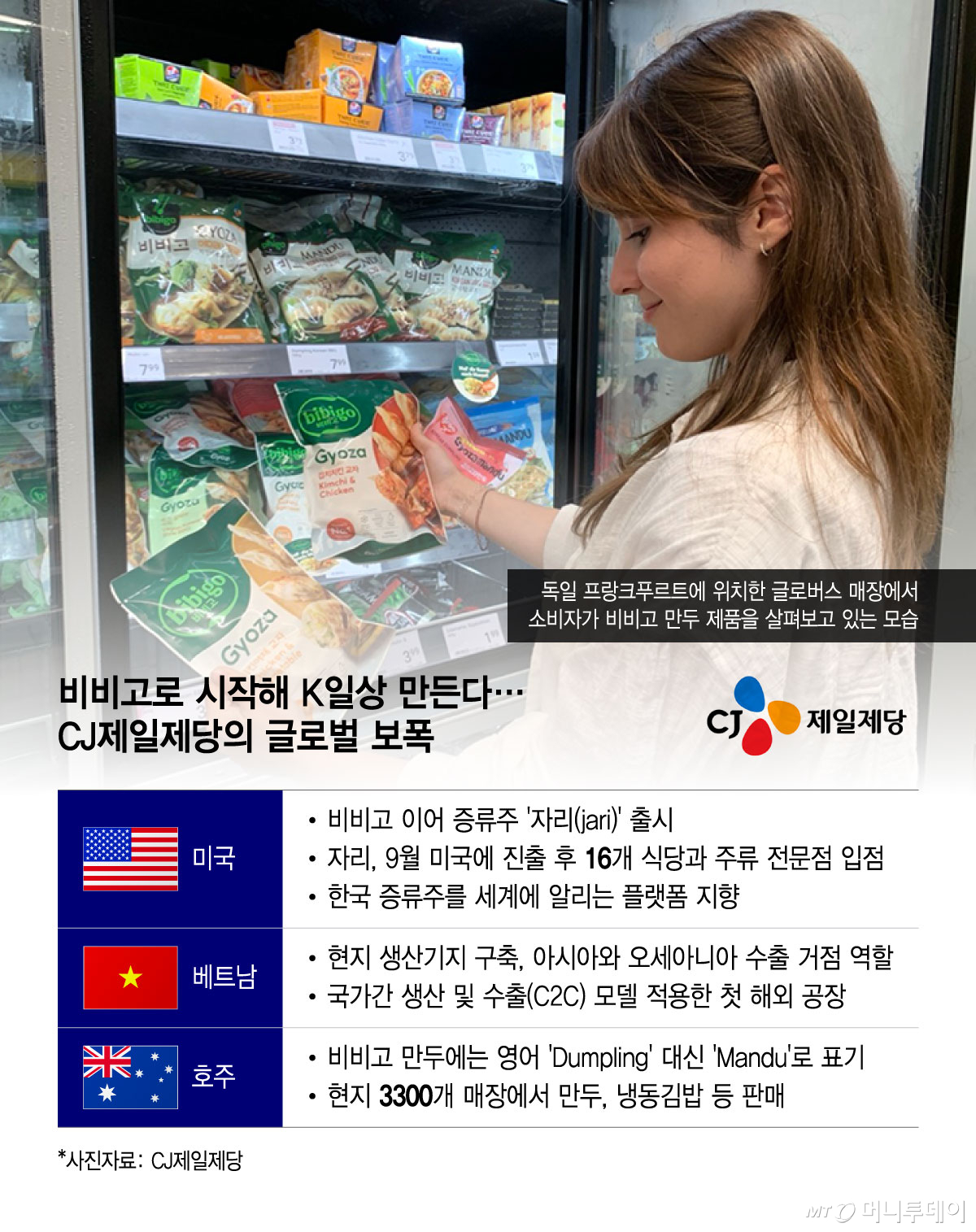
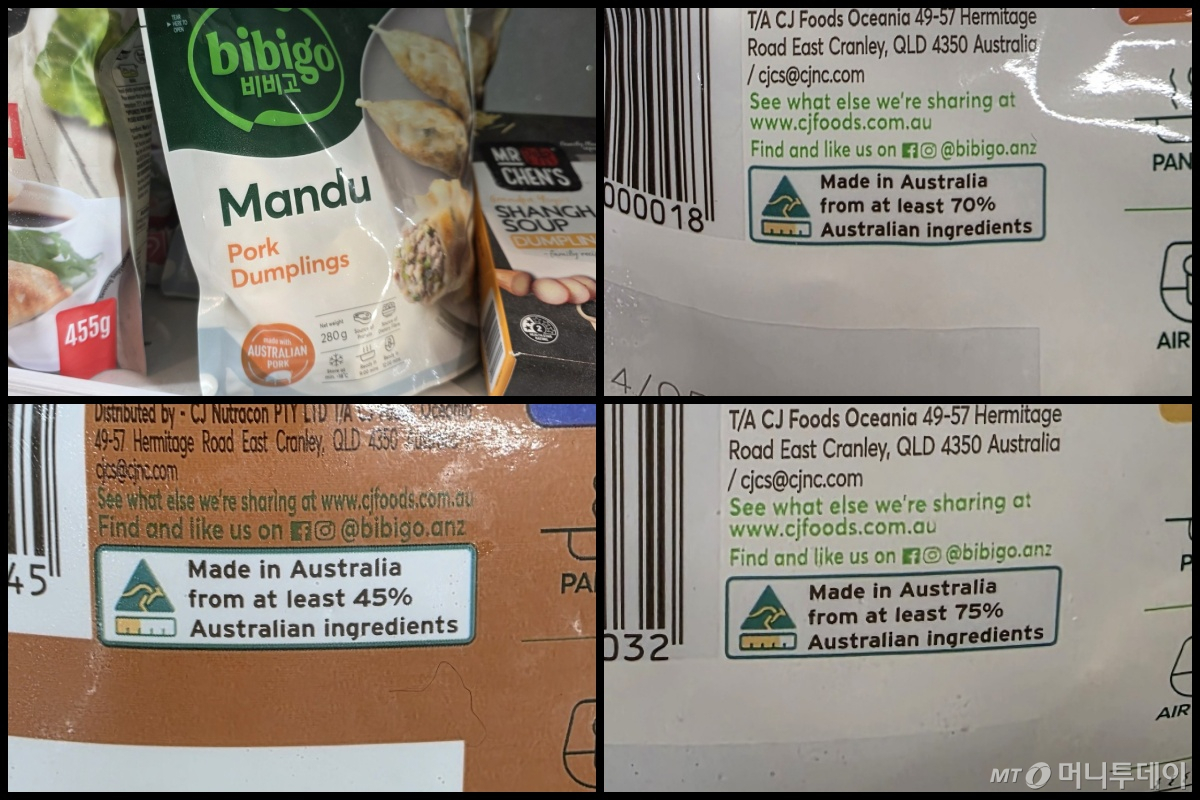
In Australia, one could see Bibigo dumplings that have successfully localized. On the 15th of last month (local time), in the frozen food corner of Woolworths Macquarie Park store, a discount store chain in Sydney, Australia, the packaging of "Bibigo Dumplings" displayed "Mandu," the direct translation of the Korean word, instead of "Dumpling." On the back of the package, it stated that Bibigo dumplings (pork) are made with at least 70% Australian raw materials, and bite-sized "Pop Mandu" with at least 45%. This is a strategy reflecting the characteristics of Australian consumers who value domestic ingredients while maintaining pride in the product name.
CJ CheilJedang has targeted Australia since 2022. Following the entry of Bibigo dumplings into more than 1,000 stores of Woolworths, the largest local discount store chain, in 2023, it expanded its sales network to Coles and others. Currently, Bibigo products, including dumplings and frozen gimbap, are sold in approximately 3,300 stores, accounting for more than 80% of the stores of Australia’s top four retailers. Starting from year-end, Bibigo frozen tteokbokki is scheduled to be stocked in about 300 Woolworths stores. After establishing a foothold in the local frozen food market with dumplings and chicken, and now introducing tteokbokki that consumers cook themselves, Bibigo has moved one step closer to Australian consumers’ dining tables.

 in LIVING


