

There is a reason why transmission towers deliver electricity at high voltages reaching 765,000 volts (V). Increasing voltage reduces current, and reducing current minimizes losses dissipated as heat in the power lines. This is the fundamental principle of how electricity travels from power plants to homes. Recently, what has become an issue is the power supply for AI data centers.
A single server rack equipped with NVIDIA-level AI accelerators now consumes up to 160 kilowatts (kW) of power — a scale equivalent to the simultaneous usage of 50 average households. The industry has launched a major overhaul, raising the voltage supplied to racks from the existing 48V to 800V. The problem is that the AI chips consuming electricity actually require hundreds to thousands of amperes (A) at voltages below 1V. When electricity leaks as heat, chip performance degrades, and additional power must be used to cool that heat, creating a vicious cycle.
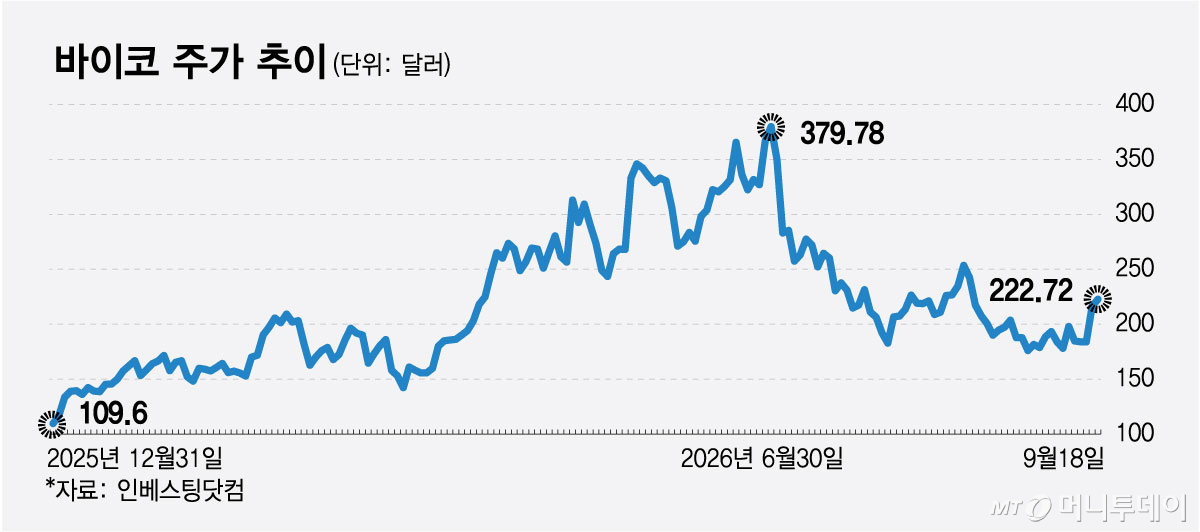
Recently, the market has shown growing interest in various technologies designed to prevent such power waste, with Vicor (VICR) standing out as a leading technology company. Headquartered in Andover, Massachusetts, Vicor has been developing these technologies for 45 years but was largely overlooked due to their low economic viability until recently, when it began attracting investor attention. On the 17th (local time), its stock price surged by 18.5% in a single day. This followed announcements that the company would triple its factory capacity and signed a patent licensing agreement with a major AI company whose identity remains undisclosed. Since the beginning of this year, Vicor's stock has nearly doubled, and its market capitalization has reached approximately 14.9 trillion won (9.9 billion dollars, based on an exchange rate of 1,400 won per dollar).
CEO for the 45th year since founding in 1981... A company where 1,000 employees make a living through patents
The founder of Vicor is Patrizio Vinciarelli, a physics PhD holder. Since founding the company in 1981, he has served as chairman and chief executive officer (CEO) for 45 years. He is a rare long-serving entrepreneurial leader on the U.S. stock market. He is both a manager and an inventor. His name appears as the inventor on many of the company's core patents. Vicor was also the pioneer in creating and selling power supply units in the 1980s as standard brick-shaped modules. Vicor's brick products were widely used in the power sections of communication equipment, industrial machinery, and defense systems.
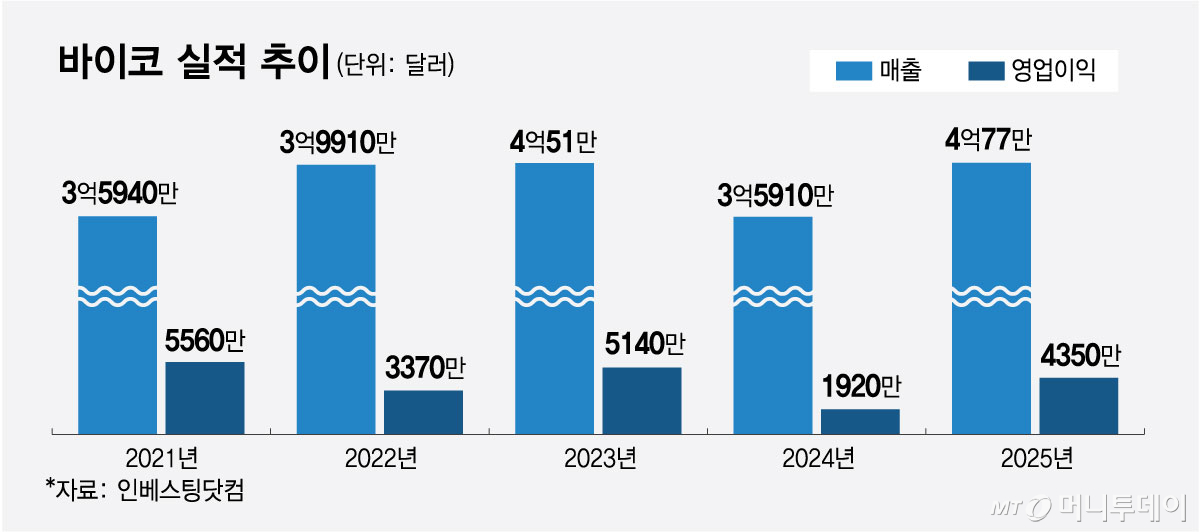
The characteristics of Vicor are also evident in its workforce composition. The number of regular employees is a mere 1,092 as of the end of 2025, yet this workforce generated sales of 633.8 billion won (452.7 million dollars) last year. This amounts to approximately 600 million won (410,000 dollars) in sales per employee. Research and development (R&D) expenses reached 110 billion won (786 million dollars) last year, accounting for more than 17% of sales. This level is three to four times that of typical manufacturers. Because Vicor operates a vertically integrated structure where design, packaging, and production are all handled at its own Andover factory, there is little risk of technology leaking out. This explains why Vicor is highly regarded for possessing both superior manufacturing technology and outstanding patented technologies.
Bico's greatest competitive advantage can be summarized in two main points. First is its proprietary technology called Factorized Power. While conventional power devices handle both voltage reduction and voltage regulation within a single circuit, Bico separates these two functions and optimizes each individually. This is similar to the logic of having two people share the tasks of descending stairs and maintaining balance. Thanks to this approach, Bico can process significantly more power within the same volume.
The second technology attracting market attention is Vertical Power Delivery (VPD). The conventional method places voltage-regulating components next to the chip and directs electricity sideways. The problem lies in distance. Currents exceeding 1,000 amperes at 1 volt accumulate losses like a snowball even when traveling just a few centimeters across the circuit board. Vico solved this issue by changing the direction of current flow itself. It attaches voltage-regulating modules directly beneath the chip to supply electricity vertically.
The travel distance will effectively disappear. The current second-generation product has a current density of around 3A per square millimeter, and the company aims to increase this to 5A by early 2027. The company argues that the existing multiphase voltage regulator (multi-phase VR) method cannot handle the current required by next-generation AI chips.
Bico's technology is evaluated as having immense value in the market. To understand this, one must know the basic laws of electricity. Losses that disappear as heat in power lines are proportional to the square of the current. When the current doubles, losses quadruple; when it triples, losses increase ninefold. Therefore, the basic strategy for power transmission is to keep voltage as high as possible and current as low as possible. Typically, this involves transmitting at high voltage up to just before the point of use, such as homes, and then lowering the voltage at the final moment.
This is why ultra-high-voltage transformers are located near residential areas or industrial complexes. Transmitting low-voltage Daejeon current over long distances causes the circuit boards to become paralyzed by heat. The problem is that this final conversion is technically the most difficult. Devices (converters) that change voltage open and close electrical switches hundreds of thousands to millions of times per second; forcibly cutting off the current while it is flowing causes energy to leak out as heat and noise each time.
Companies that used patented technology without authorization and won lawsuits saw their corporate valuations rise significantly.
Byco solved this problem with timing using the sine wave amplitude converter (SAC), which it has patented. The circuit causes current to ripple like waves, and the switch is opened and closed only at the precise moment when the current naturally reaches zero. This is akin to giving a gentle push just as a swing momentarily pauses while changing direction, requiring almost no effort.
The difference created by this timing technology is cascading. With switching losses eliminated, switching speeds can be increased to dozens of times that of competing products. As switching becomes faster, transformers and coils that temporarily store electricity can be made extremely small. As components shrink, the size of modules handling the same power drops to the size of a fingernail, making it possible to fit them only in the narrow space directly beneath the chip.
Vertical Power Delivery (VPD) is a technology that can only be realized through such extreme miniaturization. Bayco has also developed its own proprietary process, ChiP, which produces power devices in thin, rectangular packages similar to semiconductor chips. This packaging, which dissipates heat from both the top and bottom surfaces, is manufactured exclusively using dedicated equipment at Bayco’s own factory, making it impossible to replicate simply by reading patent documents. The patents accumulated over 45 years block design replication, while the factory’s know-how blocks manufacturing, creating a dual barrier.
There are numerous companies that copied BiCo's technology because they failed to develop it themselves. This trend intensified after Google raised the supply voltage for data center server racks from 12V to 48V in 2016 and publicly disclosed this standard, making intermediate conversion circuits that step down electricity received at 48V an essential component of all AI servers. This was because BiCo's patented technology represented the most compact and efficiently validated circuit.
When circumventing patents through alternative designs, efficiency and size inevitably suffer. In ultra-large data centers where electricity costs reach hundreds of billions of won annually, a 1 percentage point difference in efficiency translates to cost differences amounting to tens of billions of won. Consequently, Taiwanese server and component manufacturers such as Delta Electronics, Quanta, and Foxconn affiliates have opted to develop and supply power modules using methods similar to those employed by Vico.
Bikeo has not walked only on flower paths. In 2024, its sales fell to 502.7 billion won ($359.1 million), a 11.4% decrease from the previous year, and operating profit turned into a loss. Net income also shrank to 8.5 billion won ($6.1 million). This was due to a decline in demand for BRICK products and a delayed market penetration of new products. The stock price has also been neglected for a long time.
The company's situation began to turn around when lawsuits were filed against companies that had been using BiCo's technology without authorization. BiCo sued several power module manufacturers for infringing its patents with the U.S. International Trade Commission (ITC) and obtained a limited exclusion order (LEO) in 2025, which banned the import into the United States of the infringing products and computing systems incorporating them. As a result, customs clearance for the patent-infringing products was completely blocked at U.S. ports. This means that companies relying on the infringing products were left with no choice but to pay BiCo licensing fees or purchase and use BiCo's own products.
The effectiveness of this strategy is confirmed by the results. License revenue surged from 3.9 billion won ($2.8 million) in 2022 to 22.3 billion won ($15.9 million) in 2023, and further to 65.2 billion won ($46.6 million) in 2024. In 2024, it accounted for 13% of total revenue. In 2025, an additional 63 billion won ($45 million) from patent litigation settlements was received. The company forecasts that settlement payments related to lawsuits and license income will contribute approximately 420 billion won ($300 million) in revenue through 2026.
In the second quarter of this year, a new licensing agreement worth 84 billion won (0.6 billion dollars) over two years was added, and on the 16th, VPD patent usage contracts were signed with an unnamed major AI manufacturer (OEM). The notable aspect is the structure of the agreements. Companies that receive the license may use VPD modules made by third-party component manufacturers; however, in such cases, they must still pay licensing fees to Bioco. If they purchase Bioco modules directly, a discount on usage fees is applied. This creates a revenue model where income flows regardless of whether the company sells its own products or if competitors sell their products.
Surpassing a profit turnaround, record-breaking performance... Order backlog surged 145% in one year
Performance is showing a clear recovery trend after hitting a low last year. Second-quarter revenue reached 200.8 billion won ($143.4 million), up 26.9% from the previous quarter. Net profit was 69.7 billion won ($49.8 million), and earnings per share (EPS) came in at $1.04, significantly exceeding market expectations of $0.65. The gross profit margin rose to 58.0%, an increase of 2.8 percentage points from the prior quarter, thanks to additional high-margin patent licensing income. Order backlog (deliveries within one year) stood at 531.6 billion won ($379.7 million), up 26% from the previous quarter and 145% compared to a year ago. Cash assets reached 635 billion won ($453.6 million), while debt is virtually non-existent.
The business structure is also changing. In the second quarter, new Advanced V products such as VPD accounted for 65.7% of sales, a significant increase from 57.5% in the first quarter. Sales of Advanced V products rose by 45% in just one quarter to reach 131.9 billion won (942 million dollars). The share of older Brick products fell to 34.3%, down from 45% in 2024 alone. By region, exports accounted for 46% of sales. The company does not disclose the names of its customers. However, in its earnings announcement, it stated that VPD's key customer is rapidly increasing orders for fourth-generation products and will transition to fifth-generation products starting in the second half of this year. It also noted that demand remains strong in high-performance computing (HPC), as well as in the aerospace, defense, and industrial sectors.
The first reason companies choose Vico is performance. In AI servers, electrical loss translates directly to cost. Lost electricity becomes heat, and cooling that heat requires additional power. The Vico module, which converts voltage right beneath the chip, fundamentally eliminates transmission losses and frees up board space around the chip. This space can then be used to add more memory. In a situation where conventional methods cannot meet the current demands of next-generation chips, Vico stands as a proven alternative.
Second is supply stability. Byko handles everything from design to production at its own factory in the United States. For hyperscalers highly sensitive to geopolitical risks, this means their supply chain is fully contained within the U.S. This also overlaps with patent risks. Due to an ITC import ban order, infringing products without a license can be stopped by customs; even if a component supplier promises compensation, it cannot lift the import ban itself. Conversely, securing a license enables multi-sourcing that combines direct purchases from Byko and procurement from third parties. For customers whose trillion-won data centers would halt if supply were cut off, the value of such safeguards is inevitably significant.
The pricing structure is also a key point. The Vico module itself is not cheap. Instead, the licensing agreement includes a clause for usage fee discounts, designed so that the total cost decreases as more Vico products are purchased directly. According to the company, when looking at the entire system, the reduction in power loss and savings on cooling costs more than offset the difference in component prices.
Vicor's competitors are all large corporations larger than Vicor itself. Infineon, Monolithic Power Systems (MPS), Delta Electronics, and Renesas share the server power supply market in the multiphase VR arena. Vicor itself admits that its market share within the entire commercial power supply market is negligible and that there are many much larger competitors. However, it maintains that thanks to differentiated technology, it holds a leading position in the niche markets where it participates. The fact that the market itself is growing rapidly is positive. The company forecasts that the 800V-to-48V conversion and 48V-to-under-1V VPD markets will exceed 7 trillion won (5 billion dollars) by 2028. Of course, if major competitors launch their own VPD products that circumvent patents, a head-on confrontation becomes inevitable. In the end, Vicor's competitiveness depends on how thickly it has built up its patent portfolio.
Despite previously being cited as a growth bottleneck due to insufficient production capacity, the company has now presented a solution. The Andover Plant No. 1 (with a total floor area of approximately 30,000 square meters) is operating at its capacity limit. On the 11th, the company announced plans to acquire a 31,000-square-meter building and about 270,000 square meters of land in Merrimack, New Hampshire, as well as approximately 220,000 square meters of land in Hooksett, to construct Plants No. 2 and No. 3. Combined, the two new plants will have a total floor area of about 93,000 square meters, nearly three times the size of the existing facility. It is expected to take one year before Plant No. 2 begins initial operations. In addition, the company unveiled a share buyback plan worth 210 billion won (150 million dollars). With the announcements of factory expansion, new licenses, and the share buyback program all released within a week, the stock price surged to around $218 (approximately 306,000 won).
There are weaknesses in Vico as well. Although it has announced capacity expansion, current production capacity is insufficient. The output from the first factory is prioritized for strategic customers, and the company stated it will selectively onboard new fifth-generation VPD clients. Output from the second factory will not be available until at least the end of next year, with full contribution beginning in 2028. In the interim, if orders shift to competitors, the growth trend in the order backlog could stall.
Sustainability of patent revenue is also a variable. A significant portion of the second-quarter surprise earnings came from patent licensing fees. The company's projected licensing fee guidance stands at 7 trillion won (5 million dollars) for the third quarter, followed by 14.9 trillion won (0.1 billion dollars) per quarter for the subsequent four quarters. This is actually lower than the 15th million dollars recorded in the second quarter. Settlement payments are one-time income, and the pace of license expansion will vary depending on the outcome of ongoing follow-up ITC cases. This is why some Wall Street analysts are scrutinizing the quality of earnings. In fact, even on the day the strong second-quarter results were announced, the stock price was pushed down.
Valuation and volatility must also be examined. Bioco's price-to-earnings ratio (PER) stands at around 60 times on a trailing twelve-month basis, while its price-to-sales ratio (PSR) is approximately 18 times. The beta, which indicates stock sensitivity, exceeds 2, with daily fluctuations of 10% to 20% being commonplace. Given that the one-year return has reached triple digits, any correction could result in a significant decline. The fact that the founder has held both technology and management control for 45 years is cited as both an advantage and a disadvantage. With exports accounting for 46% of revenue, tariff and geopolitical variables remain ever-present. However, Wall Street's sentiment is generally positive. Bioco is not primarily viewed as an earnings-driven stock but rather as a company whose corporate valuation is driven by its extensive portfolio of patented technologies.

 in STOCK

