

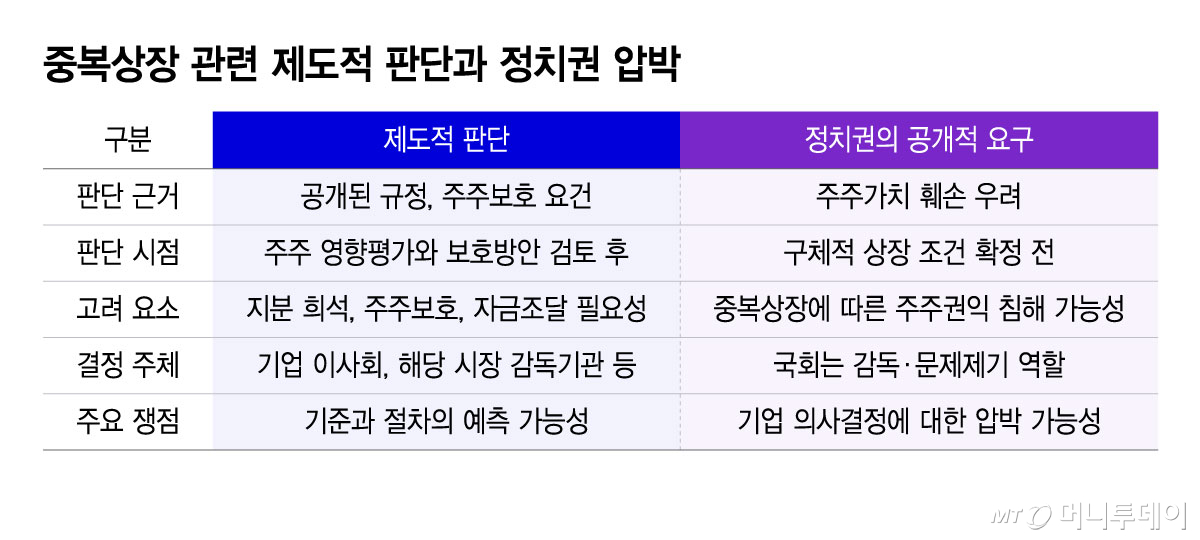
SK Hynix's decision to suspend its review of an initial public offering (IPO) for its U.S.-based semiconductor subsidiary Solidigm has turned the dilemma of duplicate listings into reality. The company is caught between criticism that a duplicate listing would harm existing shareholders and concerns that blocking funding channels could cause it to miss growth opportunities. In particular, because public opposition from the political establishment and preemptive judgments by financial regulators led to the abandonment of the listing before any specific listing plans or review process were even carried out, this is expected to affect the capital market's function in allocating funds and corporate capital raising going forward.
SK Hynix announced on the 23rd that it would suspend its review of Solidigm's IPO and pre-IPO investment. This comes 15 days after foreign media reported on the 8th (local time) that Solidigm had selected Wi Hae (CEO) as its lead underwriter for a U.S. stock market listing next year. The decision appears to have been driven by the spread of negative public opinion following intense criticism of the Solidigm listing during the National Assembly's audit period. Adding to this, financial regulators' top officials publicly stated that they would regulate in accordance with duplicate listing guidelines, further increasing the burden on pushing forward with the listing.
While concerns over a duplicate listing have diminished due to the suspension of the review, the company's funding capacity has shrunk, intensifying worries about investment and growth. Although SK Hynix stated that it will continue to consider future funding options, the fact remains that opportunities for external capital raising have decreased.
Given that financial regulators have been tightening regulations amid a history of duplicate listings leading to declines in parent company stock prices, concerns are emerging that corporate maneuvering room will narrow because the listing plan was scrapped before specific listing structures, shareholder protection measures, or fund usage plans were even announced. It is also predicted that strategies by other companies aiming to raise investment funds through overseas listings and strengthen competitiveness in new businesses may change as a result.
Ultimately, it is pointed out that strengthening shareholder protection and ensuring smooth corporate funding are tasks that must be pursued simultaneously. A financial investment industry official noted, "While protecting the rights of existing shareholders, the economic effects of a company's listing and capital raising need to be evaluated through predictable criteria and procedures," adding, "A challenge in operating the duplicate listing system going forward is ensuring that political issues do not go beyond supplementing institutional judgments but instead shrink the companies' own choices."

 in STOCK
