

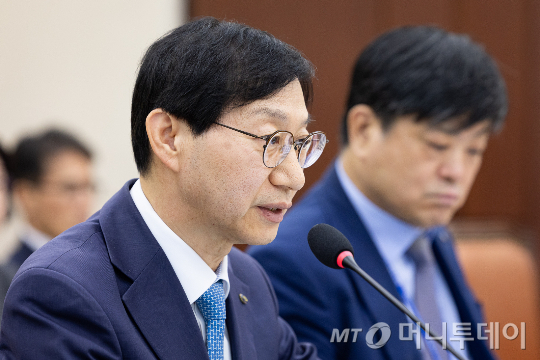
As it was confirmed that the National Pension Service had made net sales of domestic stocks this year, Chairman Kim Sung-ju repeatedly asserted that this year’s operational strategy, including a temporary deferral of rebalancing (asset reallocation), was essentially a loss-avoidance strategy.
According to pension fund industry sources on the 30th, Chairman Kim posted three consecutive videos on social media (SNS) the day after the conclusion of the national audit, defending the decision to defer the rebalancing of domestic stocks (asset weight adjustment). The videos contained edited clips of Chairman Kim’s remarks during the national audit. In a video posted with the caption “Fact-checking NPS Rebalancing,” Chairman Kim stated, “If we had sold domestic stocks, we should have invested in bonds and overseas stocks rather than bank deposits, but domestic bond yields were minus 3 percent, and overseas stock returns were only about 10 percent.”
The explanation was that reducing domestic stocks to purchase assets with lower returns would actually be disadvantageous. In another video, Chairman Kim said, “If we had not maintained the weight of domestic stocks in line with reality, the National Pension Service could have entered a loss phase,” adding, “Comparing peaks and troughs over a few months to calculate gains and losses causes pension funds, which are long-term investors, to miss important long-term profits.”
In the third video, he claimed that had past rebalancing rules been followed, approximately 800 billion won worth of stocks would have been continuously sold daily, impacting the domestic stock market. Chairman Kim stated, “Even in a phase where KOSPI has undergone significant correction like now, if we had maintained the weight of domestic stocks based on past standards, we would still be (selling domestic stocks in large quantities).”
The NPS Fund Management Committee raised the target weight for domestic stocks from 14.4 percent to 14.9 percent last January and deferred rebalancing until the end of June. In May, the target weight was raised to 20.8 percent. The committee also temporarily expanded the allowable range for Strategic Asset Allocation (SAA) of domestic stocks from the existing level of ±3 percentage points to respond more flexibly to the volatile domestic stock market situation. Citing a desire to minimize market impact, it decided not to disclose the specific level of the expanded allowable range. In this regard, criticism has been raised by the opposition People Power Party that the National Pension Service had moved to prop up stock prices ahead of the the 3rd local elections.
On the other hand, the National Pension Service side has maintained the position that rebalancing was deferred due to reasons such as market shock and a lack of alternative investment destinations. The overall return on the NPS fund for January through July this year was 14.84 percent, while the return on domestic bonds was -3.36 percent.
According to financial information provider FnGuide, there are 287 domestic listed companies for which the National Pension Service has publicly disclosed holdings of more than 5 percent. The valuation of the NPS’s shareholdings was 333 trillion 533 billion won as of the 15th of this month. This represents a decrease of 182 trillion 396.3 billion won (35.4 percent) compared to the end of June.
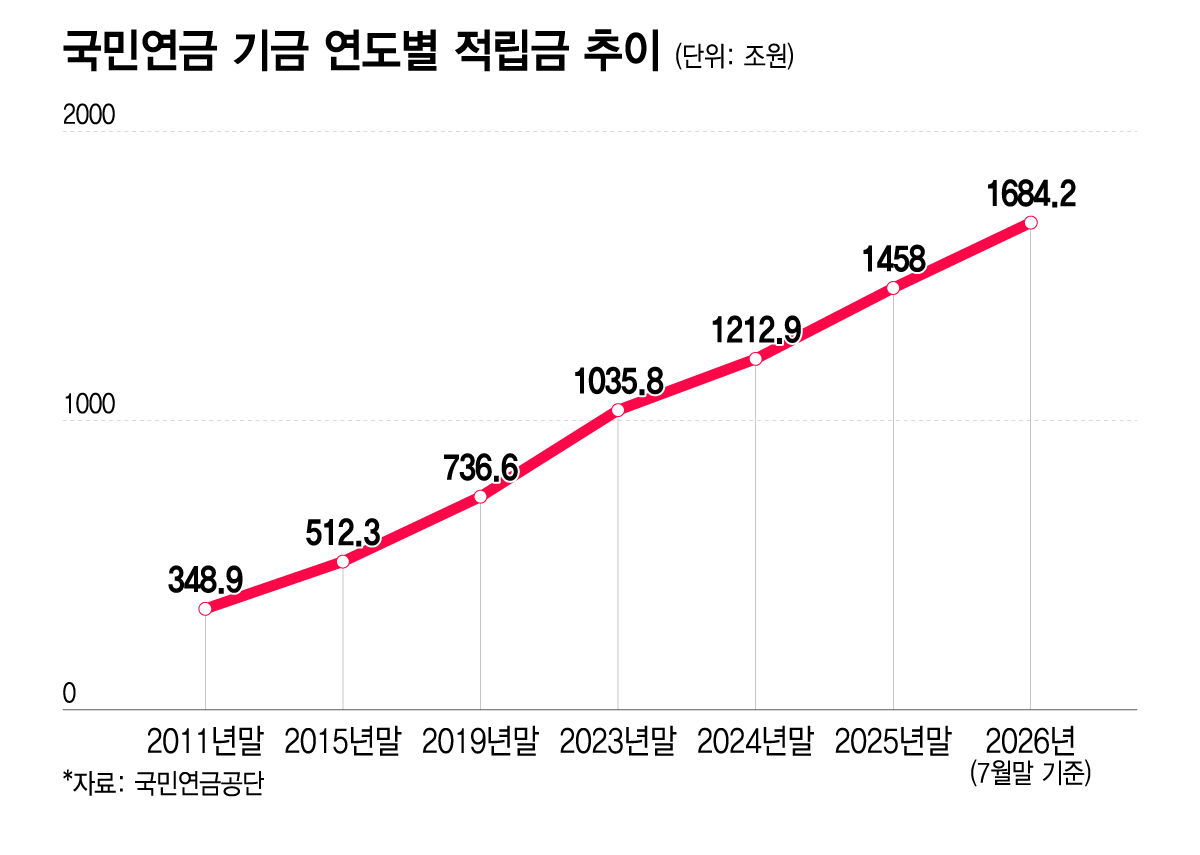
However, the decrease in shareholding valuation is due to falling stock prices and does not mean that operational losses have been finalized. NPS reserves stood at 1684 trillion 200 billion won as of the end of July, an increase of 15.5 percent compared to the end of last year.
The National Pension Service was found to be in a cumulative net selling position for domestic stocks this year, having sold them at its discretion even during the deferral period. It is reported that although it sold stocks before rebalancing resumed in July, the valuation of its holdings grew faster in the surging market, leading to an increased weight of domestic stocks. According to an official well-versed in pension fund matters, the National Pension Service has not engaged in purchases to increase its weight of domestic stocks since March and April last year, when the KOSPI index fell below the 2,500 mark due to the shock of U.S. tariffs.
Meanwhile, the minutes of the Fund Management Committee meeting in January, when the decision to raise the target weight for domestic stocks was made, remain non-public. Under the National Pension Service Act, Fund Management Committee minutes are disclosed after four years, but must be submitted as non-public if requested by a standing committee under the jurisdiction of the National Assembly. The People Power Party requested the minutes, but the Democratic Party of Korea opposed their submission citing reasons such as exposure of investment strategies, resulting in no agreement between the ruling and opposition parties.

 in STOCK

