

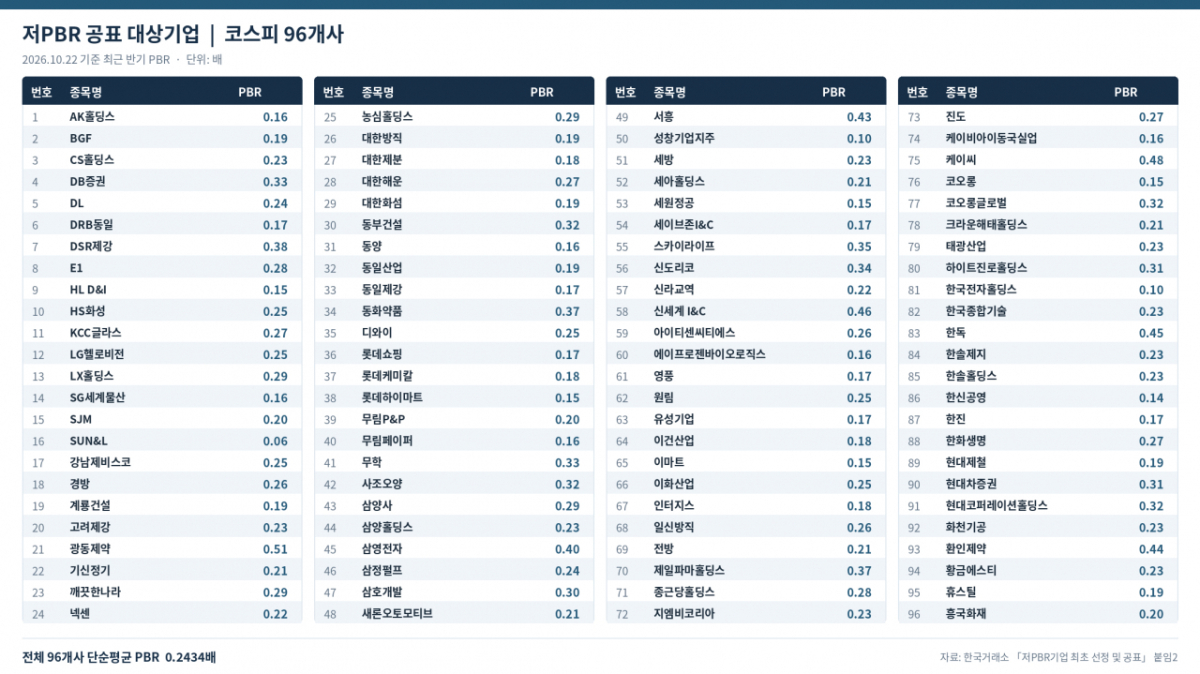
The Korea Exchange has released its first list of low-PBR (price-to-book ratio) companies. The aim is to encourage undervalued companies to voluntarily improve their corporate valuation, thereby resolving the "Korea discount." The average PBR of these companies was 0.25 times, amounting to just one-quarter of their book net asset value.
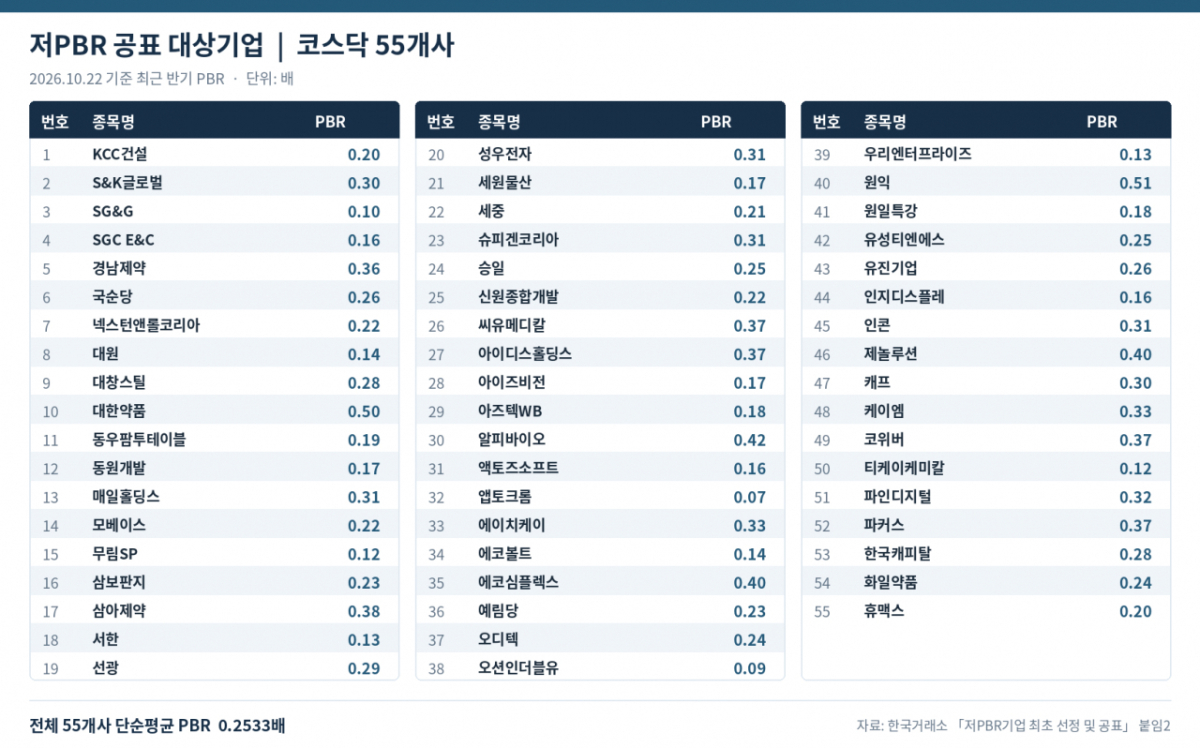
The Exchange announced on the 1st that it will publish the list of 151 low-PBR companies starting from the 2nd. This includes 96 KOSPI-listed and 55 KOSDAQ-listed companies. The criteria are companies in the bottom 25% by PBR over a cumulative three-year period in the KOSPI market, and those in the bottom 10% in the KOSDAQ market. In the KOSPI market, companies such as AK Holdings, Lotte Hi-Mart, E-Mart, Kolon, Korea Electronics Holdings, and Hanshin Engineering made the list, while in the KOSDAQ market, SG&G, Murex SP, Appotokrom, Ocean W, Wonik, and TK Chemical were named.
The average PBR of low-PBR companies is 0.247 times. By market, the average for the 96th low-PBR KOSPI companies is 0.24 times, while the 55th KOSDAQ companies average 0.25 times. According to the Exchange, as of the 30th of last month, the overall PBR for KOSPI was 1.43 times and for KOSDAQ was 1.60 times.
The announcement of low-PBR companies is a follow-up measure to the "Capital Market Structural Improvement Plan" formulated by the government in March. The list will be posted on the KIND value-up program page of the Exchange's listing disclosure system on the first trading day of May and November each year. A "low-PBR company" label will also be displayed on securities firms' HTS (Home Trading System) and MTS (Mobile Trading System). This current list will remain published until the next announcement date, which is May 4, 2027.
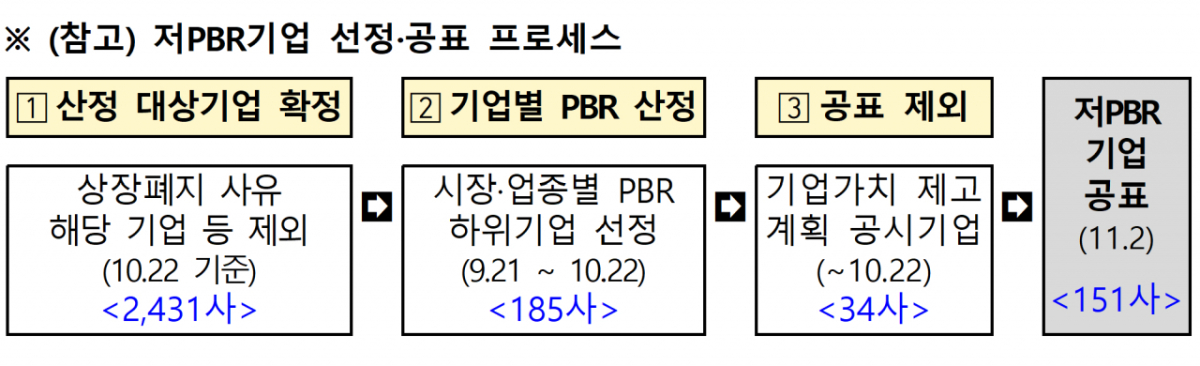
The low-PBR companies were calculated based on 2,431 companies (779 KOSPI, 1,652 KOSDAQ), excluding those with grounds for delisting as of the 22nd of last month. Among these, 185 companies (115 KOSPI, 70 KOSDAQ) that met the low-PBR criteria for six consecutive recent half-years or for six out of the most recent seven half-years were selected as candidates.
However, 34 companies (19 KOSPI, 15 KOSDAQ) that disclosed a "PBR Improvement Plan" by the 22nd were excluded from the disclosure targets, resulting in a final list of 151 companies. Considering this is the first release of the low-PBR company list, companies that disclosed corporate valuation improvement plans including PBR improvement plans were granted a one-year exemption from disclosure.
A total of 62 companies had disclosed improvement plans, but 15 of them were excluded from the exemption targets because they met the low-PBR criteria for 12 consecutive recent half-years or for 12 out of the most recent 13 half-years. The remaining 13 companies did not meet the selection criteria for low-PBR companies and therefore were not eligible for disclosure exemption.
The Exchange plans to provide one-on-one customized PBR improvement consulting support to all 151 low-PBR companies. This is intended to assist these companies in their efforts to improve their PBR, including analyzing the causes of low PBR and setting goals and formulating plans.
In addition, the Financial Services Commission will revise its stewardship code guidelines to promote shareholder engagement by institutional investors in low-PBR companies, and plans to identify best practices through implementation checks.

 in STOCK


