

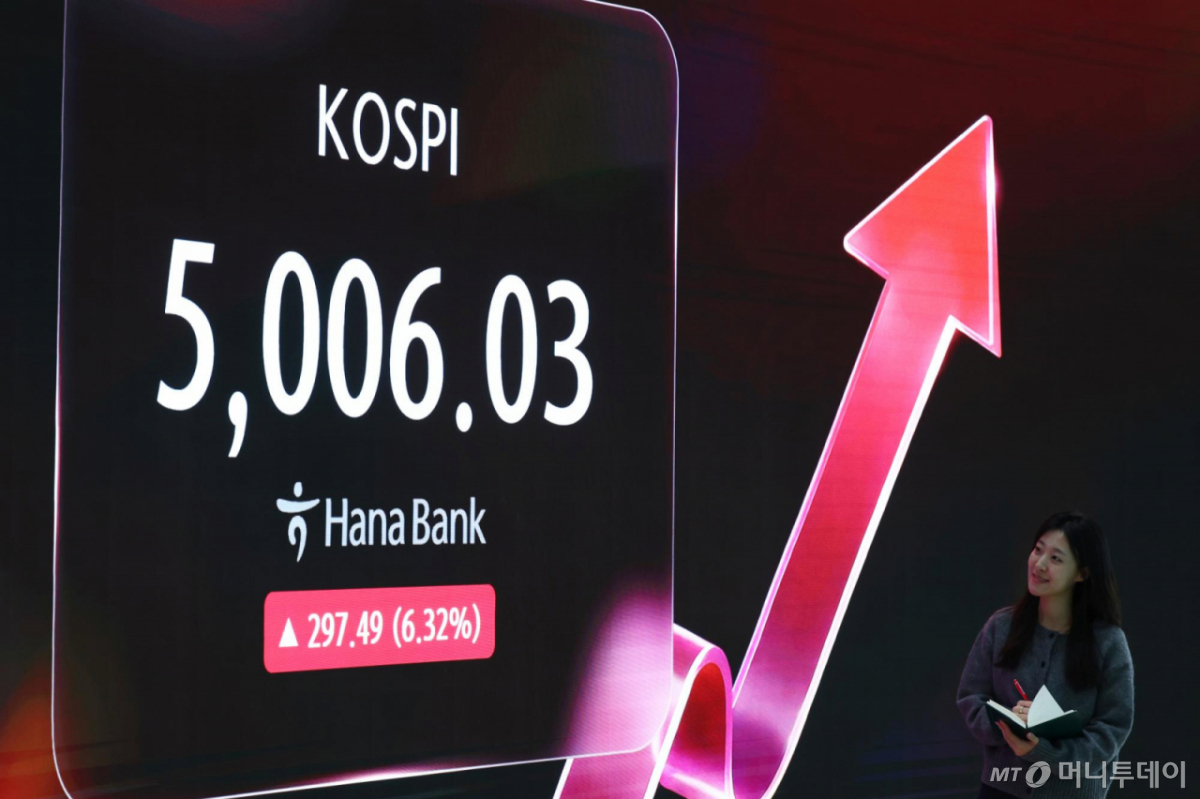
Although the KOSPI returned to the 5,000 level following Jensen Huang's return, it remains insufficient to recover recent declines. The Philadelphia Semiconductor Index, which is assessed to have a high correlation with the KOSPI, surged 14%, and the Taiwan Weighted Index jumped 9%, yet the domestic market's rise was relatively modest. Given that the domestic stock market has exhibited extreme volatility, caution appears to persist.
On the 24th, the KOSPI closed at 5,006.03, up 6.32% from the previous day. This was driven by news of NVIDIA CEO Jensen Huang's return, which caused a sharp rise in U.S. tech stocks, including NVIDIA. On the 23rd (local time), the NASDAQ closed at 24,089.56, up 6.5% from the previous day, and the Philadelphia Semiconductor Index surged 14.03% to close at 9,588.10. Samsung Electronics and SK hynix, representative domestic semiconductor stocks, rose by 6.7% each on the day. The KRX Semiconductor Index also rose by 6.8%.
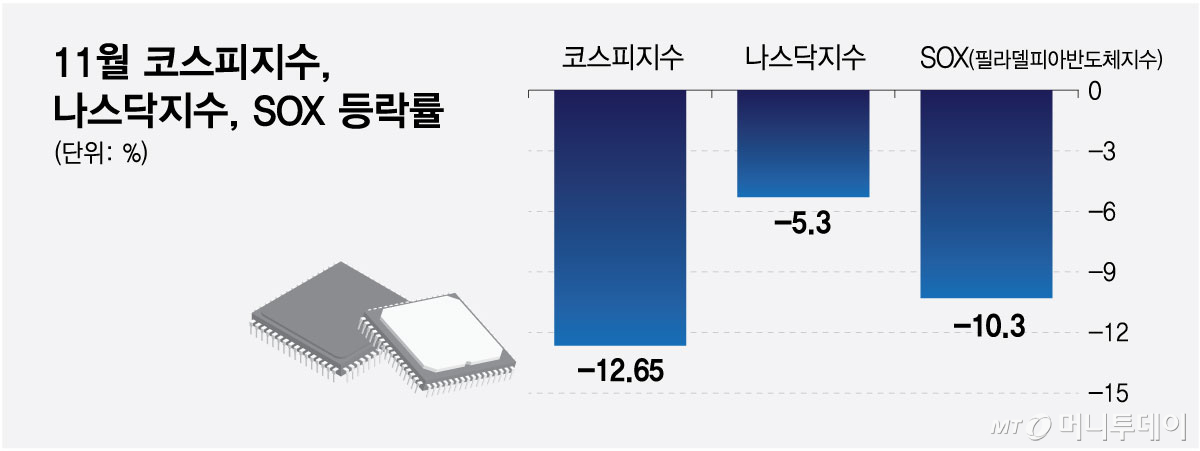
While this is a meaningful rebound after a long time, it leaves room for disappointment when considering recent declines. Since the beginning of this month, the KOSPI has fallen by 12.65%. In particular, over the previous two trading days, it plunged 8.5%, dropping to the 4,500 level during intraday trading, which is near its early-year levels. The NASDAQ and Philadelphia Semiconductor Index fell by 7.5% and 13%, respectively, over the same period, nearly recovering in a single day.
It is analyzed that caution remains as volatility in the domestic stock market has continued since the second half of the year. In particular, retail investors made net sales of 2.4 trillion won amid the market rebound. It is interpreted that funds significantly net-bought above the 7,000 level are acting as a drag by creating selling pressure during each rebound. Kim Jae-seung, a researcher at Hyundai Motor Securities, stated, "Retail investors have net-bought over 100 trillion won worth of KOSPI this year and purchased 54 trillion won in domestic equity ETFs," adding, "Additional buying power is limited, and rather, individual selling may emerge during the rebound process, which will serve to cap the upside."
Consequently, when external negative factors such as AI concerns or rising U.S. Treasury yields appear, the domestic stock market falls further. Conversely, when major global stock markets, particularly U.S. tech stocks and the semiconductor sector, rebound, the domestic market shows a lagging trend that fails to match their gains.
However, the securities industry judges that undervaluation of the KOSPI and key stocks is deepening and that market concerns are excessive. Kim Dong-won, head of the Research Division at KB Securities, said, "Although concerns about slowing memory demand have been raised due to increased supply from expanded production facilities, there are currently no signs whatsoever of a decrease in memory orders," adding, "As solid performance and increasing demand continue, stock prices are falling, deepening undervaluation."
Particular attention is being paid to whether Jensen Huang's return can serve as a catalyst for the rebound. Lee Kyung-min, a researcher at Daishin Securities, stated, "EPS (earnings per share) has increased by 32.5% compared to its June peak, while the index has fallen by 48%," adding, "It is in an undershooting zone that has dropped excessively below fair value, making holding and split buying effective, and what has changed is that a turning point has emerged."

 in STOCK

