

[For more diverse company information on startups mentioned in this article, please visit Unicorn Factory's Big Data Platform 'Data Lab'.]
The world’s largest bio cluster, Boston, USA, has evolved into a 'Hub-and-Spoke' structure as its core hub, Kendall Square, reaches saturation. Companies and research facilities have expanded to nearby areas such as Watertown, Waltham, and Woburn. The proportion of venture capital (VC) investments flowing into regions outside Cambridge, where Kendall Square is located, rose from approximately 54% in 2022 to about 60% in 2023, marking a record high. Currently, over 1,200 bio companies, including Moderna, Biogen, and Vertex, are clustered around Boston, creating more than 140,000 jobs in the life sciences sector with average annual salaries reaching approximately $200,000 (about 300 million won).
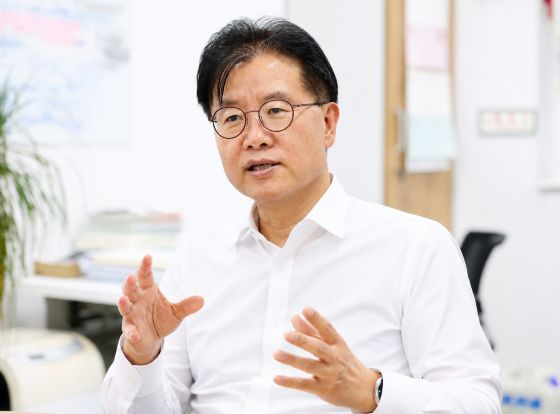
Seoul Hongneung Small-Scale R&D Special Zone (hereinafter referred to as Hongneung Special Zone), covering just 1.36 square kilometers in the city center, is home to concentrated institutions such as Korea Institute of Science and Technology (KIST), Kyung Hee University, Korea University, and Seoul BioHub. Drawing inspiration from Boston’s model, it seeks future growth strategies. Since its designation as a Small-Scale R&D Special Zone in July 2020, Hongneung has grown to host 75 startups, attract investments totaling 206.7 billion won, and achieve a corporate valuation of 2.95 trillion won within just over three years. In the 2025 annual evaluation conducted by the Ministry of Science and ICT, it received the highest rating of 'Excellent' for two consecutive years, positioning itself to leapfrog as an urban bio-medical cluster comparable to Boston and Singapore. We spoke with Im Hwan, Director of the Hongneung Special Zone Project Team, about the zone’s competitiveness, growth strategies, and plans for collaboration with regional special zones.
A compact anchor nurtures a vast hinterland
Director Im explained that while bio companies have spread to adjacent areas like Watertown, Waltham, and Woburn as Kendall Square reached saturation, this was not a spontaneous dispersion. "As Kendall Square became congested and laboratory rental prices soared, bio companies expanded into neighboring cities. However, this expansion was orderly," he stated. "The Massachusetts BioIndustry Association implemented the 'BioReady Community' system to evaluate each city’s capacity to host bio enterprises, thereby assigning roles systematically across regions."
Does this mean the value of the anchor, Kendall Square, is diminishing? To this question, Director Im responded, "Quite the opposite." He elaborated, "While production and scale-up functions can move outward, the so-called 'bump factor'—where people and ideas collide by chance to spark collaboration—emerges only in high-density anchors. The concentration of an anchor represents an irreplaceable competitive advantage."
He further added, "Indeed, Seaport, Boston’s emerging bio hub, is criticized for lacking the bump factor effect because its buildings are dispersed, failing to match the impact seen at Kendall Square."
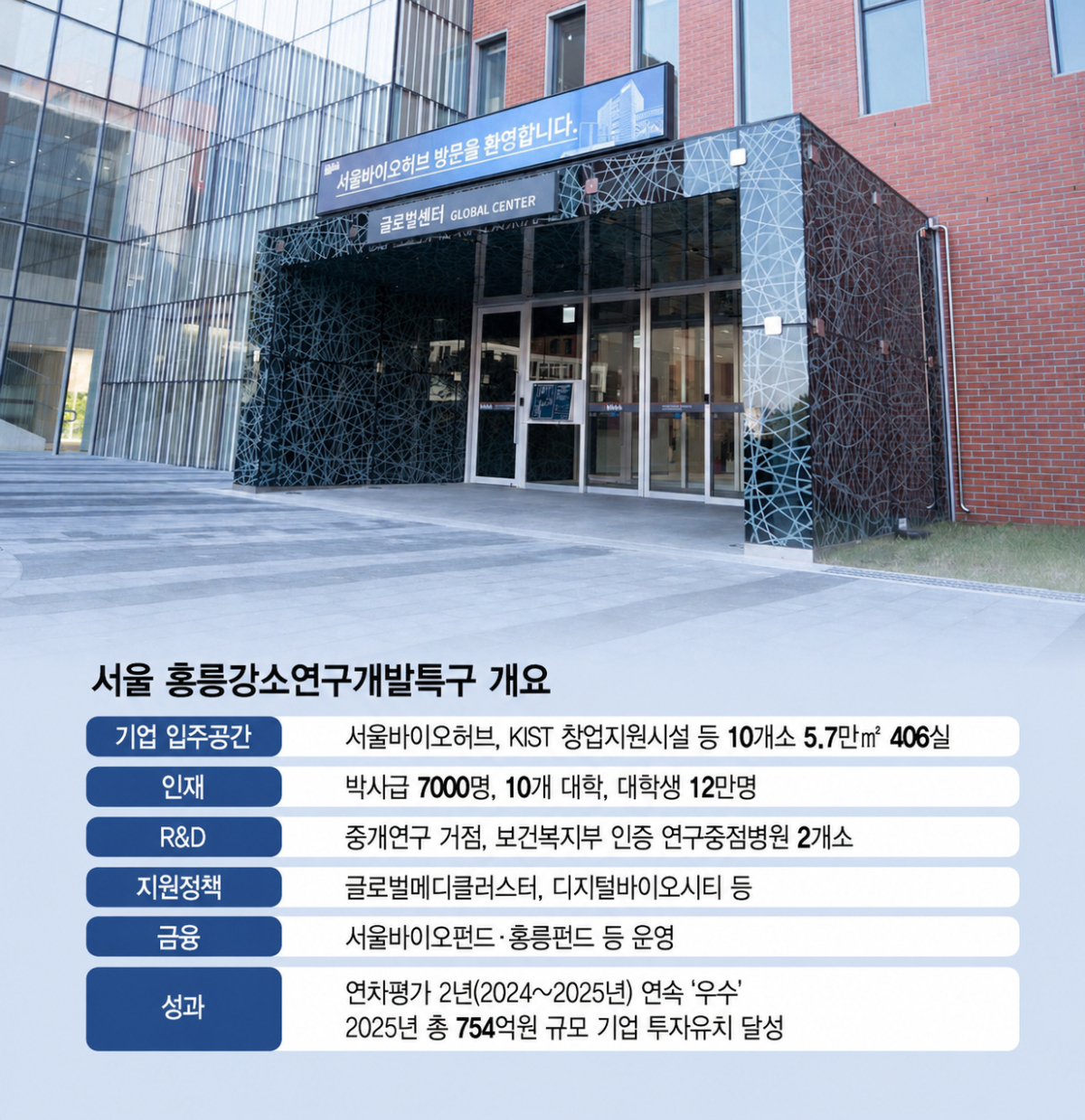
From this perspective, Director Im argued that Hongneung, with its R&D and technology commercialization functions concentrated within 1.36 square kilometers alongside KIST, Kyung Hee University, Korea University, and Seoul BioHub, represents the closest structure to a 'Korean-style Kendall Square' in the country. "Universities, hospitals, and research institutes are densely packed in a small space, naturally generating the bump factor," he said. "The active presence of physician-led startups and clinical-based deep-tech ventures mirrors Boston’s model and constitutes a unique differentiator rarely found in other domestic clusters."
Addressing concerns that Hongneung’s urban location makes it difficult to expand production facilities, he countered, "This is not a weakness but rather a growth driver for Hongneung." He explained, "Due to limited space, Hongneung must transfer production functions to adjacent areas or regional special zones. In doing so, investments, jobs, and production facilities emerge in local regions, ultimately fostering the growth of the entire national bio ecosystem. This creates a structure where a compact anchor nurtures a vast hinterland."
Director Im noted that this model has already begun operating domestically. According to him, NeoKenBio, headquartered at Seoul BioHub after acquiring KIST’s natural product processing technology, is constructing a GMP raw pharmaceutical production facility with a total project cost of 13 billion won at the Andong Industrial Hemp Regulatory Special Zone in North Gyeongsang Province. Upon completion in 2027, an industrial ecosystem spanning cultivation, ingredient extraction, raw drug production, and export will be established in Andong, mirroring Jeonju’s model.
Director Im compared this trajectory to Biogen’s growth path in the U.S. "Biogen maintains its headquarters and R&D functions at Kendall Square while establishing a production base at Research Triangle Park (RTP) in North Carolina, approximately 1,300 kilometers away, employing over 1,500 people," he stated. He further added, "It took Biogen 30 years to achieve its current success. Similarly, NeoKenBio and Hongneung are just at the initial stage of laying the foundation. Therefore, greater attention should be paid to establishing a correct growth path rather than focusing solely on short-term results."
"Not exporting companies, but dividing functions"
Director Im also proposed a collaboration model to extend such cases to other regional special zones. First is the 'Jeonju-style value chain,' which connects regional strengths. Companies developing bio technologies and launching startups in Hongneung would collaborate with Osong for clinical trials, Daegu for advanced medical device development, Wonju for medical devices, and Andong for hemp-based raw pharmaceutical production. He emphasized, "Rather than consolidating all functions in one location, assigning each region its area of expertise can create a virtuous cycle where startups growing in Hongneung lead to investments in local production facilities and job creation."
Second is 'functional specialization,' clearly defining each special zone’s professional focus. Just as Boston uses the 'BioReady' system to assign roles by city, domestic zones should leverage their respective strengths to reduce redundant investments and excessive competition. Hongneung will concentrate on digital healthcare, AI diagnostics, and biomarkers, while other regions take on responsibilities such as new drug clinical trials or medical device production based on their unique advantages.
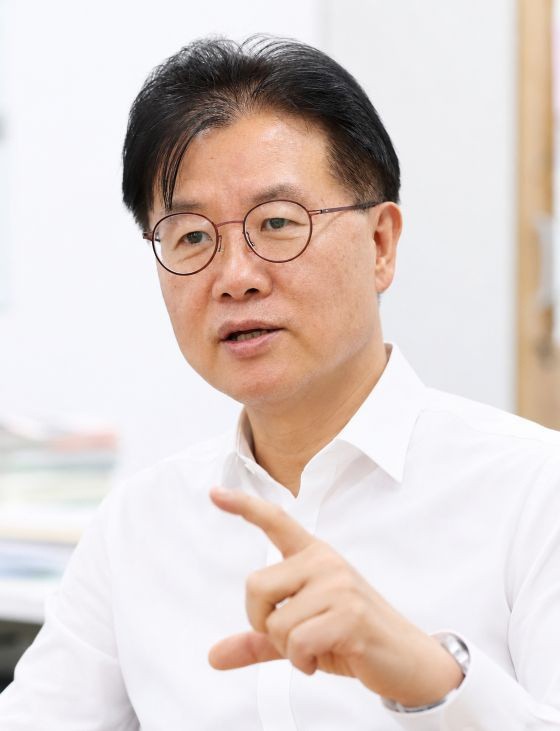
Third is a role-sharing model where research occurs in Seoul and production takes place in regional areas. Companies will continue R&D and startup activities in Hongneung but collaborate with regional special zones during mass production stages. Director Im stated, "We are not exporting companies to local regions; we are dividing functions. For the competitiveness of Korea’s entire bio industry to rise, R&D should remain in Hongneung while production is handled by regional areas." To support this, he proposed providing tax incentives and site support for companies that keep their headquarters and R&D functions in Hongneung while establishing production facilities elsewhere. Additionally, a system should be created to separately manage production and employment outcomes generated by Hongneung-originated companies in local regions.
[MoneyToday startup media platform 'Unicorn Factory']

 in TECH


