

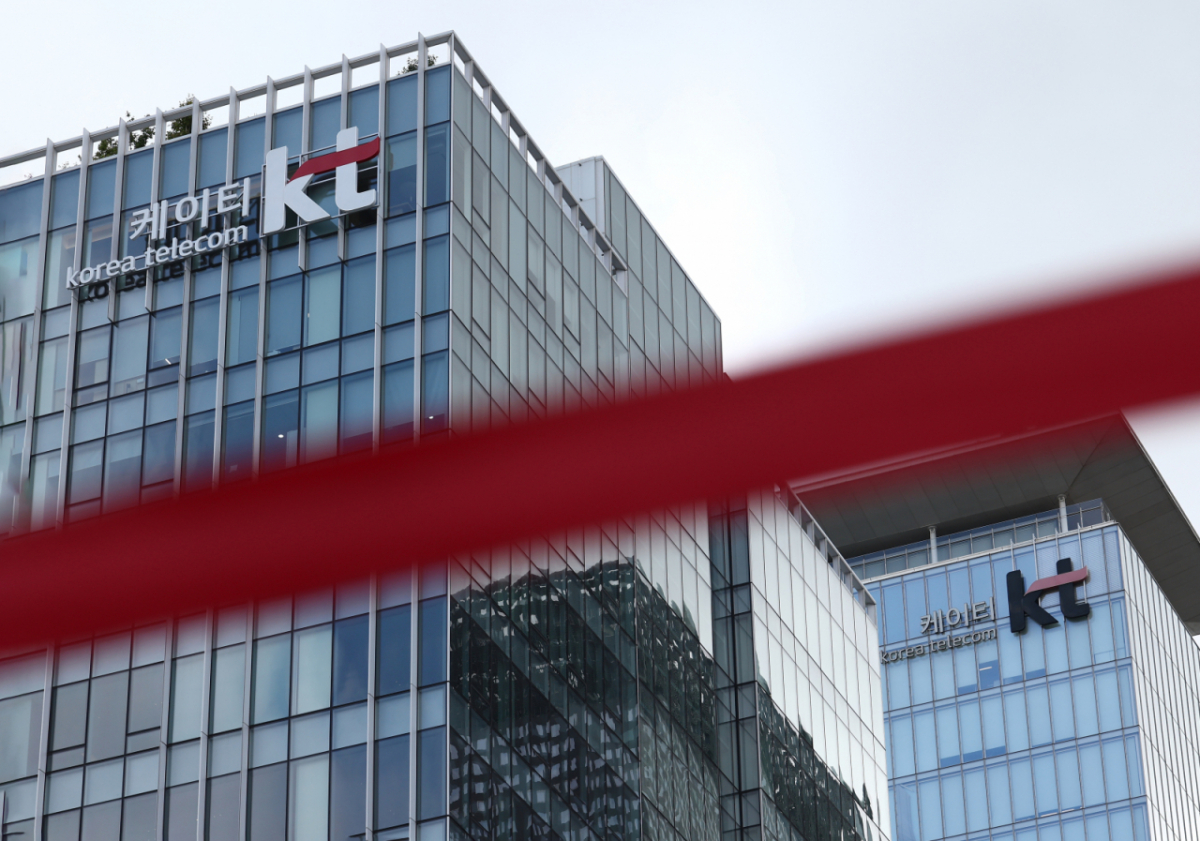
KT was ordered to pay a fine of over 50 billion won for violating safety measures related to the hacking incident. Some interpretations suggest the amount is excessive compared to previous cases, given that the number of victims fell short of 20,000.
The Personal Information Protection Commission announced on the 30th that it imposed a fine of 539 billion 79 million won on KT during its 15th plenary meeting held on the 29th, along with decisions to issue corrective orders, improvement recommendations, and public disclosure. The fine represents 0.8% of KT's 5G and LTE business revenue from 2022 to 2024, which served as the basis for calculation (6 trillion 50 billion won).
This rate is similar to that of SK Telecom (1%) but lower than Coupang's (1.8%). According to the Commission's investigation, personal information including mobile phone numbers, subscriber identification numbers (IMSI), and device identification numbers (IMEI) were leaked from a total of 16,647 individuals. Although KT initially reported 22,227 cases, the number decreased after removing duplicates such as corporate accounts and multiple lines. Compared to SKT and Coupang, which had leaks affecting 23 million and 37 million people respectively, the scale of this leak is merely one-thousandth of those incidents.
The relatively high fine ratio compared to the scale of the leak is attributed to the fact that actual financial damages occurred. Hackers intercepted ARS and SMS messages containing payment authentication codes, causing unauthorized small-amount payments totaling 243 million won across 777 cases affecting 368 individuals. Professor Choi Kyung-jin from Gachon University's Department of Law (Korean Artificial Intelligence Association) stated, "The fine is large relative to the scale of damage," and added, "The Commission has issued a warning not only for data leaks but also for cases that led to actual harm."
Industry insiders expressed surprise that KT received a fine in the hundreds of billions of won despite completing follow-up measures such as fully replacing the 'femtocell' that served as the hacking channel. The fact that USIM authentication keys were not leaked, reducing the risk of secondary damage, and that sensitive information such as purchase details, addresses, and door passwords were not compromised—as was the case with Coupang—did not significantly mitigate the penalty. Professor Choi remarked, "There may have been an element of suspicion regarding the concealment of the 2024 malware infection discovered during the investigation, which could have contributed to the increased fine."
However, skepticism has also been raised about punitive fines. Lee Seong-yeop from Korea University's Technology Management program stated, "There is a theoretical issue with imposing financial penalties in the form of fines even when there is no unjust enrichment," and added, "While this applies to SKT and Coupang as well, whether the fines were appropriately calculated will be verified through future litigation." He further noted, "The process for calculating fines, including how aggravating or mitigating factors are applied, has not been transparently disclosed, making it difficult for experts to reach a consensus."
Former Ajou University Cybersecurity Professor Park Chun-sik also said, "Since regulation alone is not the solution, government authorities should take proactive measures such as allocating part of the fine toward strengthening security budgets for small and mid-sized companies."
KT maintains its stance of taking all necessary precautions to prevent recurrence. A KT representative stated, "We take the disciplinary outcome seriously. We sincerely apologize for causing concern and anxiety," and added, "We are reevaluating our personal information protection system from scratch and will make every effort to prevent future incidents and restore trust through expanded security investments and strengthening company-wide personal information protection capabilities."

 in TECH
